
Our Stainless Steel 70° Elbow Pipes are weld-ready bends for intake and exhaust fabrication. They cover popular diameters (e.g., 50–70 mm) with a typical 400 mm leg, letting you achieve sharp direction changes in tight spaces while maintaining flow. Stainless construction offers reliable heat and corrosion resistance for street and workshop builds.
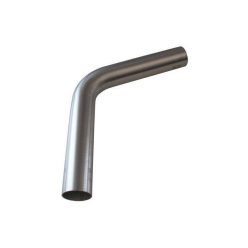
Net price: 15 €
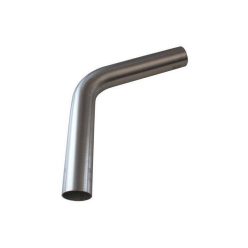
Net price: 18 €
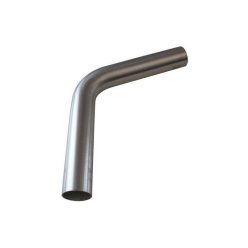
Net price: 17 €
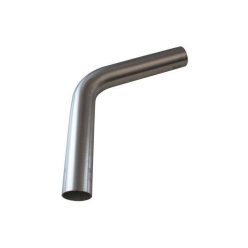
Net price: 17 €
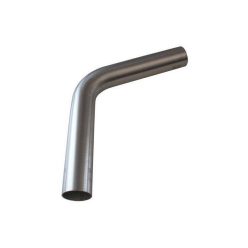
Net price: 18 €
Brief summary & key benefits
Stainless Steel 70° Elbow Pipes are ideal when you need a substantial change in direction but a full 90° would be too sharp. The 70° geometry offers a smart balance between packaging and flow, often replacing several smaller bends with a single, clean part. With multiple diameters available (commonly 50, 57, 63.5, 70, 76 mm) and a typical 400 mm leg, they integrate neatly into intake and exhaust systems.
Technical Basics
These elbows are made from stainless steel and supplied in a weld-ready format. Stainless provides strong corrosion resistance and withstands exhaust heat. Sitting between 45° and 90°, a 70° bend reduces turbulence compared with a sharp 90°, yet it is more compact than stacking multiple 30–45° pieces. Common sizes include 50 mm, 57 mm, 63.5 mm, 70 mm and 76 mm; the leg length is typically 400 mm, giving enough trimming allowance for accurate fitment. Typical pitfalls: leaving too little straight for the weld, overheating the tube wall, or mixing dissimilar materials in one joint.
Selection Criteria
Diameter: match engine output and the rest of your system. Oversizing on the intake can reduce air velocity; undersizing on the exhaust increases backpressure. Angle: choose 70° when 45° is insufficient but 90° is too tight; two 70° elbows can achieve roughly 140° with a short straight in between. Wall thickness: favour heavier walls for hot sections; lighter options may suit the cold side. Material strategy: keep metals consistent within a section to minimise galvanic effects and thermal expansion mismatch.
Installation & Maintenance
Mark cut points carefully, then deburr and degrease the ends. Use a jig or welding magnets for alignment; tack around the joint to counter heat pull. For exhausts, consider back-purging (argon) to limit internal oxidation and keep the root smooth. After welding, check for distortion and contact points; pressure- or smoke-test the system and re-torque clamps and hangers after initial heat cycles. Periodically inspect mounts and heat shielding to prevent vibration cracks and metal-to-metal contact.
FAQ
When is a 70° elbow the right choice?
When a 45° bend won’t turn enough but a 90° is too abrupt—70° gives a neat, compact solution.
Is it suitable post-turbo?
Yes—stainless with proper welding and appropriate wall thickness handles the heat well.
What sizes are typically available?
Common diameters: 50, 57, 63.5, 70, 76 mm; typical leg: 400 mm.
Do I need gaskets?
Not for fully welded joints; for clamped joints, use quality sleeves/clamps and flat mating faces.
Why choose this over stacking smaller angles?
Fewer joints mean fewer potential leaks and less risk of vibration-related issues.
