
Sport catalytic converters (sports cats) are high-flow exhaust components designed to balance gas flow, packaging and system load in tuned road cars and track builds. In this category you will typically find 100-200 CPSI options with metal or ceramic cores, stainless housings and several common inlet sizes.
To choose the right part, compare pipe size, body length and EURO marking together, because available space and exhaust movement matter just as much as cell density. As a preventive step, check sensor position, joining method and nearby heat protection before ordering.
Verify exact dimensions and specifications on the product card; in-stock items dispatch fast within the EU.
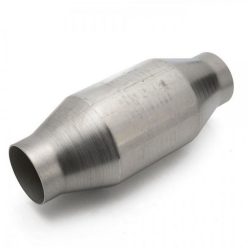
Net price: 61 €
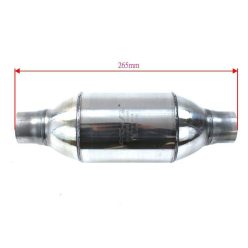
Net price: 309 €
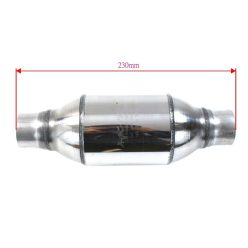
Net price: 121 €
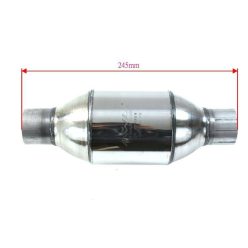
Net price: 139 €
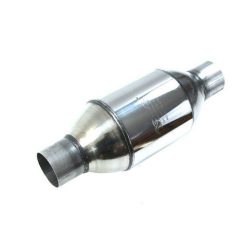
Net price: 232 €
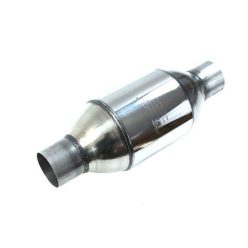
Net price: 302 €
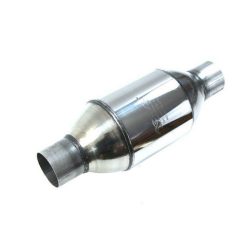
Net price: 137 €
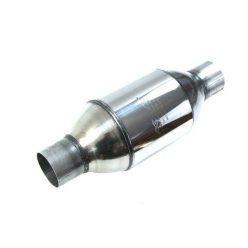
Net price: 162 €

Net price: 121 €
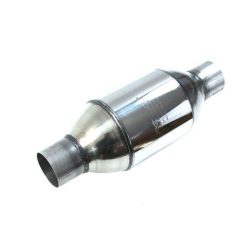
Net price: 232 €

Net price: 401 €
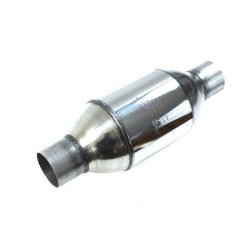
Net price: 413 €
Sport Catalytic Converters for Tuned Exhaust Systems
This category brings together high-flow exhaust catalysts that builders often search for as sports cats. The right part is not only about cell density; body size, pipe routing, thermal movement and sensor position must also work together within the full exhaust system.
Technical background and system integration
You will typically see 100-200 CPSI designs here, giving different compromises between flow behaviour, response and intended use. For a road project, track car or modified exhaust, the catalyst should be chosen around the whole system rather than by nominal diameter alone.
Core material may be metal or ceramic; a metal core often copes better with vibration and repeated heat cycling, while a ceramic version can be a cost-conscious option for many builds. That is not a ranking, but a use-case decision based on how the car is driven and how hard the system is worked.
Many parts in the category use a stainless housing, and common connection sizes include 50 mm, 60 mm and 2.5 inch (63.5 mm). Product cards should also be checked for body length, body diameter and EURO marking, because packaging space and intended system logic decide what can be installed sensibly.
- Diameter: match the catalyst connection to the real pipe size used in your exhaust.
- Body size: check full length and body diameter against tunnel space, braces and heat shields.
- EURO marking: use it to narrow intended application, but still verify the vehicle’s own requirement and sensor layout separately.
How to choose the right one?
Quick selection guide: start with pipe size, then compare CPSI, then confirm core material and EURO marking. When more than one option exists in the same diameter, available space and intended use will usually decide whether a shorter compact body or a larger casing suits the build better.
Within this category, filters and product cards make it easier to compare pipe size, CPSI, engine-capacity guidance and stock status without leaving the listing. Some models are tagged for roughly 2.0-5.0 litre applications, but that should always be read together with the actual engine, exhaust layout and emissions target.
- Road build: check whether you need a sensor provision and how much clearance remains around the body.
- Track use: allow for higher heat load, vibration and movement in the exhaust line.
- Verification: compare diameter, overall length and cross-section on the product card with your own system before buying.
Installation and failure-prevention tips
Before welding or clamping, confirm that pipe ends are clean, aligned and able to move naturally with the engine and exhaust hangers. A sport catalytic converter should not be forced sideways into position, because packaging fit and mechanical load are linked.
Heat clearance matters around the floor, shields, brake and fuel lines, and the routing of the lambda sensor wiring. Whether you weld, sleeve or clamp the joints, finish the final fixing only when the exhaust sits in its natural loaded position on the hangers.
PRO TIP: When several options look right on paper, narrow the choice by packaging space and sensor placement first, and only then make the final call on CPSI or core material.
FAQ
What is the most common failure or installation mistake?
The most common issue is a housing or joint installed under slight stress rather than in natural alignment. Typical signs are resonance, soot marks around a joint or an early crack, so alignment, hanger position and heat-shield clearance should be checked together during installation.
Should I choose a metal-core or ceramic-core catalyst?
A metal core often deals better with vibration and repeated heat cycling, while a ceramic core can be a more budget-aware option in many projects. The best choice depends on use, heat load and the rest of the exhaust build.
What do 100 CPSI and 200 CPSI mean?
CPSI means cells per square inch, describing the density of the internal core. Different values can influence flow behaviour and system response, so they should be judged alongside engine setup, exhaust design and intended use.
How do I know whether it will fit my existing exhaust?
Measure real pipe size, available overall length, body clearance and sensor position first. Then compare those figures with the product card, including body dimensions and any engine-capacity or EURO guidance.
What checklist should I run before first start-up?
Check welded or clamped joints, hanger position, heat-shield clearances and lambda sensor wiring route. After the first heat cycle, inspect again for leaks, soot marks, unwanted vibration and any sign that the exhaust is pulling the catalyst out of alignment.
