
BMW B58 Performance Tuning Kits bring together focused Forge Motorsport upgrades for B58-powered BMWs, aimed at better thermal control, steadier IAT (Inlet Air Temperature) and improved reliability of the charge pipe path. The range includes boost/charge pipes, a chargecooler radiator, carbon intake and inlet duct options, an OEM-style panel filter, a boost tap for monitoring, plus wheel spacers.
Use the filters (brand, price, size/options) and sorting, then open each product card to confirm the exact part number and fitment list. Pick the right configuration and place your order.
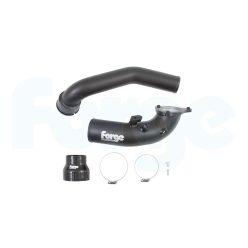

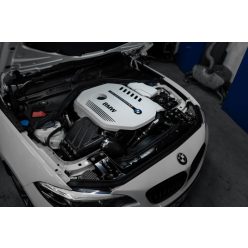
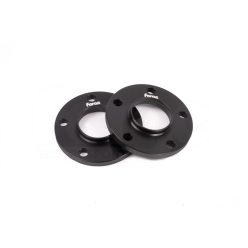
Net price: 46 €


Net price: 511 €

Net price: 795 €

Net price: 49 €
BMW B58 Performance Tuning Kits – cooling, airflow and reliability upgrades for B58 setups
BMW B58 Performance Tuning Kits focus on the common limiting factors seen on tuned B58 cars: heat load, intake-side airflow and the durability of boost plumbing under higher pressure. The goal is repeatable performance in warm conditions, during back-to-back pulls, and on occasional track day use.
Some items overlap B48/B58 applications (such as the chargecooler radiator and the panel air filter), so fitment notes and the exact part number are the final reference. If you add an ECU remap, make sure the calibration matches the hardware and your intended use.
Technical Basics
The factory plastic charge pipe can become a weak point at higher boost, so the FMBP3 boost pipe kit uses aluminium pipework and CNC couplers to target long-term reliability. The description notes an integrated 1/8” NPT water-methanol port with a blanking plug, which is useful if you plan auxiliary injection later.
On water-cooled charge-air systems, a larger chargecooler radiator can help stabilise temperatures; for FMCCRAD11 the stated volume is 17 litres versus an OEM figure of 7.71 litres, with triple pass coolant flow. This approach typically reduces temperature spikes and helps maintain consistent IAT, although real-world results depend on the full system and ambient conditions.
For intake airflow, the FMINDK50 carbon induction kit targets restrictions in the OEM airbox/inlet tract, and the description states it includes the FMINLH25 inlet hose. That hose is described as increasing the airbox-end diameter from 85 mm to 90 mm to reduce turbulence and support higher-boost builds.
To improve fresh-air feed, the FMINLD2 carbon inlet duct is described as directing airflow towards the airbox/intake to support better throttle response and more consistent IAT. Because variants exist (FMINLD2-P, FMINLD2-D, FMINLD2-M), selection depends on your chassis layout, so the fitment graphic/list matters more than the name.
For an OEM-style upgrade, the FMPAN-0172 panel air filter is described as using a pleated, high-flow synthetic nanofibre medium. The listing describes it as washable and reusable, with a cleaning suggestion of 10,000 miles (about 16,000 km) or yearly, depending on which comes first.
If you need a clean boost reference, the FMBGFK12 boost tap plate is installed between the MAP sensor and its mounting boss, providing a take-off for a boost gauge or a vacuum-operated valve. The description notes that hose/ties are supplied and the installation is reversible, but sealing quality is essential to avoid leaks and faults.
Wheel spacers are included for chassis setup rather than engine output: the 13/16/20 mm options are described with a 72.6 mm centre bore and 5×120 PCD, in a hubcentric format. The listing warns that extended wheel bolts are not supplied and clearance should be checked at full lock after fitting.
Selection Criteria
If your priority is reliability at higher boost, start with the charge pipe upgrade (FMBP3) and then address cooling capacity with the FMCCRAD11 chargecooler radiator. These parts target common failure/limitation points before you chase extra power.
For an OEM+ intake approach, pair the FMPAN-0172 panel filter with the FMINLD2 inlet duct, keeping the factory airbox while improving feed and filtration. If you want a more comprehensive airflow change, the FMINDK50 induction kit is the step-up, but it adds packaging and heat-management considerations.
If you plan water-meth, choose hardware that already supports clean plumbing: the boost pipe kit is described with a 1/8” NPT port, and the boost tap can provide a stable reference for monitoring. In this scenario, correct fittings and sealing are as important as the parts themselves.
The category also includes a Stage 1 remap item; treat it as a service and verify details on the product page (location, scheduling and requirements) before purchase. Good maintenance (spark plugs, cooling system health, leak-free intake/boost path) helps ensure the calibration remains stable.
For spacers, thickness choice (13 mm, 16 mm, 20 mm) depends on wheel offset and arch clearance, so the goal is safe space and vibration-free running rather than “more is better”. Hubcentric design helps centring, but bolt length and correct torque are non-negotiable.
Installation & Maintenance
When fitting a boost/charge pipe, clamp position and torque are critical: too loose can create boost leaks, too tight can damage couplers or outlets. After installation, do a short test drive and re-check fasteners after a heat cycle.
For a chargecooler radiator, plan for correct bleeding and leak checks, because any issue in the coolant loop can quickly affect IAT stability. While the system is open, inspect hose condition and ensure coolant choice matches the vehicle specification.
With FMINDK50 and FMINLD2 style intake parts, prioritise secure mounting, consistent sealing and good clearance from heat sources to avoid rubbing and unwanted hot-air ingestion. For the panel air filter, follow the cleaning procedure closely, as over-oiling or poor cleaning can reduce filtration quality.
For the FMBGFK12 boost tap, verify sealing surfaces and hose routing, then monitor for stable readings and the absence of fault codes under load. With spacers, confirm flat seating and clearance at full lock, and re-torque wheel bolts after the first 50–100 km.
FAQ
Why replace the factory B58 charge pipe?
The OEM plastic charge pipe can become brittle under higher boost and heat cycling, increasing the risk of cracking or failure. An aluminium option like FMBP3 is aimed at stronger joints and long-term reliability. Always check the fitment list for your exact chassis and connections.
Do I need a chargecooler radiator or an intercooler on a B58?
Many B58 applications use a water-cooled charge-air system, where a larger chargecooler radiator helps manage temperature stability. The FMCCRAD11 listing describes a significant volume increase, which can support more consistent IAT under repeated load. The correct route depends on your car’s OE layout and your tuning goals.
What thread size is used for the water-meth port?
The boost pipe description mentions a 1/8” NPT port, a tapered thread commonly used for injection nozzles and plugs. Use the correct NPT fittings and sealing method to prevent leaks. If you do not run water-meth, keep it sealed with the supplied blanking plug.
How often should I clean the B48/B58 panel filter?
The FMPAN-0172 listing suggests cleaning every 10,000 miles (about 16,000 km) or once per year, whichever comes first. Dusty roads and frequent short trips can shorten that interval, so visual inspection helps. Clean it using the recommended method to maintain filtration performance.
What should I check after fitting BMW wheel spacers?
Confirm the spacer sits flat, the setup remains hubcentric, and there is no rubbing at full steering lock. The listing notes extended bolts are not supplied, so correct bolt length is essential. Re-torque after initial driving to ensure everything stays secure.
Filter by your goal (cooling, intake airflow, boost plumbing, monitoring), confirm fitment on the product page, then place your order for the right B58 setup.
