
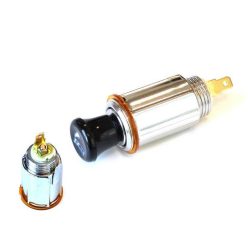
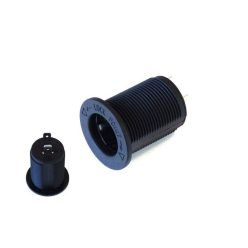
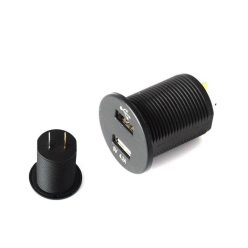
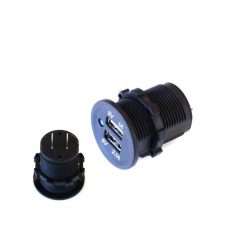
The Sockets & Electrical Accessories range covers 12/24 V add-ons such as panel-mount lighter sockets, dual USB chargers and digital voltmeter modules. Suitable for cars, 4x4s, boats and race builds. Always match voltage and current ratings, and choose sealed units where exposure to water or dust is expected.
Brief summary & key benefits
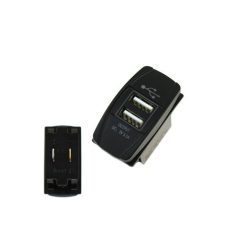
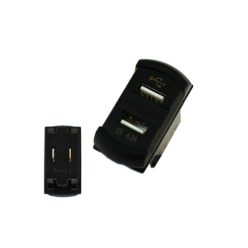
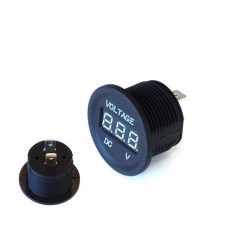
The Sockets & Electrical Accessories category enhances your vehicle’s power distribution and monitoring. Lighter sockets feed portable loads like coolers or compressors, panel USB chargers provide safe device charging, and digital voltmeters let you track battery health at a glance. Compact footprints, sealing caps and simple panel cut-outs make installation neat and fast.
Most products work with both 12 V and 24 V systems, so they fit passenger cars, LCVs, 4x4s and boats. With correct cable sizing, per-branch fusing and solid grounds you’ll achieve a durable, vibration-resistant setup. Many brands offer modular ranges so multiple functions share the same aperture, keeping your dashboard visually consistent.
Technical Basics
Typical housings are ABS or polycarbonate with copper or brass contacts for low resistance. Lighter sockets are commonly rated 10–20 A; select fuses and wiring to match the intended load. USB modules output 5 V at around 2.1–4.8 A, some adding fast-charge support and integrated readouts.
Voltmeter modules usually cover 5–30 V, ideal for 12/24 V monitoring. Displays use LED or LCD technology for low power and good readability. For exposed areas, choose IP-rated units with rubber caps and gaskets. Check the panel cut-out (often 28–30 mm), fixing method (lock-nut/back-plate) and rear terminations (spade Faston or solder tabs).
Common pitfalls include undersized cables, excessive voltage drop, weak earthing and heat build-up. Avoid them by selecting the right cable gauge, keeping grounds short and clean, and placing fuses close to each load. In high-vibration environments, crimp with a ratchet tool and secure with heat-shrink.
Selection Criteria
Define system voltage (12 V/24 V) and expected current. A dual USB charger rated 2×2.4 A typically needs a 5 A fuse and matching conductor cross-section. For heavier loads via a lighter socket—compressors or fridges—use heat-resistant wiring and robust mechanical mounting.
Match materials to environment: for heat/UV exposure pick reinforced plastics or metal fascias; in marine settings prefer stainless hardware and tinned copper terminals. If space is tight, a combo panel (USB + voltmeter) saves room. For night use, consider backlit rings or LED accents, avoiding glare.
For scalability, check whether the brand offers a family of modules sharing the same aperture (dual USB, meter, switch). For high-current scenarios, run a dedicated feed and its own ground point. Plan cable routes to minimise chafe and keep service loops for easy maintenance.
Installation & Maintenance
Mark the panel cut-out accurately and drill with a hole saw; deburr edges. Use cables of adequate cross-section and fit a fuse on each branch close to the load. Prepare a clean, bare-metal earth and clamp with a star washer; verify voltage drop under load—around 0.5 V or more signals the need for thicker wire or a better ground.
Crimp terminals with a quality ratchet tool, seal joints with heat-shrink and, in splash zones, silicone. Periodically re-torque retaining nuts, inspect for heat discolouration or softened plastics, and clean contacts with electrical cleaner. Keep the voltmeter dry and ensure the USB cap closes firmly to prevent ingress.
FAQ
Q: Can I run a 24 V voltmeter on a 12 V system?
A: Yes—if its range is 5–30 V it will read correctly on 12 V.
Q: What fuse size for a dual USB charger?
A: Typically 5 A, but always follow stated current draw and wire accordingly.
Q: My socket gets hot. What should I check first?
A: Cable gauge, earth quality and connector tightness; upgrade if voltage drop is high.
Q: Are USB outlets waterproof?
A: Many have rubber caps, but IP rating varies—choose sealed units for exterior mounting.
Q: Will a voltmeter drain the battery?
A: Consumption is low, but for long parking periods wire it via a switch or ignition.
