
The Single Switches category covers standalone rocker, toggle and push-button types for 12/24 V systems. Options include LED-lit, ON–OFF, ON–OFF–ON and momentary actions, plus safety covers and connectors. Before fitting, confirm current rating, termination style and panel cut-out size to ensure safe, tidy installation.



Brief summary & key benefits
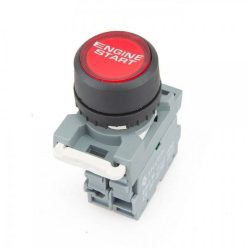
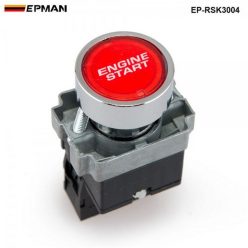
Single Switches are perfect when you need targeted control without a full panel—aux lighting, fans, pumps, winches and other auxiliaries. The range includes mini/standard rockers, chrome toggles, and metal push-buttons (19/22 mm) with LEDs. Standalone parts keep builds modular, easy to service and simple to expand, while safety covers prevent accidental activation.
Most models suit both 12 V and 24 V systems with typical ratings of 5–20 A. LED backlighting and status indicators improve night-time usability; colour can be matched to function. Accessories—protective caps and plug housings—speed up installation and maintenance.
Technical Basics
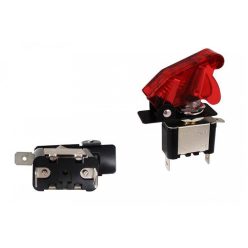
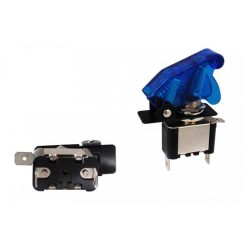
Rocker switches usually provide ON–OFF or ON–OFF–ON functions; momentary actions spring back and are safer for winches. Toggle types mount via a threaded bushing and panel nut, often with LED rings. Metal push-buttons require 19 mm or 22 mm cut-outs and come in latching (ON–OFF) or momentary variants. Housings are typically ABS/polycarbonate or aluminium; contacts are copper/brass with plating for low resistance.
Terminations include 6.3 mm Faston tabs, solder lugs and sealed plug housings. For LED versions, observe correct polarity and nominal voltage (12 V/24 V); otherwise a series resistor may be required. Besides the continuous rating, consider load inrush current, which can be several times higher for a short period.
Common pitfalls: undersized cabling and fuses, switching high currents directly without a relay, sloppy panel cut-outs that loosen over time, and poor earthing causing heat. Avoid these by sizing conductors correctly, relaying high-draw loads, machining accurate apertures and using short, clean grounds.
Selection Criteria
Function — choose latching ON–OFF, three-position ON–OFF–ON or momentary. Lighting often benefits from three positions; winches are safer with momentary.
Current rating — verify the switch rating and the load’s inrush. Above ~10–15 A, drive the load via a relay so the switch carries only control current.
Mounting — confirm cut-out (round 19/22 mm or rectangular rocker), fastening (snap-in or panel nut) and rear clearance. For harsh environments, specify sealed boots and rubber toggles.
Indication — choose backlight and status LEDs to aid operation but avoid glare at night; align LED colours with function.
Visual consistency — keeping to one family maintains a cohesive dashboard and simplifies future replacements.
Installation & Maintenance
Disconnect power. Mark the panel cut-out, drill with the correct tool and deburr edges. Size the cable gauge to the expected load (e.g., 10–15 A → 1.5–2.5 mm²) and fit a fuse on each branch close to the load. Use relays for high-draw or inductive accessories and protect coils with a flyback diode.
Crimp with a quality ratchet tool and secure with heat-shrink. Prepare a short, clean earth using a star washer. During commissioning, measure loaded voltage drop; ~0.5 V or more indicates the need for thicker wiring or better grounding.
For upkeep, re-torque fixings periodically, inspect for heat discolouration or softened plastics, and clean with neutral detergents—avoid aggressive solvents that can haze lenses or remove legends. If an LED flickers or dims, verify supply voltage and ground integrity.
FAQ
Q: Can a 12 V switch be used on 24 V?
A: Only if specified by the manufacturer. For LED versions, confirm the LED’s nominal voltage or add a suitable resistor.
Q: When do I need a relay?
A: For loads above ~10–15 A or for inductive devices (compressors, winches, large light bars) use a relay or solid-state driver.
Q: What are common cut-out sizes for metal push-buttons?
A: 19 mm and 22 mm are most common—check the product sheet.
Q: Difference between latching and momentary?
A: Latching (ON–OFF) stays in position; momentary returns when released.
Q: How should I wire the LED indicator?
A: Follow the pinout; LEDs are polarity-sensitive. Many switches separate backlight and status LED terminals.
