
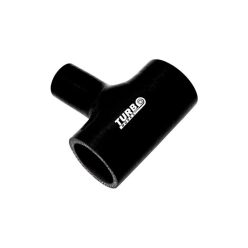
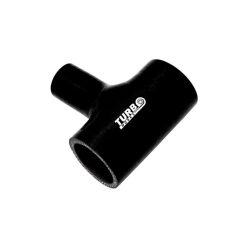
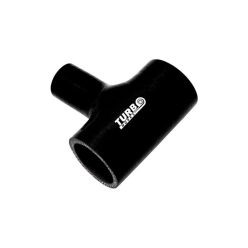
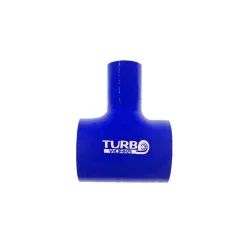
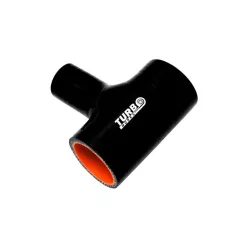
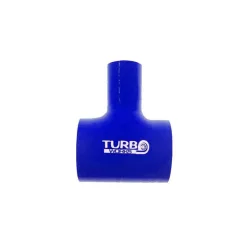
Silicone T couplers (a T-shaped silicone branch joiner) connect a main line with a side branch in charge-air or coolant systems when you need a sealed junction with some compliance for vibration.
Select by the three internal diameters (inch/mm), leg lengths and wall thickness, then allow enough straight engagement for proper clamp seating on every side.
Verify exact dimensions and specifications on the product card; in-stock items dispatch fast within the EU.


Net price: 10 €
Net price: 10 €

Net price: 9 €

Net price: 9 €
Net price: 10 €

Net price: 10 €

Net price: 11 €
Silicone T Couplers: A Sealed Branch with Stress Relief
A silicone T coupler (often searched as a “silicone T coupler”, i.e. a T-shaped branch joiner) is used when a main pipe needs a controlled side take-off without turning the joint into a rigid stress point. The silicone section can help accommodate vibration and thermal movement so the sealing faces are less likely to be disturbed over heat cycles.
Typical applications include charge-air branch lines for control/sensor plumbing and coolant branches for auxiliary loops. Construction varies by product version, so match the media and temperature environment using the product card specifications.
Technical background: why the third leg matters
With a T-piece, you have three sealing interfaces and often three clamps, so the side leg sizing and routing affect the stability of the whole joint. A beaded pipe end and correct clamp placement can reduce the tendency for the hose to creep on pulsating or higher-load circuits.
- Three diameters: measure pipe ODs and choose matching hose IDs for all legs.
- Engagement length: ensure each leg has enough insertion so the clamp compresses over supported material.
- Packaging: account for outside diameter and clamp width in tight bays.
Avoid petroleum-based sprays/solvents on sealing surfaces, as they can leave a slippery film and reduce clamp grip.
Quick selection guide
Start by confirming whether it’s for charge-air or coolant routing, then measure the main line OD and the branch line OD. Pick a T-coupler where all three IDs and leg lengths fit your layout, and where there is enough straight run for clamps on every side.
- Equal main, smaller branch: common for control/sensor take-offs.
- Equal all legs: useful where flow is split evenly and space allows.
- Tight space: prioritise clamp access and straight engagement length.
Installation and failure-prevention tips
Dry-fit first to avoid twisting the coupler, and route the branch so it does not side-load the main legs. Position clamps behind any bead (not on top of it), and make sure each leg is inserted evenly on the sealing surface with burr-free pipe ends.
degrease using a manufacturer-recommended cleaner, then allow to dry completely before applying load/boost
If a leak or slip occurs, symptoms are typically a hiss/whistle, unstable boost, or a damp joint; prevent it by using a clean, dry sealing surface, correct sizing, a clamp style matched to the joint, and beaded pipe ends where possible, then re-check after the first heat cycle.
If you need to compare more coupler styles, use the main category filters to narrow by size and type.
PRO TIP: On charge-air builds, support the branch line with a small bracket or a fixed section so the T-coupler isn’t acting like a hanger; it often improves long-term sealing stability.
FAQ
What is a silicone T coupler used for?
It creates a sealed branch from a main line while keeping a degree of compliance for vibration and thermal movement. Common in charge-air and coolant routing when a side take-off is required.
Which measurements do I need before ordering?
Measure the pipe outside diameters for the main legs and the branch leg, then choose matching internal diameters. Also check leg lengths and wall thickness for clamp clearance and packaging.
How is a T coupler different from a straight coupler?
A straight coupler joins two pipes in-line, while a T coupler adds a third leg for a branch line. That means more interfaces to seal and more sensitivity to routing and clamp positioning.
What is the most common failure or mistake?
Poor clamp positioning or fitting on a surface that isn’t properly degreased can allow the coupler to creep. Signs include a hiss/whistle, boost drop, or visible dampness; correct by cleaning, drying, and ensuring proper insertion and clamp placement.
Quick diagnostic checklist for a suspected leak
Confirm each leg has full insertion, clamps sit behind the bead, and the branch routing isn’t pulling sideways. Check the joint is clean and dry, then re-check after a short test run.
