
The SEAT – MTS Technik lowering springs category mainly covers Seat Cordoba (6K1, 6K2, 6K5, 6L2) models with chassis-specific lowering spring kits offering 30/30, 40/40 or even 60/40 mm drops. These drops lower the centre of gravity, reduce body roll and noticeably sharpen cornering stability. Tuned for road use, MTS Technik springs provide a sportier feel while keeping everyday usability and comfort at a sensible level.
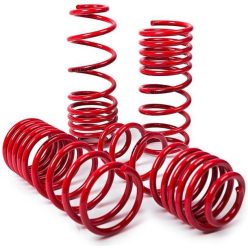
Net price: 162 €
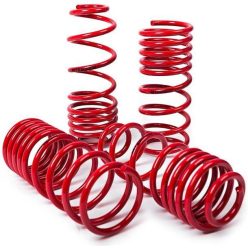
Net price: 156 €
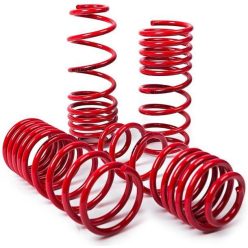
Net price: 137 €
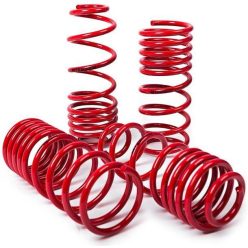
Net price: 145 €
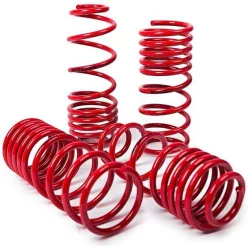
Net price: 140 €
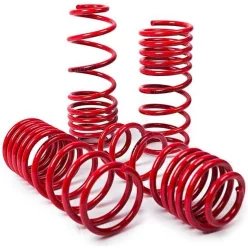
Net price: 148 €
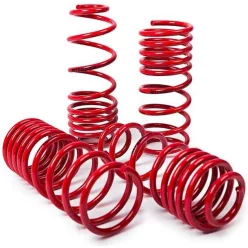
Net price: 150 €
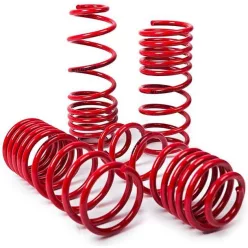
Net price: 148 €
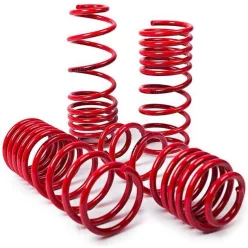
Net price: 150 €
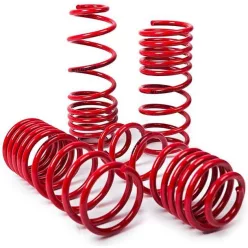
Net price: 164 €
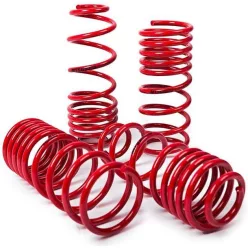
Net price: 164 €
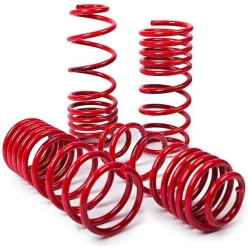
Net price: 162 €
Benefits and applications of SEAT lowering springs
The SEAT – MTS Technik lowering springs are aimed at owners who want to bring out the naturally sporty character of SEAT models. Factory suspension on Seat Cordoba (6K1, 6K2, 6K5, 6L2) variants is typically tuned with comfort and generous ground clearance in mind, which can lead to noticeable body movement during spirited driving. A well-chosen lowering spring kit dropping the car by 30–60 mm lowers the centre of gravity, tightens body control and makes steering feel more precise. With moderate drops, the car remains practical for everyday use while looking and feeling significantly more dynamic.
Technical Basics
MTS Technik lowering springs are made from high-strength spring steel with multi-stage heat treatment and durable corrosion-resistant coatings to withstand long-term use and winter conditions. For various Seat Cordoba generations, kits with 30/30, 40/40 and 60/40 mm drops are available, indicating front and rear ride-height changes compared with stock suspension. Spring rates are matched to each model’s axle-load data, engine variant and body style so that they can work effectively with OE or uprated dampers. A key warning is that the more you lower the car, the less ground clearance and suspension travel remain, increasing the risk of underbody or bumper contact over speed bumps and steep driveways.
Selection Criteria
Selecting the correct SEAT lowering spring kit begins with identifying the precise model, body style, engine and production year. Lightweight, small-engine variants and heavier, better-equipped versions demand different spring characteristics, so using chassis-specific part numbers is crucial. For everyday road use, drops of around 30–40 mm generally provide the best compromise between improved stability and practical ground clearance. More aggressive 60/40 mm setups suit drivers who knowingly accept a firmer ride and reduced clearance in exchange for a very sporty stance and sharper responses.
Installation & Maintenance
Professional installation of lowering springs on SEAT models is strongly recommended, as complete spring-and-damper assemblies must be removed and refitted safely. MacPherson front struts must be compressed and reassembled correctly, and rear springs should be installed using the right tools and procedures. It is important to respect factory torque specifications and to check shock absorbers, top mounts, bushes and bump stops, as firmer springs subject these components to higher dynamic loads. After installation, a full wheel alignment (toe, camber and, where applicable, caster) is mandatory to maintain stability and avoid uneven tyre wear; periodic inspections of spring coating and mounting points help ensure long-term reliability.
FAQ
How much should I lower a road-driven SEAT Cordoba?
For daily use, a drop of around 30–40 mm usually offers the best balance between sharper handling and workable ground clearance. It clearly improves stance and stability without making normal speed bumps and ramps unmanageable. More extreme 60/40 mm drops are better suited to good roads and owners who understand the compromises.
Can I keep my OEM dampers with MTS Technik springs?
With a moderate 30–40 mm drop and healthy factory dampers, many SEAT models can safely retain their OE shocks. On higher-mileage cars or with more aggressive drops, upgrading to sport dampers is recommended to maintain control and avoid bottoming out. A matched spring-and-damper package typically provides the most predictable and durable setup.
How does comfort change after lowering a SEAT?
Lowering springs make the ride firmer, so potholes and sharp edges are felt more directly, especially with low-profile tyres. In return, the car rolls less in corners, feels more stable under braking and delivers more precise steering feedback. Drivers who prioritise comfort should choose a modest drop and avoid extreme wheel-and-tyre combinations.
Will lowering my SEAT increase tyre wear?
Tyre wear can increase if wheel alignment is not corrected after lowering, typically through excess negative camber or unsuitable toe values. A careful geometry setup immediately after installation and periodic checks help keep tyre wear close to stock levels. Any rapid inner-edge wear or pulling to one side indicates that alignment needs attention.
Is approval required to lower a SEAT for road use?
Requirements depend on local regulations and vehicle inspection rules in your country. TÜV or ECE-approved springs and keeping the documentation in the car often simplify inspections. When in doubt, consult an inspection station or suspension specialist familiar with modified SEAT models.
