
Screw-fitted black bolt-on wheel spacers (black bolt-on spacers) are hub-mounted spacer sets that move the wheel outward while matching wheel-bolt vehicle layouts. This subcategory is aimed at builds where correct seating and clean hub location matter as much as the stance change itself.
Your main checks are PCD, centre bore, thickness and the wheel’s inner profile. Verify exact dimensions and specifications on the product card; in-stock items dispatch fast within the EU.
Before fitting, inspect the hub and wheel mating faces, because corrosion, coating build-up or burrs can reduce seating accuracy and affect how the assembly centres.
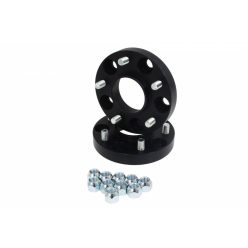
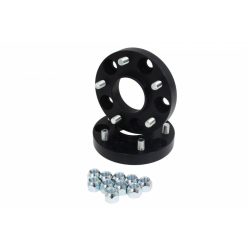
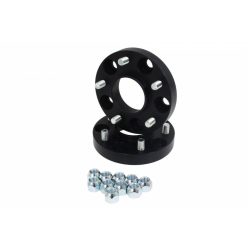
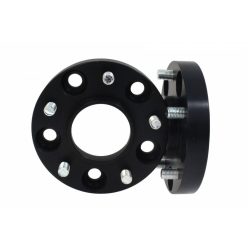
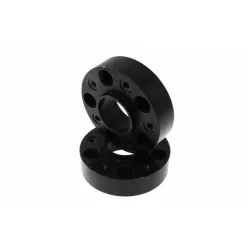
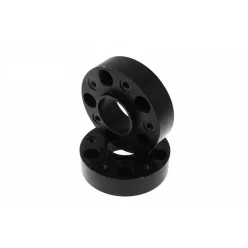
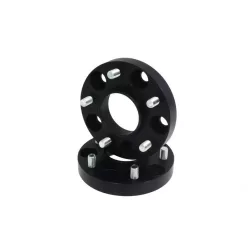
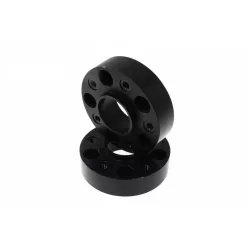
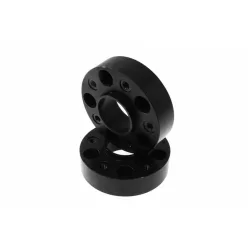
Screw-fitted Black Bolt-On Wheel Spacers – Size Selection, Fitment and Installation Guidance
This hub-mounted black wheel spacer is often referred to by builders as a black bolt-on spacer, and it suits applications where the wheel spacer needs to match a wheel-bolt fastening layout. The right choice is not only about moving the wheel outward, but also about how the spacer seats on the hub, supports accurate centring and works with the original fastening geometry of the car.
Technical background and system integration
The hub-centric interface matters because a screw-fitted spacer does more than add track width; it creates a new contact layer between hub and wheel. If hub-side and wheel-side fitment are not right, the assembly may still bolt together, yet running accuracy and load distribution can become less controlled.
From a load path perspective, the spacer becomes part of the whole wheel assembly, so the contact face, centre bore, bolt seat and the first turns of the threads all influence how the connection behaves. On both road and track use, even seating and proper centring can help the system respond more consistently under changing loads.
The current size range in this subcategory typically covers 20, 25, 30, 40, 45 and 50 mm options, commonly in 5x112 and 5x120 PCD patterns with 57.1 mm, 66.5 mm and 72.6 mm centre bores. That is why thickness should always be checked together with bolt pattern and centre location.
- PCD: the bolt pattern must match both the vehicle and the wheel correctly.
- Centre bore: hub-side fit and wheel-side centring both depend on the correct pilot size.
- Thickness: check not just stance, but also arch, suspension and brake clearance.
How to choose the right one
Quick selection guide: start by filtering for thickness, then confirm PCD, centre bore and the detailed hub and wheel information shown on the product card. On a leaf page like this, filters and product cards are the most reliable route to the correct option.
product-card check is essential, because two spacers with the same thickness can still differ in bolt pattern, centring dimensions and fastening details. If the factory data is unclear, measure the hub-side and wheel-side dimensions first, then narrow the list.
Installation and failure-prevention tips
clean threads and flat faces should come first: clean the hub face, the centring area, the wheel contact face and the thread starts, then dry-test the spacer before final assembly. In this mechanical category, a progressive criss-cross tightening routine and a follow-up inspection after initial use matter more than any generic torque figure.
common issue appears when the spacer does not sit fully flat on the hub because corrosion, old coating, burrs or an incorrect centre bore interrupts the fit. In that case the joint can preload unevenly during tightening, so trial fitting, checking full seating and re-inspecting the hardware after first use are the key prevention steps.
visual inspection should include the bolt-seat shape, the first turns of the bolts and whether the wheel back face clears the spacer design properly. The black finish works well in darker wheel setups, but dimensional fit and centring accuracy still matter more than appearance.
PRO TIP: If the car sees both road and track use, check inner and outer clearance at full steering lock and through suspension movement before committing to the final thickness.
FAQ
What does screw-fitted mean in this category?
In this subcategory you are looking at hub-mounted black bolt-on wheel spacers intended for wheel-bolt based vehicle layouts. Final compatibility should always be confirmed from the product-card dimensions and design details.
Which measurements should I confirm before ordering?
At minimum, check PCD, centre bore, thickness and the wheel’s inner design. It is also worth checking the available room around the brake package and under the arch.
What is the most common failure or installation mistake?
Start with a short checklist: does the spacer sit fully flat, is the centring lip clean, do the bolts start smoothly, and was the tightening done evenly. Then inspect the wheel seat and re-check the assembly after the first miles for contact marks or uneven seating.
When should I look beyond a 20 mm option?
A thicker spacer can make sense when the desired wheel position, brake or suspension proximity, or arch relationship requires it. Thicker is not automatically better; it only works well when the whole package still fits and moves correctly.
Is there any difference between the black finish and other finishes?
The black finish mainly changes visual integration behind the wheel. For selection, accurate fitment, centring quality and the correct fastening logic remain the more important factors.
