
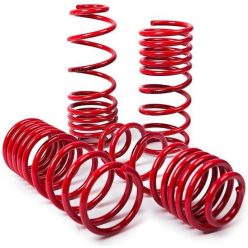
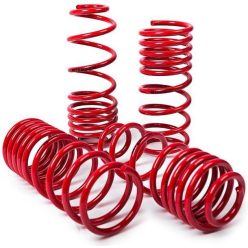
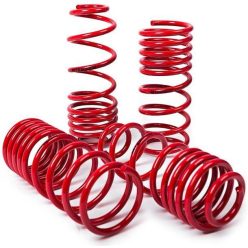
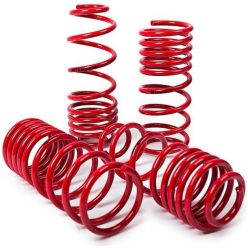
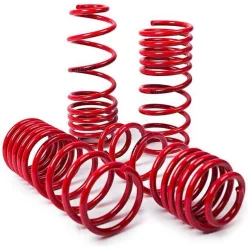
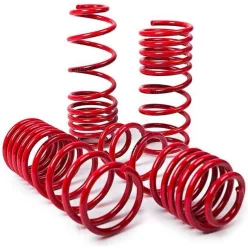
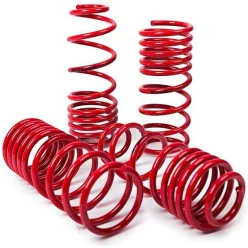
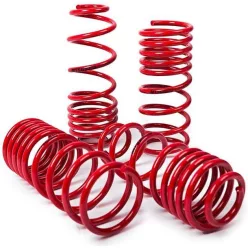
The Renault – MTS Technik lowering springs category covers classic and youngtimer models such as the Renault 5, 11, 19, 21 and 25 with various drop options (for example 35/–, 40/40, 60/– mm). These chassis-specific lowering spring kits reduce ride height, lower the centre of gravity and improve cornering stability. Tuned for fast-road use, MTS Technik springs make the suspension firmer and more precise while keeping everyday usability.
Net price: 127 €
Net price: 108 €
Net price: 87 €
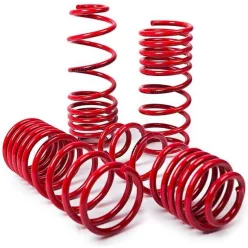
Net price: 111 €
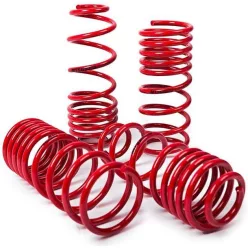
Net price: 115 €
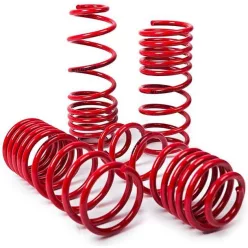
Net price: 92 €
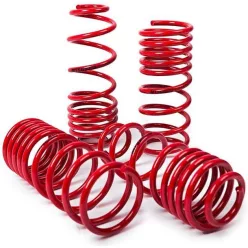
Net price: 409 €
Net price: 406 €
Net price: 404 €
Benefits and applications of Renault lowering springs
The Renault – MTS Technik lowering springs are designed for owners who want a sportier feel from their classic Renault chassis without losing day-to-day usability. Models such as the Renault 5, 11, 19, 21 and 25 often leave the factory with suspension tuned for comfort and generous ground clearance, which can mean noticeable body roll during spirited driving. A carefully chosen lowering spring kit typically drops the car by 25–60 mm, lowering the centre of gravity and making body movements more controlled. With moderate drops, comfort remains acceptable, but the driving experience becomes much more in line with the character of sportier Renault variants.
Technical Basics
MTS Technik lowering springs are manufactured from high-strength spring steel and receive multi-stage heat treatment plus durable anti-corrosion coatings. Renault applications are tuned to specific axle loads, engine variants and body styles so that spring rates match the car’s weight distribution. Drop values such as 35/– mm, 40/40 mm or 60/– mm describe how much lower the front and rear axles sit compared with stock suspension. The dash indicates setups where the rear height depends on axle design and must be set during installation. A key warning is that larger drops reduce both ground clearance and available suspension travel, increasing the risk of underbody contact over speed bumps and steep ramps.
Selection Criteria
When choosing a Renault lowering spring kit, start by identifying the exact model (for example Renault 5, 11, 19, 21, 25), year, engine and body style. Lighter, small-engine cars and heavier, higher-output versions require different spring characteristics, so using model-specific kits is essential. For road use, drops around 30–40 mm offer the best compromise between handling gains and usable ground clearance. More aggressive 60 mm setups provide a very low stance and sharper response but demand careful wheel and tyre selection and more attention to road conditions.
Installation & Maintenance
Professional installation of lowering springs on Renault models is strongly recommended, as complete spring-and-damper assemblies must be removed and refitted correctly. During the work, shock absorbers, top mounts, bushes and bump stops should be inspected and replaced if worn, because stiffer springs place higher dynamic loads on these parts. After installation, a precise wheel alignment – including toe, camber and, where possible, caster – is mandatory to maintain stability and avoid irregular tyre wear. Periodic checks of spring coating, spring seats and mounting points are advisable; any clunks, knocking noises or floaty behaviour are clear warnings that the suspension should be inspected before the car is driven hard.
FAQ
How much should I lower a road-driven Renault 19?
For a daily-driven Renault 19, a drop of around 35–40 mm usually offers the best balance between sharper handling and practical clearance. It clearly improves stability and stance while still allowing the car to deal with speed bumps and driveways. More extreme drops are best suited to good roads and experienced owners who understand the compromises.
Can I keep my OEM dampers with MTS Technik springs?
With a moderate 30–40 mm drop and healthy original dampers, many Renault models can safely retain their factory shocks. On high-mileage vehicles or with larger drops, upgrading to sport dampers is recommended to maintain damping performance and prevent bottoming out. Matching springs and dampers as a package usually delivers the most consistent and durable result.
How does comfort change after lowering a Renault?
Lowering springs make the suspension firmer, so rough surfaces and sharp edges are felt more clearly than with soft stock springs. In return, body roll and pitch are reduced, braking stability improves and steering feels more precise. Drivers who value comfort highly should choose a modest drop and avoid extreme wheel-and-tyre combinations.
Will lowering my Renault increase tyre wear?
Tyre wear can increase if wheel alignment is not corrected after lowering, typically via excess negative camber or unsuitable toe settings. A proper alignment immediately after installation and regular checks help keep tyre wear close to stock levels. Any rapid inner-edge wear or pulling to one side is a sign that geometry needs attention.
Is approval required to lower a Renault for road use?
Legal requirements depend on your country’s local regulations and inspection rules, so they should always be checked before modifying suspension. TÜV or ECE-approved springs and keeping the documentation in the car often simplify inspections. When in doubt, an inspection station or suspension specialist familiar with modified Renaults can provide guidance.
