
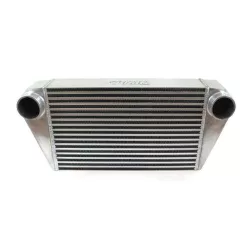
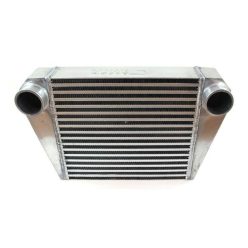
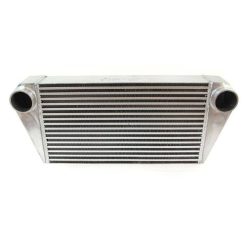
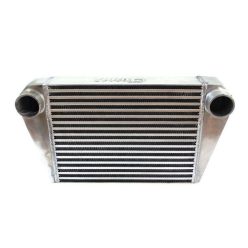
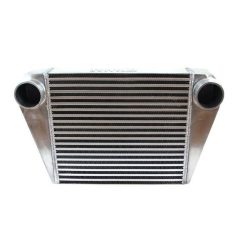
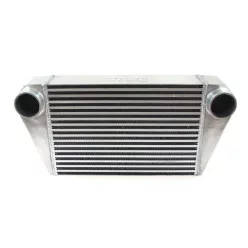
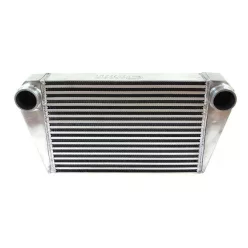
A rear port intercooler (backward intercooler) is a universal air-to-air core with the outlets facing toward the rear, helping many front-end builds keep the charge piping shorter and tidier behind the bumper or slam panel. It suits layouts where the pipes need to turn rearward soon after the core instead of exiting outward beside it.
Package space first: choose by core size, pipe diameter, clamp clearance and outlet direction together, because fitment depends on the whole route rather than one single dimension. Verify exact dimensions and specifications on the product card; in-stock items dispatch fast within the EU.
Avoid side-load on the couplers by leaving room for clamps, confirming bead-rolled pipe ends and allowing for engine movement before final tightening.
Net price: 121 €

Net price: 121 €
Net price: 164 €

Net price: 164 €
Net price: 136 €
Net price: 136 €
Net price: 142 €
Net price: 142 €
Net price: 180 €
Net price: 180 €
Net price: 129 €
Rear Port Performance Intercoolers for Shorter Charge Pipe Routing
Rear-facing outlets: these universal charge-air coolers place the connections toward the back of the core, which can help a turbo build route the pipework more neatly with fewer awkward turns. They are especially useful when the slam panel, headlamp housings or bumper structure limit how far outward the pipes can leave the intercooler.
Technical background and system integration
Layout logic: a rear port design is only the better choice when the turbo, radiator pack and pipe route support it. In the right package space it can shorten unnecessary pipe length and reduce the number of tight bends close to the end tanks.
Heat and flow: core size should be judged as a whole package of frontal area, thickness and route quality. An oversized core can create packaging compromises, while an undersized one may reach its comfort zone sooner in hot ambient conditions or repeated load.
- Core size: measure the real opening and mounting area, not just the visible gap through the grille, because brackets, horns and bumper reinforcement often reduce usable space.
- Outlet direction: rear-facing ports work best when the pipe can turn away cleanly behind the core without the clamp or coupler touching nearby bodywork.
- Finish: silver and black versions are available in many ranges, and the right choice is usually about packaging, appearance and project style rather than blanket performance claims.
How to choose the right one
Quick selection guide: if you want to compare the broader range first, start in Universal Air-to-Air Intercoolers and narrow the search by available space, outlet direction and the path your pipework needs to follow. For this type, the key question is whether it still fits with the clamps installed, not just whether the core itself can be made to fit.
Filters and product cards: check outer core dimensions first, then inlet and outlet size, then core thickness. The product card should confirm whether the rear port layout actually reduces bends in your own build instead of only looking compact on paper.
- Width: measure between real obstacles behind the bumper, not edge to edge of the whole opening.
- Height: confirm clearance to the bumper bar, ducting and number-plate area before choosing a taller core.
- Thickness: include radiator, A/C condenser, fan and bend radius clearance, because space is lost both in front of and behind the intercooler.
Installation and failure-prevention tips
Pipe path and support: a rear port intercooler works best when the pipe does not kink immediately after the outlet and the system is properly supported as a whole. If you are planning the route from scratch, Intercoolers and Pipe Kits can help you map a cleaner installation.
Typical mistake: if the coupler is too short, the clamp sits too close to the edge, or the pipe pulls the joint sideways, load can bring rotation, oily misting or intermittent boost loss; better straight-line approach, more seating length and proper support reduce that risk.
Degrease using a manufacturer-recommended cleaner, then allow to dry completely before applying load/boost. Then set the couplers on clean, burr-free surfaces and make sure the joint is not pre-loaded when the engine moves in its mounts.
PRO TIP: mock up the core outline and initial pipe angle with cardboard or masking tape before drilling brackets; it shows very quickly where clamp clearance disappears in the real car.
Frequently asked questions
Why choose a rear port intercooler?
It suits builds where the charge pipes need to run rearward behind the intercooler rather than leaving to the outer sides. That can make the front-end package cleaner and reduce awkward routing compromises.
When is rear port better than same side?
Rear port is usually the better layout when both pipes can turn rearward cleanly behind the core. If one side has very little rear clearance, a same side arrangement may be easier to package.
How should I choose between 65, 76 and 102 mm thickness?
Do not choose thickness in isolation. Look at frontal area, available space, target power level and pipe route together, because a thicker core can also create extra packaging and airflow compromises.
What is the most common failure or installation mistake?
Check that the pipe end has a proper bead, the coupler has enough engagement length, the clamp is not hanging off the edge, and the joint still has clearance for engine movement. That short inspection prevents a lot of rework later.
What quick diagnostic checklist should I use after installation?
Inspect bracket security, body clearance, clamp position and any oily residue around the joints after a loaded drive. If you log data, rising intake temperatures or inconsistent boost behaviour can also point to routing or mounting issues that need refinement.
