
The PTFE (Teflon) Fuel & Oil Line Fittings category is for AN-style components designed specifically for PTFE-lined fuel and oil hoses, where correct sealing and material compatibility matter.
You’ll typically find hose ends (straight, 90°), olive inserts, and common sizes such as AN-6, AN-8, AN-10, AN-12 (brands include Aeromotive, DeatschWerks, TurboWorks).
Use the filters by brand, stock and price, then sort by price or name to narrow down quickly.
Pick the size and angle you need, then add the fittings to your cart.
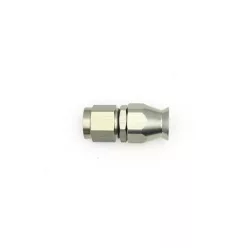


Net price: 7 €

Net price: 8 €


Net price: 57 €

Net price: 33 €

Net price: 60 €
PTFE (Teflon) Fuel & Oil Line Fittings – what they’re for and what to watch out for
PTFE (Teflon) liners are often chosen when the fluid and environment are demanding and you want a robust, low-permeation setup for fuel (including ethanol blends) or engine oil. Because PTFE behaves differently from rubber/CPE hose, you need the correct hose end design and the right sealing surfaces to avoid leaks.
This category focuses on AN sizing (commonly AN-6 to AN-12) with straight and 90° hose ends, plus olive inserts that help the PTFE liner seat properly. If you’re building a track, drift, or street performance fuel system, correct fittings and assembly technique are as important as the hose itself.
Technical Basics
A PTFE liner is firmer and doesn’t “bite” like rubber, so many assemblies rely on an olive insert (ferrule/olive) or PTFE-specific support components. PTFE hose is often paired with braided outer reinforcement, which protects the line but can fray during cutting if you don’t control it.
AN fittings typically seal on a 37° flare surface rather than on the threads, so surface condition and correct mating are key. Warning: for flare sealing, PTFE tape on the threads is usually not the solution; for tapered threads (e.g., NPT), use the manufacturer-recommended sealant instead. Mixing standards or forcing a mismatch is a common cause of weeps and damaged sealing cones.
A frequent pitfall is mixing systems: a PTFE hose end won’t seal correctly on rubber/CPE hose, and the reverse is also true. The same applies to ports and threads: AN/JIC, ORB and metric ports may require the correct adapter, chosen based on the exact pump, regulator, rail, or filter specifications.
Selection Criteria
Start with sizing: AN-6 can be suitable for many street builds, while higher power targets often move to AN-8 or AN-10 to reduce restriction. Don’t size by guesswork—match the hose and fittings to your expected flow, pump outlet, and system layout (return vs returnless).
Angle choice affects both packaging and reliability: a 90° hose end can reduce kinking and improve routing in tight bays, while a straight end is simpler and often easier to service. Where alignment is tricky, a swivel style can help prevent hose twist during tightening.
Material and finish matter in real-world use: anodised aluminium is common in motorsport, while stainless can be preferred in harsher environments. If you’re unsure about port type or compatibility (metric vs ORB vs AN), verify thread and sealing type before ordering and follow the component manufacturer’s drawings.
Installation & Maintenance
Cutting and prep are where many PTFE leaks start: aim for a clean, square cut and keep the braid under control with proper cutters and simple measures (e.g., wrapping) to prevent fraying. During assembly, the olive insert must seat correctly; if it’s mispositioned, the joint may leak once pressurised.
After installation, leak-check cold and after a short heat cycle: begin with a low-pressure test and re-check once the system has run. Route the line away from sharp edges and heat sources, and secure it so vibration can’t work the joint loose—this is especially important in a fuel system.
For maintenance, periodically inspect threads, the 37° sealing cone, and the hose outer for abrasion. If you disassemble a joint, keep sealing surfaces clean and confirm the fitting hasn’t been over-tightened or damaged.
FAQ
Which size should I choose: AN-6 or AN-8 for fuel?
Many street builds work well with AN-6, but higher power setups often prefer AN-8 to reduce pressure drop. Check your pump outlet, regulator/rail ports, and whether adapters are required, because port sizes can dictate your final routing. Consider the full system, not just one section of hose.
Is PTFE suitable for ethanol fuels (E85)?
PTFE is commonly chosen for E85 and ethanol blends due to its chemical resistance and typically lower odour permeation. Even so, use PTFE-specific fittings and confirm compatibility per the manufacturer’s spec. Always pressure-test a fuel system after assembly.
Do I need PTFE tape on AN fittings?
Most AN joints seal on a 37° flare, so tape on threads usually won’t help and can cause issues. For tapered threads (like NPT), use the sealant recommended by the component manufacturer instead. Identify the sealing method before applying any sealant.
What is an olive insert and when is it required?
An olive insert helps a PTFE liner seat and seal correctly inside a PTFE-type hose end. It must match the exact size (e.g., AN-6 is not interchangeable with AN-8). Incorrect sizing or seating is a common cause of leaks.
Why does my PTFE hose end weep after installation?
Typical causes include a mis-seated olive insert, a damaged 37° sealing surface, or mixing PTFE and non-PTFE components. Re-check the cut quality, cleanliness, and that the fitting size truly matches your AN hose and ports. A controlled pressure test will help pinpoint the leak location.
Once you’ve confirmed size, angle, and compatibility, choose your PTFE fittings and build a clean, leak-free fuel or oil line setup.
