
A exhaust flex pipe (flexible exhaust connector) is a stainless compensating section that can help absorb vibration and thermal movement within the exhaust system. On this page you can compare PRO 304SS options typically covering roughly 1.75in-3.5in (45-90 mm) diameters and 4in-10in (100-250 mm) lengths.
To choose the right one, focus on the inside diameter, the effective length and how much free movement the installation area allows; a very short unit may absorb less movement, while a longer one can ask for more routing space. Verify exact dimensions and specifications on the product card; in-stock items dispatch fast within the EU.
For durable service, do not weld it preloaded, and leave enough room for natural exhaust movement so the welds, manifold area and hangers carry less unwanted stress. Use the filters first, then confirm the exact fitment on the product card.
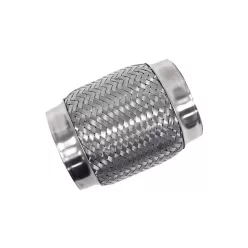
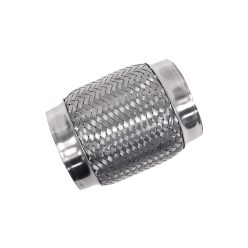
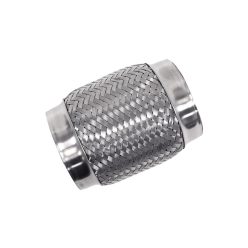
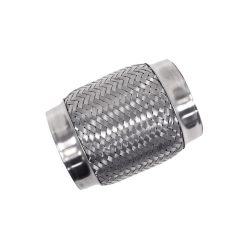
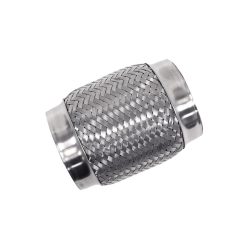


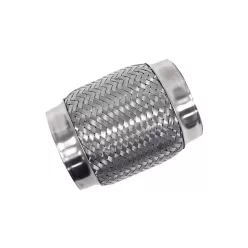
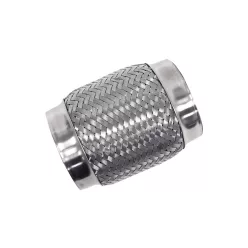
PRO 304SS Exhaust Flex Pipes: Vibration Control, Thermal Movement and Lower System Stress
The PRO 304SS range works as a stainless compensator within the exhaust line, helping the system deal with vibration and heat-related movement rather than forcing every load into rigid welded sections. When sized and positioned well, it can reduce the stress seen by nearby welds, manifold-side parts and the rest of the pipework.
On this page you are choosing between products with the same core selection logic but different diameters and lengths, so the real decision is based on fitment, movement and available space. For a custom road or track build, this matters more than the product name alone.
Technical background and system integration
System role: an exhaust flex pipe is useful because it can help the exhaust cope with engine rock, resonance and thermal expansion. That can make the overall movement of the system more controlled and may reduce side-load on rigid joints.
Thermal movement: around the manifold, downpipe or post-turbo area, the exhaust line can change position noticeably as temperatures rise. The flex section therefore needs both physical room and a sensible location, not just enough space to be welded in.
- Diameter: match the nominal internal diameter to the real pipe size in the car, because even a small mismatch can create awkward fabrication compromises.
- Length: 4in, 6in, 8in and 10in style lengths suit different jobs; shorter pieces fit tighter spaces, while longer ones may absorb movement more progressively when the packaging allows it.
- Material context: it works best as part of a coherent stainless exhaust build where the surrounding pipes, welds and supports follow the same fabrication logic.
- Support: a flex section does not replace a proper hanger layout; the rubber mounts, brackets and supporting points still define long-term durability.
How to choose the right one
Quick selection guide: start by measuring the actual exhaust pipe and checking the connection style you are fabricating around, then choose the flex pipe by its nominal inside diameter. This page is not split into separate subcategories, so the filters and product cards are the clearest path to the correct size.
Packaging space: check how much straight pipe is available for welding and whether the flex section will still have room to move naturally once installed. In a very tight area a shorter unit may package more easily, but only if it does not force the rest of the exhaust into an unnatural position.
Build context: road car, track car and vibration-sensitive custom fabrication can each point to a different ideal length and location. On the product card, confirm whether you need roughly 45 mm, 51 mm, 57 mm, 60 mm, 63 mm, 70 mm, 76 mm or 90 mm, then match the listed length to the section you plan to replace.
Installation and failure-prevention tips
Dry assembly: before final welding, assemble the surrounding pipework and make sure the flex pipe sits in a neutral position. It should not need to be twisted, bent sideways or pulled into place just to meet the adjoining sections.
Location: place the flex section where it can actually absorb movement, while still being protected from impact and poor ground clearance. A section trapped between overly rigid supports or hanging in a long unsupported span is rarely the best arrangement.
Common failure: when the flex pipe is welded into the system with a slight twist or preload, the braid and end sections can carry more load once heat builds, weld areas may see extra stress and the exhaust can develop harsher resonance. This is usually prevented by dry fitting, tack-weld checks in the neutral position and reviewing the hanger layout before final welding.
PRO TIP: if the flex pipe sits close to the manifold or post-turbo section, make sure the downstream exhaust still has organised support, so one component is not forced to carry the movement of the entire system on its own.
FAQ
How do I know which diameter I need?
Always begin with the real pipe size already on the vehicle and the connection style used in your fabrication plan. On the product card, confirm whether the stated value refers to the internal diameter and whether that dimension matches the way you intend to weld the part into the system.
How do I choose the right length?
Length is not only about what physically fits in the gap; it also affects how the section can deal with movement. A shorter unit can suit tighter packaging, while a longer one may be easier to integrate where more controlled movement is needed and space allows it.
Should I choose PRO 304SS or reinforced 304SS?
That depends more on the build and expected use than on a fixed hierarchy. Where the exhaust is likely to see harder mechanical load, harsher use or less forgiving packaging, many builders also look at reinforced versions; where the goal is a size-matched stainless flex section in a tidy custom system, PRO 304SS can be the right route.
What is the most common failure or installation mistake?
First check whether the pipe ends meet without side-load, then confirm that the flex section still has room for natural movement once the full exhaust is hanging on its mounts. After that, inspect the hanger positions, weld surroundings and whether a rigid neighbouring section is pulling the assembly out of line.
Where is the best place to install an exhaust flex pipe?
Usually it belongs where it can genuinely reduce system stress while staying protected from impact and poor clearance. In many builds that is somewhere around the manifold-side or post-turbo section, but the final position should always be decided from the actual routing of the exhaust on the car.
