
The Porsche – MTS Technik lowering springs category offers kits for classic sports models such as the Porsche 911 (964, 993, 996), 924, 944, 968 and Boxster 986. These chassis-specific lowering spring kits typically provide 20–30 mm drops, further enhancing cornering stability and steering feedback. Designed to complement Porsche chassis philosophy, MTS Technik springs deliver a firmer yet still road-usable suspension setup.

Net price: 293 €

Net price: 285 €
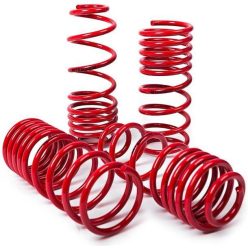
Net price: 257 €
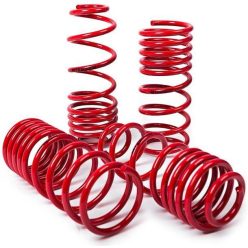
Net price: 136 €
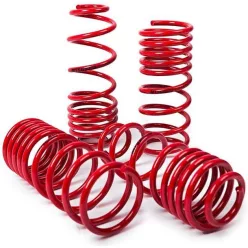
Net price: 158 €
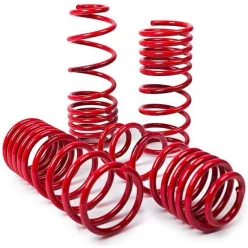
Net price: 145 €
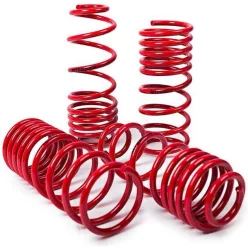
Net price: 201 €
Benefits and applications of Porsche lowering springs
The Porsche – MTS Technik lowering springs are aimed at drivers who want to sharpen the already capable handling of classic Porsche models. On Porsche 911 (964, 993, 996) variants, transaxle cars such as the 924, 944 and 968, and the Boxster 986, factory suspension strikes a balance between comfort and performance. A carefully selected lowering spring kit reduces ride height by around 20–30 mm, lowering the centre of gravity, cutting body roll and making steering responses feel even more precise. The benefits are particularly noticeable on twisty roads, mountain passes and occasional track days.
Technical Basics
MTS Technik lowering springs are manufactured from high-strength spring steel with multi-stage heat treatment and durable corrosion protection. Porsche 911 (964, 993, 996) applications typically offer around 30/30 mm drops, while 924, 944 and 968 kits use values such as 20/– or 30/– mm, and the Boxster 986 commonly sees about 20/20 mm of lowering. These figures describe front and rear ride-height changes relative to stock suspension, with the dash indicating a combined torsion-bar adjustment at the rear on some models. A key warning is that reduced ground clearance, combined with longer overhangs, demands extra care over ramps, kerbs and circuit pit exits.
Selection Criteria
Choosing the correct Porsche lowering spring kit starts with identifying the precise model, body style (Coupé, Cabriolet), engine and suspension configuration (for example Carrera or Turbo). A rear-engined 911 (964 or 993) requires different spring characteristics from a front-engined transaxle 924 or 944, so using model-specific kits is essential. For fast-road and occasional track use, drops in the 20–30 mm range usually provide the best balance between increased stability, grip and usable ground clearance. Drivers planning extensive circuit work should consider matching the springs with sport dampers, uprated brakes and suitable, high-load tyres as part of a complete package.
Installation & Maintenance
Installation of lowering springs on Porsche models should be entrusted to workshops experienced with Porsche suspension systems. MacPherson front struts, multi-link or torsion-bar rear axles and model-specific components require precise disassembly, reassembly and correct torque settings. After fitting the springs, a comprehensive wheel alignment – including toe, camber and caster – is mandatory to preserve straight-line stability and predictable handling at high speeds. Regular inspections of spring coating, seats, bushes and ball joints are recommended; any unusual noises, instability or uneven tyre wear should be treated as a signal to have the suspension checked.
FAQ
How much lowering is suitable for a road-driven Porsche 911 (964 or 993)?
For mixed road use, a drop of around 30 mm usually offers the best compromise. It sharpens handling and improves stance while maintaining enough ground clearance for typical road conditions. More extreme drops can be used but tend to reduce practicality and require more attention to approach angles.
Can I keep my OEM dampers with MTS Technik springs?
With moderate 20–30 mm drops and good-condition original dampers, many Porsche models can retain their OE shocks, especially if they are relatively fresh or refurbished. For high-mileage cars or frequent track use, combining lowering springs with sport dampers is advisable for consistent control. A well-matched spring-and-damper package helps avoid bottoming out and preserves composure at speed.
How does comfort change on a Porsche 924/944/968 after lowering?
Lowering springs make the ride firmer, so bumps and surface imperfections are felt more clearly, particularly with low-profile tyres. In return, body roll is reduced, braking stability improves and steering precision increases, which suits the sporty nature of these transaxle cars. If you regularly drive on poor roads, a modest drop is preferable to maintain some compliance.
Will lowering my Porsche increase tyre wear?
Tyre wear can increase if wheel alignment is not adjusted after lowering, typically through excess negative camber or incorrect toe. A precise alignment and regular checks help keep tyre life close to standard levels. Rapid inner-edge wear or pulling to one side indicates that geometry needs to be corrected.
Is approval required to lower a Porsche for road use?
Legal requirements depend on your country’s local regulations and inspection standards. TÜV or ECE-approved springs often simplify inspections, and keeping the documentation in the car is recommended. When unsure, consult an inspection station or Porsche specialist familiar with modified cars.
