
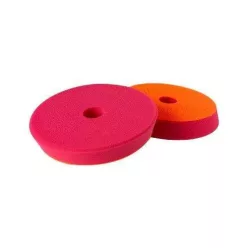
The Polishing Pads range includes foam pads and accessories for machine paint correction. Match pad hardness (cut, polish, finish) to defect level and select the correct diameter for your backing plate—e.g., pads for 125 mm DA plates. We stock ADBL Roller series and Colourlock options, delivering consistent results for cutting and refining stages.


Brief summary + key benefits
The Polishing Pads category helps you correct and refine paintwork safely. By matching hardness and diameter to your tool and paint, you gain predictable cut, better heat management and a uniform finish. ADBL Roller pads and Colourlock options cover the full cycle—cut, polish, finish—so you can move from heavy defect removal to high-gloss refinement with confidence.
Technical Basics
Most pads are made from polyurethane foam with different open/closed cell structures. Cut pads are firmer and remove defects quickly (more heat), polish pads target moderate defects and haze, while finish pads maximise gloss with fine abrasives. Thickness, bevelled or flat edges and centre holes influence cooling and control. Dual-action machines commonly use 125 mm backing plates; pad diameter should slightly exceed the plate to protect edges. Rotary machines build heat faster, so stable foam and proper lubrication are essential. Accurate centering reduces vibration and bearing load.
Foam density and compression resistance determine shape retention under pressure. Open-cell designs improve compound distribution and heat dissipation; tighter cells extend working cycles. The rear hook-and-loop interface is the standard; quality adhesive layers withstand heat and centrifugal forces. Caution: Excessive speed and pressure can cause foam delamination—stay within the manufacturer’s recommended speed range.
Selection Criteria
Defect level: choose a firm cut pad with an aggressive compound for heavy defects; a polish pad for moderate swirls; a finish pad for final jewelling. Machine type: large-throw DA (e.g., 15–21 mm) pairs well with medium/softer pads; rotary benefits from heat-resistant foams and steady technique. Size: match pad diameter to the plate—e.g., for 125 mm DA plates, 135–150 mm pads give good coverage. Edge profile: rounded or tapered pads reduce edge-cutting on curved panels. Material quality: uniform pore structure and heat-tolerant adhesive deliver consistent performance.
Process control: effective correction is staged: cut → polish → finish. Start with a test spot using the least aggressive combo that achieves the goal. Compound compatibility: some foams prefer oilier or wetter polishes; if the pad loads up, cut drops and dusting increases—clean or change pads to restore performance.
Installation & Maintenance
Preparation: align the pad centrally on the hook-and-loop; prime with a small amount of compound. Technique: work in small sections with cross-hatch passes; use moderate pressure and low–medium speed to avoid overheating. Cleaning: after each set, blow out or brush the pad to remove spent abrasives. Rotate multiple identical pads during longer jobs to allow cool-down. Washing: clean with neutral detergent in lukewarm water, no softener; air-dry only. Warning: excessive heat collapses foam and weakens adhesives.
FAQ
Which pad should I start with? Begin with a polish pad on a test spot; step up to cut if needed, or down to finish for refining.
Why is my compound dusting? Usually over-speed, a loaded pad or too little product. Clean the pad, slow down and add a small amount of fresh compound.
How long does a pad last? As long as the foam remains elastic, the hook-and-loop is intact and the face isn’t torn. Replace when delamination or hardening appears.
Can I cut and finish with one pad? It’s not recommended; dedicated stages offer better control and finish quality.
How do I avoid holograms? On rotary, finish with a soft pad at low speed or switch to DA with a finish pad and fine polish.
How often should I wash pads? After every job; during long sessions, clean between sets. Clean pads maintain cut and run cooler.
