
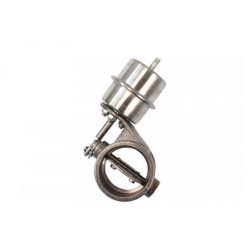
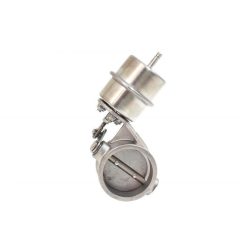
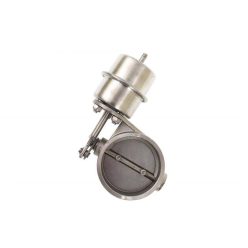
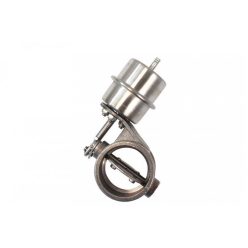
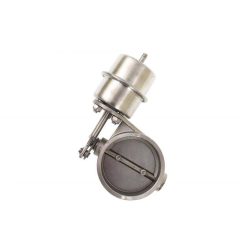
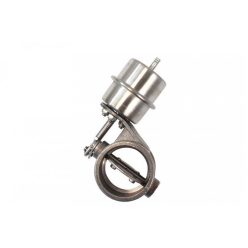
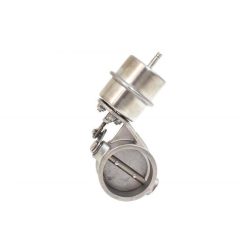
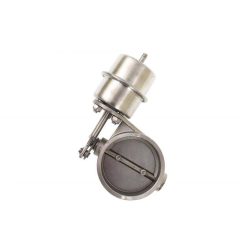
A pneumatic exhaust cutout valve (exhaust bypass valve) diverts exhaust flow so one system can deliver a quieter road manner or a more direct note when required. This category includes 51, 60, 63, 70, 76 and 89 mm options, plus vacuum- and boost-referenced versions in stand-alone valve and complete kit form.
Choose by pipe size, control strategy and fail state: some versions are vacuum open, some vacuum closed, while boost-referenced listings suit builds where manifold pressure is the useful signal. Check default position and packaging space around the actuator, especially if the valve sits just after the catalyst.
Verify exact dimensions and specifications on the product card; in-stock items dispatch fast within the EU. Use filters by size and availability, then confirm the actuation type and kit contents on the product page.
Net price: 39 €
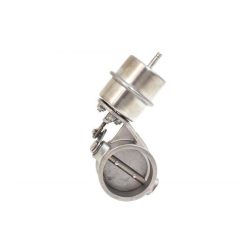
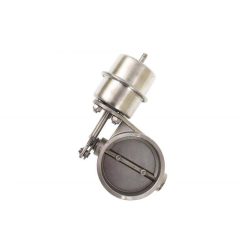
Net price: 39 €
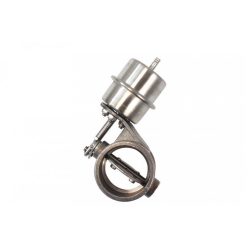
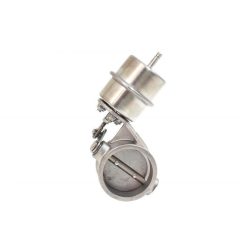
Net price: 39 €
Net price: 39 €
Pneumatic Exhaust Cutout Valves - Exhaust Sound and Flow Path Control
Overview: this category brings together compressed-air-operated exhaust diverter units, in other words exhaust bypass valve style solutions that can alter the gas path according to control logic and use case. Chosen well, they can help manage exhaust note, distribute load within the system and reduce stress on selected exhaust components while keeping the same car usable on the road and for occasional track work.
Technical background and system integration
Operation: pneumatic cutout valves redirect flow through a closing element inside the housing, typically on the section after the catalyst. Because the actuator responds to an external vacuum or pressure reference, valve behaviour depends not only on nominal size but also on signal quality, hose routing and the overall exhaust layout.
Material: the units in this category use stainless SS304 housings, which are a sensible starting point for exhaust use. Long-term durability still depends on weld quality, vibration isolation, thermal movement management and how well the surrounding pipework is supported.
- Sizes: roughly 51, 60, 63, 70, 76 and 89 mm options make matching easier on many custom exhaust builds.
- Control: you will find vacuum-open, vacuum-closed and boost-referenced closed versions, so selection should start from the control strategy of the project.
- Supply form: both stand-alone valve bodies and complete kits are listed, which matters for fresh fabrication work as well as retrofit jobs.
- System effect: when positioned correctly, a cutout can help tune exhaust note, resonance and flow path without forcing one fixed character on the car in every driving condition.
How to choose the right one
Quick selection guide: start by matching the real pipe size to the chosen valve, then separately confirm the control type and supply form. Filters help narrow the page by diameter and availability, while the product card is the place to verify whether you are buying a valve body only or a complete kit.
Size check: around 63 and 63.5 mm, or 76 and 76.1 mm, even a small difference can change how the job fits together, so measure more than the nominal diameter. For one-off custom exhaust work, measure the straight section and actuator clearance before choosing the valve body.
Default state: choose between vacuum-open, vacuum-closed and boost-referenced versions based on the behaviour you want at idle, part load and under load. Always confirm the exact operating logic on the product card, because not every size and package appears with the same control layout.
Installation and failure-prevention tips
Positioning: place the valve body so the actuator, signal hose and fasteners do not touch heat shields, body panels or moving parts. Over-tight hose routing and poor support can add side load to the housing, which may lead to inconsistent movement over time.
Common issue: if the valve reacts slowly, does not hold a stable position or behaves inconsistently during load changes, the main cause is often not the housing itself but a weak reference signal, a leaking pneumatic connection or heat-hardened hose. Clean signal routing, short hose runs and stable mounting are the best starting points for prevention.
Sealing: Degrease using a manufacturer-recommended cleaner, then allow to dry completely before applying load/boost. After that, inspect flange flatness, sealing surface cleanliness and whether the welded pipe section is placing the valve under unwanted stress.
PRO TIP: if the car alternates between road and track use, protecting the control hose from heat matters almost as much as valve size, because signal stability has a major effect on repeatable operation.
Frequently asked questions
What is the most common failure or installation mistake?
Start by checking the full reference path from the signal source to the actuator, then inspect T-pieces, clamps and hose heat shielding. Next, move the valve by hand with the system cold and confirm the housing is not being side-loaded by the surrounding pipework.
What is the difference between a vacuum-controlled and a boost-referenced version?
The main difference is the source of the control signal, so the opening and closing character can suit different build goals. Vacuum-based operation often behaves differently at part load, while a boost-referenced setup is usually chosen around loaded conditions and turbo-related control logic.
When is a stand-alone valve enough, and when is a complete kit better?
A stand-alone valve is practical when you already have the surrounding exhaust branch and want to fabricate the rest yourself. A complete kit can be more convenient when you are building a new branch and want the main joining pieces in one package.
Where should a pneumatic cutout valve be installed?
The section after the catalyst is the usual starting point because packaging is often more manageable there and the bypass branch can be separated cleanly. Final placement should still be decided by heat exposure, floor clearance, bracing and service access around the actuator.
Can it work well on a road car too?
Yes, provided the installation is tidy, the control logic fits the build and the hose routing is protected from unnecessary heat and vibration. On a road car, it is especially important that both the open and closed states match the intended use of the vehicle.
