
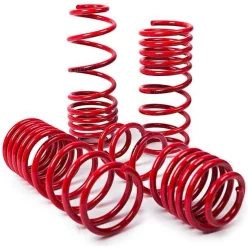
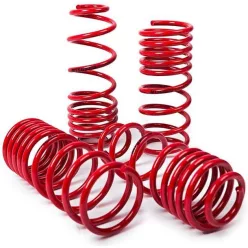
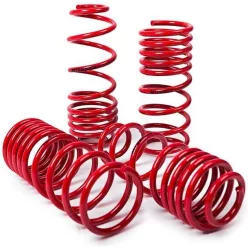
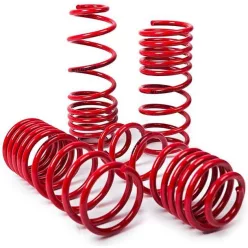
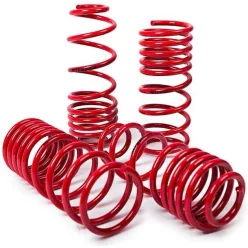
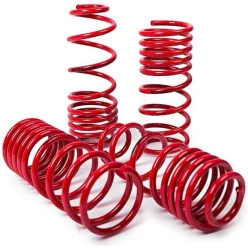
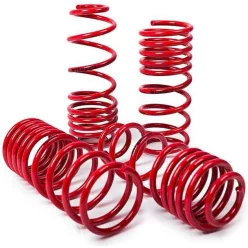
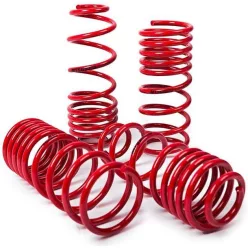
The Peugeot – MTS Technik lowering springs category includes kits for models such as the Peugeot 1007 and classic 106 I/II, with 35/25, 35/–, 40/– and even 60/– mm drop options. These lowering spring kits reduce the centre of gravity, improve cornering stability and give a visibly sportier stance. Tuned for road use, MTS Technik springs make the chassis firmer and more precise while keeping the cars usable every day.
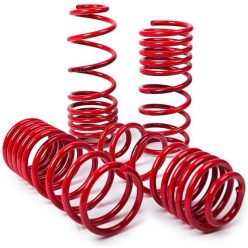
Net price: 153 €
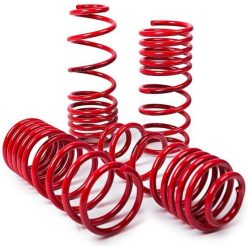
Net price: 158 €
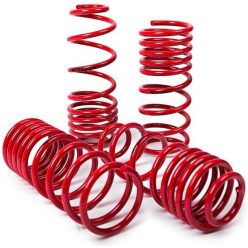
Net price: 103 €
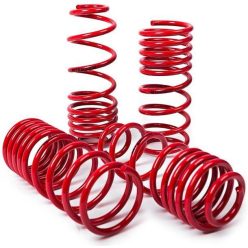
Net price: 103 €
Net price: 98 €
Net price: 103 €
Net price: 98 €
Net price: 90 €
Net price: 95 €
Net price: 103 €
Net price: 90 €
Net price: 95 €
Benefits and applications of Peugeot lowering springs
The Peugeot – MTS Technik lowering springs are aimed at drivers who want to make compact Peugeot models feel sharper and more agile. City-oriented cars like the 1007 and lightweight hot-hatch style Peugeot 106 I/II often come with compliant factory suspension that allows noticeable roll in fast bends. A suitable lowering spring kit with drops from around 35 up to 60 mm reduces ride height, lowers the centre of gravity and significantly improves stability in corners. Visually, the lower stance works especially well on 106s fitted with sportier wheels and tyres.
Technical Basics
MTS Technik lowering springs use high-strength spring steel and robust anti-corrosion coatings to withstand daily use and winter conditions. Peugeot 1007 kits typically offer around 35/25 mm of lowering, while Peugeot 106 I/II applications are available in 35/–, 40/– and 60/– mm versions, where the dash indicates that the torsion-bar rear axle must be adjusted separately. These figures describe the front ride-height reduction compared with stock; the rear is matched by repositioning the torsion bars. A key warning is that 60 mm drops result in very low ground clearance, making them suitable mainly for good road surfaces and careful driving.
Selection Criteria
When selecting a Peugeot lowering spring kit, start by confirming the exact model, year, engine and body style. A city-focused 1007 has different suspension needs from a lightweight, more spirited 106 GTi-style build. For cars used daily on mixed roads, a 35–40 mm drop usually offers the best compromise between improved stability and workable ground clearance. The more aggressive 60 mm setups are designed for enthusiasts who accept reduced comfort and clearance in exchange for a very low stance, and they require particular care with wheel diameter, offset, tyre profile and torsion-bar adjustment.
Installation & Maintenance
Installing lowering springs on Peugeot models – especially torsion-bar rear axles like those on the 106 – should be entrusted to experienced suspension workshops. The front MacPherson struts must be safely disassembled and reassembled, with shocks, top mounts, bushes and bump stops inspected and replaced if necessary. At the rear, the torsion bars must be reindexed to achieve the desired drop, a procedure that requires specialist tools and knowledge. After installation, a full wheel alignment is mandatory to ensure stable tracking and even tyre wear. Regular checks of spring coating, rear axle condition and suspension joints are recommended; any unusual noises or instability should be investigated promptly.
FAQ
What drop is suitable for a road-driven Peugeot 106?
For everyday use, a 35–40 mm drop generally provides the best balance between sharper handling and usable ground clearance. It noticeably improves cornering and stance without making the car overly sensitive to bumps and ramps. A 60 mm drop is more extreme and best reserved for good roads and experienced owners.
What does the 35/– or 40/– mm marking mean on Peugeot kits?
Markings such as 35/– mm or 40/– mm indicate a defined front drop, while the rear height is set by adjusting the torsion-bar position. This gives flexibility in tuning the rear ride height but also demands experience to avoid an overly stiff or unbalanced setup. Incorrect adjustment can make the car harsh, bouncy or unstable.
Can I use stock dampers with MTS Technik springs on my Peugeot?
With moderate 35–40 mm drops and healthy OE dampers, factory shocks can often be retained. For 60 mm drops or when dampers are already tired, sport shocks are strongly recommended to maintain control and avoid bottoming out. A well-matched spring-and-damper combination delivers safer, more consistent behaviour.
Will lowering my Peugeot affect tyre wear?
Lowering may increase tyre wear if alignment is not corrected, particularly through excess negative camber or unsuitable toe settings. A precise alignment after installation and regular checks help keep tyre wear close to stock. Rapid inner-edge wear or pulling to one side is a sign that geometry needs attention.
Is approval required to lower a Peugeot for road use?
Legal requirements vary between countries, so always verify the applicable local regulations and inspection standards. Using TÜV or ECE-approved springs and keeping the documentation in the car can simplify inspections. If you are unsure, consult an inspection station or suspension specialist familiar with modified Peugeot models.
