
Performance & Racing Thermostats (racing thermostats) change how the cooling circuit manages warm-up, flow handover and load response, helping the engine’s thermal control suit fast road use, tuned builds or track-focused applications with more predictable cooling behaviour.
The right choice depends on exact vehicle fitment, thermostat housing style and surrounding hardware; check the fitment details and sealing layout before ordering so added heat load does not expose a mismatch during installation.
Verify exact dimensions and specifications on the product card; in-stock items dispatch fast within the EU.
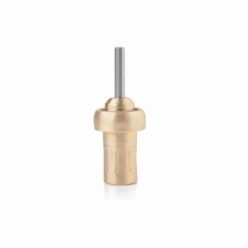
Net price: 20 €

Net price: 59 €
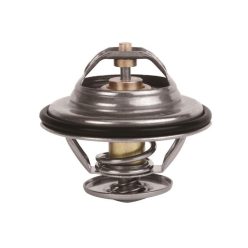
Net price: 59 €
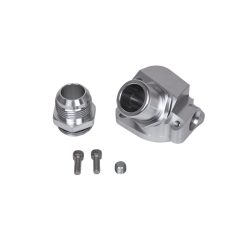
Net price: 49 €

Net price: 59 €

Net price: 117 €
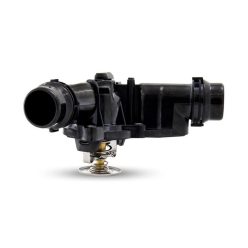
Net price: 117 €
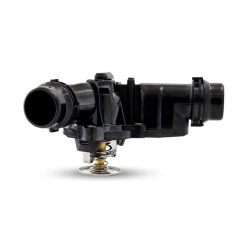
Net price: 77 €
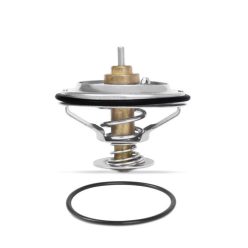
Net price: 73 €
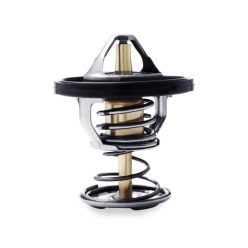
Net price: 59 €
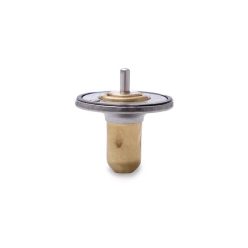
Net price: 59 €
Net price: 59 €
Performance & Racing Thermostats – Targeted Heat Control for Cooling Systems
Heat management in this category is not just about when a thermostat starts to open, but about how the whole cooling circuit reacts during warm-up, transient load and repeated high-demand use. A well-matched performance thermostat can help the system behaviour suit the actual build, while still working with the radiator, water pump, fan strategy and housing layout as one package.
Technical background and system integration
Cooling circuit: The thermostat manages the transition between the smaller internal circuit and the main radiator path, so it directly affects warm-up pace and the way coolant flow responds to changing load. That matters on tuned road cars and track cars alike because temperature rise is rarely perfectly steady.
Opening behaviour: The nominal opening point is only one part of the picture; the way the thermostat progresses through its travel also matters. The best result usually comes from a unit designed for the exact engine and housing rather than from assuming one general temperature strategy works for every build.
System context: A thermostat works inside a wider package, so radiator efficiency, coolant condition, fan control, pressure cap, sensors and hose routing all influence the real outcome. When one of those elements is weak or mismatched, the change you expect from the thermostat alone may appear smaller or less consistent.
- Housing: confirm whether the product is an insert-only part or a housing-integrated unit.
- Seal: check whether it uses an O-ring, profile seal or a separate gasket arrangement.
- Sensors: review nearby sensor locations and clearance around fittings and wiring.
- Application: road, fast-road and track use can justify different cooling priorities.
How to choose the right one
Fitment: Start with the exact engine, model range and production compatibility, because small changes in housing design or surrounding hardware can alter what fits correctly. Product photos and fitment notes should be reviewed together rather than separately.
Use case: Decide whether the car is mainly a road build, a fast-road car or something that sees repeated high-load sessions. The right thermostat choice depends on the full package and on how the engine is actually used, not on a single forum rule or a headline claim.
Product card: On this page, filters and product cards are the fastest way to narrow the range; sort by brand or vehicle application, then open the card to confirm housing style, compatibility notes and any installation remarks before you commit.
Installation and failure-prevention tips
Degrease using a manufacturer-recommended cleaner, then allow to dry completely before applying load/boost. During installation, focus on clean sealing faces, correct orientation and the manufacturer’s assembly order, because coolant-side joints can become misleadingly troublesome when residue or a slightly displaced seal is left in place.
Bleeding: After replacing the thermostat, proper bleeding is as important as the part itself. Air trapped in the circuit can distort warm-up behaviour, delay flow changeover and make the dashboard reading look calmer than the local temperature conditions actually are.
Typical issue: A common problem is not the thermostat element itself but a housing that does not seat cleanly or a seal that shifts during assembly; the symptom can be an unstable warm-up curve, recurring coolant seepage or post-load temperature behaviour that no longer settles as expected. Careful surface preparation, correct orientation and thorough bleeding usually prevent that pattern.
Post-check: After the first heat cycle and road test, inspect the housing area, coolant level and the nearby hose joints again. On older systems, the first full warm-up often reveals where a previous seal, clamp or mating face needs further attention.
PRO TIP: If your build also has fan-control changes, radiator upgrades or software-based temperature strategy adjustments, judge the thermostat as part of that combined package rather than as a stand-alone modification.
Frequently asked questions
How is a performance thermostat different from a normal OE-style replacement?
A performance or racing thermostat is usually chosen to alter how the cooling system responds under tuned or harder-driven conditions. It is still only one part of the cooling package, so the final result depends on the engine, the rest of the hardware and the calibration around it.
Does this category make sense for a road car as well?
Yes, provided the specific vehicle and usage justify it. Fast-road, mountain-road and occasional track-day cars can all benefit from a better-matched cooling response, but correct fitment and system condition remain the priority.
What is the most common failure or installation mistake?
Start by checking housing alignment, seal seating and whether the system has been bled fully. Then compare dashboard temperature indication with ECU data and the actual heat rise in the radiator hoses, and inspect the housing area for any trace of seepage. Finally, confirm that coolant level and fan operation stay stable through several complete heat cycles.
What should I verify on the product card before ordering?
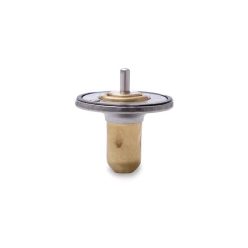
Check the exact vehicle and engine application, whether the unit is housing-integrated or insert-only, the sealing arrangement and any fitment notes. If the product image shows a different connection layout from the one on your car, do not ignore that detail because it often affects installation more than the thermostat element itself.
Is replacing the thermostat alone enough if the engine is running hot?
Not necessarily. The source may also be the radiator, water pump, pressure cap, sensor accuracy, fan control or an unresolved bleeding issue, so thermostat replacement should always be judged within the condition of the whole cooling system.
