
PCD conversion wheel adapters (bolt pattern adapters) sit between the hub and the wheel to change the mounting pattern; this category mainly covers 20 mm and 25 mm adapter sets for several 5x100- and 5x112-based conversions.
When choosing, the source and target PCD, the thickness, the centring details and the wheel-side space all matter together, because fitment depends on the full stack rather than one number alone. Verify exact dimensions and specifications on the product card; in-stock items dispatch fast within the EU.
To avoid mistakes, think through the whole chain before ordering: hub pattern, adapter, then wheel pattern and wheel-pocket space. Open the product card and confirm that the selected adapter truly matches your PCD pair.
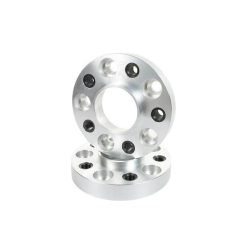
Net price: 109 €
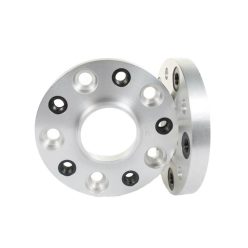
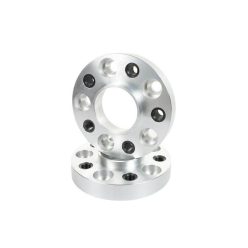
Net price: 109 €
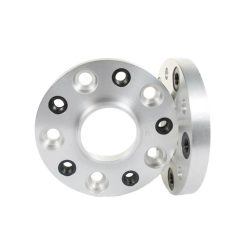
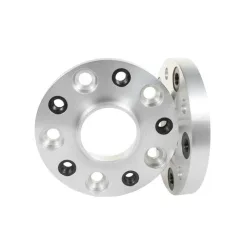
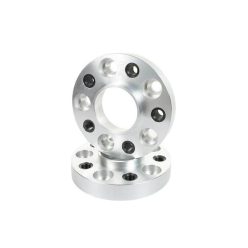
Net price: 109 €
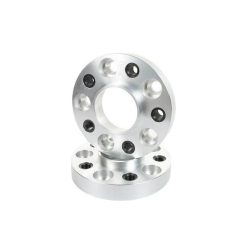
Net price: 113 €
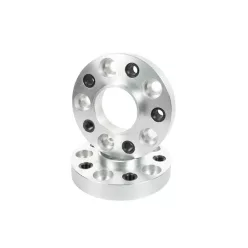
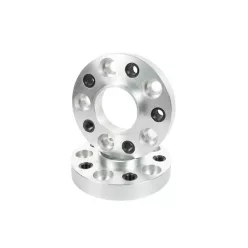
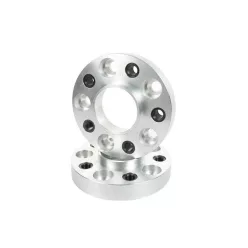
Net price: 113 €
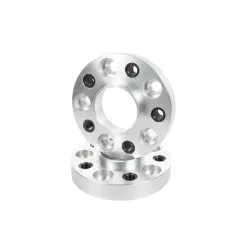
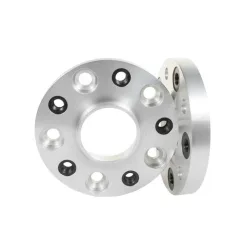
PCD Conversion Wheel Adapters: Bolt Pattern Change, Centring and Serviceable Wheel Fit
These wheel adapters for bolt-pattern changes work best when the hub-side pattern, wheel-side pattern, thickness and centring are treated as one complete fitment system. The right choice helps the wheel sit correctly, keeps load transfer more orderly and makes later servicing less awkward.
Technical background and system integration
Design logic matters because these parts do two jobs at once: they change the bolt pattern and they add track width. That means the PCD pair is only the starting point, while thickness, centring and wheel geometry still need to line up with the vehicle.
Range combinations on this page commonly include 5x100→5x112, 5x100→5x120, 5x100→5x130, 5x112→5x100, 5x112→5x120 and 5x112→5x130 layouts, mainly from MTUNING and TURBOWORKS. That already shows this is not a generic spacer page, but a fitment-focused conversion category.
Centring is important because the adapter does more than bridge two bolt patterns; it also affects how the wheel locates on the car and how cleanly the assembly loads up in use. Exact centre-bore details and centring design should always be checked on the product card, not assumed from the PCD alone.
- Source PCD: the hub-side pattern the adapter mounts to first.
- Target PCD: the wheel-side pattern the wheel will then use.
- Thickness: influences stance, space claim and installation logic at the same time.
How to choose the right one
Quick selection guide: first identify the car's original hub PCD, then the wheel's required PCD, and only after that match the suitable adapter thickness. Next, check whether the wheel's inner shape, bolt-pocket area and centre opening leave enough room for the adapter arrangement.
Product-card check should cover the source PCD, target PCD, thickness, centring details and kit construction together. On this category page, the best way to close the decision is to judge the PCD pair, thickness and centring data as one package.
- 5x100 base: often a starting point for builds moving to a different wheel pattern.
- 5x112 base: common on several European platforms, so multiple conversion paths appear.
- 20/25 mm: the difference can affect both stance and the available wheel-side clearance.
Installation and failure-prevention tips
Test-fitting should begin at the hub side, then move separately to the wheel side so you can assess seating surfaces, fastener start and overall alignment in stages. Work with clean threads, start the first fasteners by hand and follow the vehicle and adapter maker's tightening process rather than a generic routine.
Common issue is that the PCD conversion itself is correct, but the centring, wheel-back pocket or wheel-side fastener space is not; the adapter may mount, yet the wheel does not seat cleanly or the assembly feels awkward during fitting. The best prevention is a combined check of hub seating, centre bore, wheel-side holes and real clearance before final assembly.
Wheel-side space deserves separate attention because back-pocket shapes, ribs and recesses do not behave the same way with every adapter. A thicker version changes more than stance; it can also change how much room remains around the fixing area.
PRO TIP: before ordering, write down the hub-side PCD, wheel-side PCD, adapter thickness and centre-bore details in one line; it is the simplest way to make sure the setup works in practice, not only on paper.
FAQ
What is the most common failure or installation mistake?
Use a checklist: hub-side PCD, wheel-side PCD, adapter thickness, centre bore, wheel-back clearance and a hand-started test-fit. If any point looks tight, offset or inconsistent, review the dimensions before committing to the setup.
What is the difference between a spacer and a bolt-pattern conversion adapter?
A basic spacer usually keeps the same bolt pattern and mainly moves the wheel outward. A conversion adapter changes the bolt pattern as well, while also affecting wheel position.
Is the 5x100→5x112 marking enough on its own?
No, because thickness, centring and the wheel's rear-side shape also affect the real fit. The PCD pair is only the first filter, not the full fitment answer.
Should I choose 20 mm or 25 mm?
That depends on the available space around the suspension and arch, as well as the wheel's inner design. The choice can influence both visual position and installation room.
What should I inspect during the first test-fit?
Check clean hub seating, easy hand-start of the fasteners, correct wheel-centre location and whether the wheel can sit fully on its mounting face. Any sign of crooked seating, tight pockets or interference means the setup should be reviewed again.
