
A dual outlet intercooler (twin outlet intercooler) is an air-to-air core with one connection on each side, which suits front-mount builds where the charge pipes need to approach from left and right. The right core size and outlet diameter help keep packaging, pipe length and response in balance.
On this page you will find TurboWorks and Mishimoto options in several sizes and core styles for universal charge-air setups. Verify exact dimensions and specifications on the product card; in-stock items dispatch fast within the EU.
Use the filters by brand, size and availability, then open the product card to confirm thickness, outlet layout and mounting space. Plan pipe routing and available clearance together, so you do not have to correct the build later with extra bends or reducers.
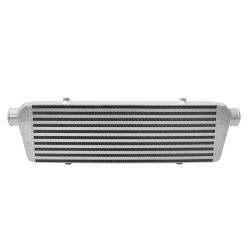
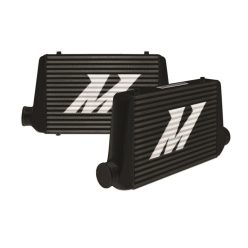
Net price: 342 €

Net price: 342 €
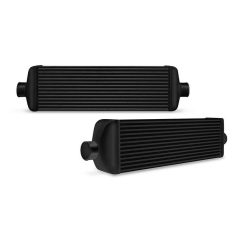
Net price: 421 €
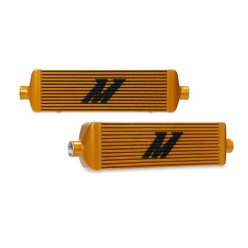
Net price: 444 €
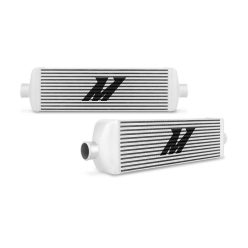
Net price: 421 €

Net price: 384 €
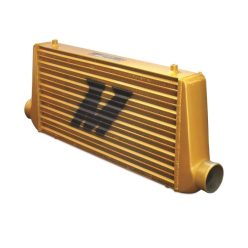
Net price: 410 €
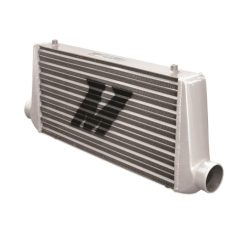
Net price: 384 €
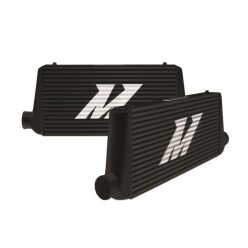
Net price: 439 €
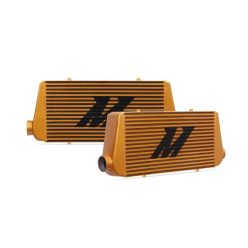
Net price: 463 €
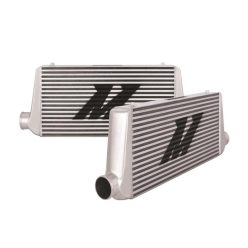
Net price: 439 €
Dual Outlet Intercoolers for Custom Front-Mount Charge-Air Layouts
Front-mount packaging works well with this layout when you want the compressed-air path split between the left and right sides. It is the opposite-side outlet form of an intercooler core, often described as a twin outlet layout, and it can make routing around the bumper beam, headlamps and lock carrier easier to plan.
Technical background and system integration
Opposite-side outlets usually reduce unnecessary pipe crossovers, which can help installation quality and reduce side-loading on silicone couplers, clamps and end-tank connections.
Core construction matters because bar-and-plate designs often bring more thermal mass, while tube-and-fin units can suit builds where lower weight and easier packaging matter. The better choice depends on the available space, the planned pipe path and how consistently the car will be used under load.
- Layout: choose a core that lets both pipes meet the outlets on a natural line rather than forcing sharp correction angles near the end tanks.
- Diameter: match the outlet size to the pipe outside diameter you plan to run; some product cards use 2.25 in or 3 in references alongside mm-based sizing.
- Thickness: check bumper, crash bar and radiator clearance together, because a thicker core can change both space claim and hose angle.
- Weight: mounting strategy matters on universal builds, so review how the brackets and isolators support the core without preloading it.
Brand range on this page includes TurboWorks and Mishimoto, with G-Line, J-Line, M-Line and R-Line variants appearing across different size families, so the product card should always be the final reference.
How to choose the right one
Quick selection guide: start with the maximum width, height and thickness you can package, then check how the left and right outlets line up with the bumper opening, headlamp area and lock carrier.
Product card checks should combine total external size, outlet outside diameter and core thickness; families around 445×300×70, 550×180×95 or 600×300×100 mm ask for different space and bend geometry. If your build would be cleaner with both pipes gathered on one side, see Egyoldali Csonkos (Same Side).
Filters help narrow brand, stock and price, but you should also decide whether the outlet size matches the piping you already own or whether the build needs extra silicone joiners and reducers.
Installation and failure-prevention tips
Dry fit the core first and make sure the intercooler is not being forced on its mounts and that the pipes arrive at the outlets on a natural arc. This helps sealing integrity and reduces unnecessary stress around the end tanks.
Degrease using a manufacturer-recommended cleaner, then allow to dry completely before applying load/boost, and only then tighten the joints in their final position so surface grip and clamp behaviour stay more predictable.
Common mistake on this layout is leaving one coupler slightly twisted because the two sides ask for different pipe angles; under load you may then see a light oil film around the joint and inconsistent system behaviour, so straighten the hose before final tightening and confirm the clamp sits behind the bead.
Thermal movement is worth checking after the first full heat cycle by reviewing mounts and couplers again. If the packaging really wants the pipework to turn rearward, see Hátrafelé Álló Csonkos (Backward).
PRO TIP: Before you commit to a size, make a cardboard template of the full core and mark the outlet centre lines on it; this quickly shows where you must leave room for bends, clamps and nearby brackets.
FAQ
What is the most common failure or installation mistake?
Start by checking whether both couplers are fully seated to the bead, whether the clamp sits on the correct band position and whether either pipe is pulling the outlet sideways. Then inspect the brackets, isolators and bumper clearance, and re-check the joints after a short road test.
When is a dual outlet intercooler better than a same-side unit?
It can be the better fit when you want the charge-air path split across the left and right sides and you want to avoid unnecessary crossovers in front of the car. A same-side core often makes more sense when the whole route is naturally concentrated on one side.
Should I choose bar-and-plate or tube-and-fin?
Bar-and-plate can suit builds where extra thermal mass is useful, while tube-and-fin can work well when lower weight and easier packaging are part of the goal. The right answer depends on the space available, the pipe route and the way the car is actually used.
How do I confirm bumper clearance before ordering?
Measure overall width, height and thickness, then add the space needed for bends, joiners and clamps at both outlets. It is also worth checking the lock carrier, crash bar and radiator pack together so the pipes can follow a natural line.
Should I choose a universal or vehicle-specific intercooler?
A universal core is usually the better starting point when you are planning custom pipework, your own brackets or a modified front-end layout. If you want easier packaging around the factory mounting area, a vehicle-specific option may be the cleaner route.
Next step: narrow the range by size and outlet diameter, then use the product card to confirm the exact dimensions and layout before adding the right core to your basket.
