
In Nylon Braided Rubber Fuel Hoses, you’ll find nylon braided hoses with a rubber inner construction for service-friendly fuel line routing, typically used with AN hose ends. This option is often chosen when you want abrasion protection and easier handling than steel braid, while keeping an AN-based build tidy. To browse the full range, go back to Fuel Hoses. As this is a LEAF page, filter by size (for example AN-6) and length, sort the list, then open the product card to confirm inner diameter and fuel compatibility notes. Choose the right hose for your setup and check out.
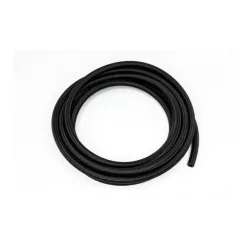
Net price: 171 €


Nylon Braided Rubber Fuel Hoses – flexible, easier-to-route braided hoses for AN plumbing and cleaner installs
Nylon Braided Rubber Fuel Hoses are designed for builders who want a protected yet flexible fuel hose for custom routing. The nylon braid primarily improves abrasion resistance and handling, while the rubber inner construction supports everyday vibration and movement.
These hoses are commonly used with AN plumbing where service access and modular fittings matter. Depending on what’s listed, you may see pre-made assemblies or cut-to-length hose options, so always confirm whether you’re adding a hose itself, a complete assembly, or a related accessory.
Technical Basics
Start with sizing: the AN number is a helpful guide, but the product-page inner diameter and hose construction determine real fit and flow behaviour. If you’re choosing AN-6, confirm it matches your hose ends and the expected demand of the line (feed vs return).
The braid protects the hose, but sealing depends on correctly assembled AN fittings. Clean, square cuts and respecting bend radius reduce the risk of internal kinks that can create pressure drop and unstable delivery.
Important: fuel compatibility (petrol, additives, E85) can vary by liner material, so only run ethanol if the product description explicitly states suitability. If compatibility isn’t clearly stated, a PTFE (Teflon) hose solution is often the safer route, with fittings matched accordingly.
Selection Criteria
First, define the line role: feed, return, vent, or gauge take-off each has different requirements. Many systems run larger on the feed and smaller on the return, so choose sizes like AN-8 only when your flow needs and connection points justify it.
Second, plan the route: engine bays demand heat management and clearance from moving parts, while underbody routing needs abrasion control and secure mounting. A tidy route is not just cosmetic—it makes leak checks and troubleshooting faster and safer.
Third, consider serviceability: cut-to-length hose is ideal for bespoke routing, while ready-made assemblies can reduce installation mistakes. Avoid stacking adapters and reducers, as they can introduce unnecessary restriction and pressure loss.
Installation & Maintenance
During installation, respect minimum bend radius and keep the hose away from sharp edges, vibration points and exhaust heat. Larger sizes such as AN-10 can be stiffer, so use proper strain relief and secure mounting to protect fittings.
After assembly, perform leak checks and re-check after a heat cycle. Any weeping, fuel smell or braid damage should be treated as a safety issue, because small leaks can escalate quickly.
For maintenance, visual inspection is the fastest win: look for chafing, flattened sections and marks around fittings. A well-supported fuel line run reduces vibration and makes ongoing checks straightforward.
FAQ
Why choose nylon braided rubber fuel hose instead of steel braid?
Nylon braid can offer good abrasion protection and is often easier to handle, while being gentler on nearby parts. Sealing still depends on correct AN fitting assembly. Choose based on your routing environment and service needs.
How do I decide between AN-6 and AN-8?
Decide by line role and required flow, then confirm inner diameter and fitting compatibility on the product page. Feed lines may justify larger sizes, while returns are often smaller. If pressure drops under load, review hose size, filters and adapters together.
Can I use these hoses with E85?
Only if the listing explicitly states E85 compatibility. Ethanol can be harder on materials, so hoses, seals and O-rings across the system must all be suitable. Always pressure-test and inspect fittings after installation.
What should I watch for when cutting and assembling braided hose?
Make clean, square cuts and keep the braid controlled so it doesn’t fray into the fitting. Respect bend radius to prevent kinks and internal restriction. Finish with a thorough leak check.
Why does mounting and routing matter so much?
Chafing and vibration can loosen fittings over time and lead to leaks. Proper mounting reduces stress on hose ends and keeps the route inspectable. It’s one of the simplest ways to improve long-term reliability.
Filter by size and length, confirm fuel compatibility on the product page, and order the nylon braided rubber fuel hose that matches your build.
