
Locking bolts (wheel lock bolts) are keyed wheel fasteners; this category includes MTUNING kits in M12x1.25, M12x1.5 and M14x1.5 threads, with 28 mm or 40 mm lengths and both ball- and cone-seat versions.
Start by checking the thread and seat type, then confirm the length, because correct fitment depends on all of them together. Verify exact dimensions and specifications on the product card; in-stock items dispatch fast within the EU.
To avoid installation issues, compare the new bolt with the OE part for thread, seating surface and usable length before fitting. Use filters first, then open the product card to confirm the details.


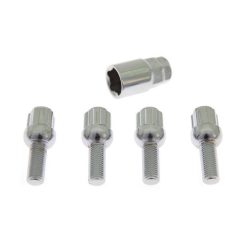
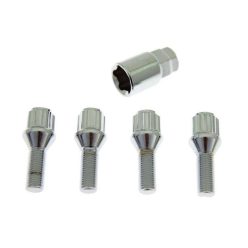
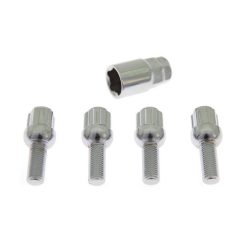
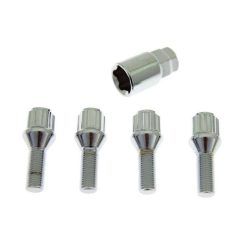
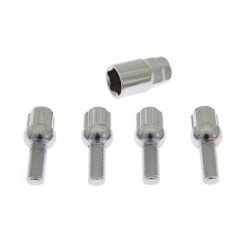
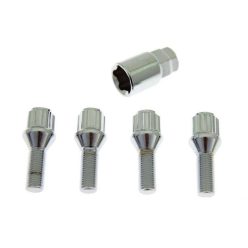
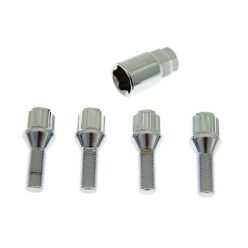
Locking Bolts: Thread Accuracy, Seat Fit and Wheel Security
This keyed wheel-bolt range focuses on wheel-lock kits where theft deterrence and correct mechanical fit need to work together. The right choice helps keep wheel installation serviceable while seating contact and clamp-load transfer remain more consistent around the rim.
Technical background and system integration
Seat type matters because the range includes both ball-seat and cone-seat versions, and the locking bolt must match the wheel exactly. The key pattern supports the anti-theft function, but real fit still depends on thread, seating profile and length working together.
Thread size across this category includes M12x1.25, M12x1.5 and M14x1.5 options. These may look similar at first glance, yet they are not interchangeable, so the OE wheel bolt should always be your reference point.
- Ball seat: suits many OE alloy wheels with a rounded seating surface.
- Cone seat: commonly used on many aftermarket wheels with a tapered seat.
- 28/40 mm: length can affect both thread engagement and access around the wheel pocket.
How to choose the right one
Quick selection guide: first confirm whether your car uses M12x1.25, M12x1.5 or M14x1.5 wheel bolts, then check whether the wheel requires a ball or cone seat. After that, decide whether the 28 mm or 40 mm version better suits the wheel hole and the space behind the mounting face.
Product-card check should include exact thread pitch, stated length and seat style, then compare those details with the removed OE bolt. There is no separate subcategory step on this page, so the selection is best finalised through the filters and the item data itself.
- M12x1.25: a common starting point on various Japanese and French applications.
- M12x1.5: a widely used pitch across many road and tuning setups.
- M14x1.5: a larger-diameter choice where the factory wheel fixing requires it.
Installation and failure-prevention tips
Clean threads matter: inspect the hub and bolt before fitting, start the bolt by hand for several turns and only then use the key. Final tightening should always follow the vehicle or wheel maker's specification rather than a generic figure.
Common issue is incorrect thread pitch or the wrong seat profile; the bolt feels rough to start, the wheel may not seat cleanly and later removal can become harder. If that appears, stop, compare the OE bolt with the selected item and continue only when thread, seat and length all match.
Key access also deserves attention, especially on wheels with deeper or narrower holes, because the supplied patterned key must sit fully home on the head. Limited clearance can make both fitting and later removal more awkward.
PRO TIP: the safest check is to compare the removed OE bolt and the chosen locking bolt side by side for thread, seat, length and key clearance before final installation.
FAQ
What is the most common failure or installation mistake?
First check thread diameter, pitch, seat type and length, then confirm the bolt starts by hand for several turns. After that, verify full key engagement and re-check the wheel fixing after a short initial drive following the vehicle guidance.
What is the difference between cone and ball seat?
A cone seat uses a tapered contact surface, while a ball seat uses a rounded one. They are not interchangeable because they transfer clamp load to the wheel differently.
Can I swap M12x1.25 and M12x1.5?
No, because the pitch is different even when the nominal diameter is similar. Forcing the wrong thread can damage both the hub thread and the bolt.
When does 28 mm or 40 mm length matter?
Length can influence thread engagement and the available space around the wheel hole. The right option should always be checked against the OE bolt and the wheel design.
What should I inspect after first use?
Look for any damage on the key pattern, the bolt head or the area around the wheel hole, and make sure removal still feels even. Fresh marks, rough loosening feel or unusual noise are signs to review fitment again.
