
In K&N Universal Inline Fuel Pumps, you’ll find low-pressure, 12-volt universal inline fuel pumps that typically suit carburettor feed and other low-pressure supply needs. The selection includes 81-0400 to 81-0403, covering roughly 1–10 psi depending on the model. If you want to compare universal pumps across brands, open Fuel Pumps - Universal; on this page, use filters (stock/price) and click a product card to verify pressure/flow figures for your setup. Choose the right K&N pump and place your order.
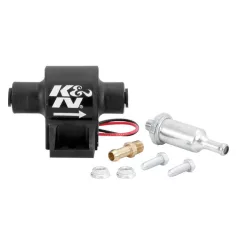
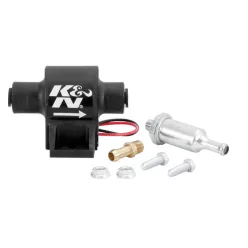
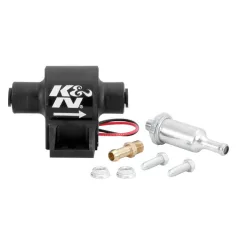
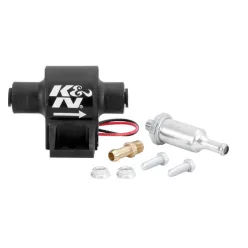
K&N Universal Inline Fuel Pumps – low-pressure inline pumps you can size by pressure range and flow
K&N Universal Inline Fuel Pumps are a practical fit when you need a low-pressure electric fuel pump and want to choose by stated pressure range and flow rather than vehicle-specific fitment. This is common on carburettor builds where consistent delivery matters more than high EFI rail pressure.
K&N describes these pumps as self-regulating, 12-volt and self-priming, aimed at universal inline installation. In real-world terms, they can work well as a feeder/lift-style solution when paired with sensible plumbing and filtration.
Technical Basics
The key differences between models are flow and delivery pressure: K&N states the 81-0400 is engineered for 15 GPH (≈ 56.8 l/h) between 1–2 psi, while the 81-0401 targets 25 GPH (≈ 94.6 l/h) between 1.5–4 psi.
For higher pressure ranges, K&N lists the 81-0402 at 32 GPH (≈ 121.1 l/h) between 4–7 psi, and the 81-0403 at 34 GPH (≈ 128.7 l/h) between 7–10 psi. The manufacturer page also notes a fuel filter and installation hardware are included, which can simplify planning your fuel line layout.
K&N highlights reducing vapour lock and flooding, which are relevant failure modes on carburettor systems in hot conditions. Warning: actual pressure at the carb depends on restriction, venting and component condition, so pressure verification is still part of a safe setup.
Selection Criteria
Start with your carb’s required fuel pressure and choose a matching model range: the 81-0400 and 81-0401 suit lower-pressure targets, while 81-0402 / 81-0403 cover higher low-pressure needs. The goal is stable delivery under load without pushing pressure higher than the carb can tolerate.
Then size by flow: treat GPH/l/h as a planning figure and leave margin for heat, voltage drop and filter restriction. On many builds, the “weak link” is not the pump itself but a tight inlet path, undersized hose, or an overly restrictive filter element.
Finally, think about regulation and safety: even with a stated self-regulating design, some carburettors benefit from a pressure regulator if they are sensitive to inlet pressure. Quick warning: excessive pressure can trigger flooding and rich running, so measurement at the carb inlet is a practical final check.
Installation & Maintenance
Mount an inline pump in a protected, serviceable spot, typically close to the tank with a well-fed inlet side. Use a suitable pre-filter, quality fuel line and secure clamps, and support the hose so fittings are not stressed by vibration.
Electrically, stable 12 V supply matters: relay power, correct fusing and solid grounding help keep output consistent under load. After first start, check for leaks, verify pressure, and re-check joints after heat cycling.
For maintenance, filtration is a primary checkpoint: a clogged filter element can cause noise and delivery drop, which may show up as hesitation at higher demand. If issues persist, inspect inlet restriction and venting before replacing the pump.
FAQ
Which K&N inline pump is best for a carburettor setup?
Choose based on your target fuel pressure: K&N lists the 81-0400 at 1–2 psi and the 81-0401 at 1.5–4 psi for lower-pressure needs. If your setup needs more, the 81-0402 (4–7 psi) or 81-0403 (7–10 psi) may be a better match. Confirm pressure at the carb inlet after installation.
What does “self-regulating” mean on these pumps?
K&N describes the pumps as self-regulating, meaning they are designed to operate within a stated pressure window without external control. That does not guarantee your carb sees the exact value, because plumbing and restriction matter. If your carb is sensitive, a pressure regulator can still be beneficial.
Why is self-priming useful on an inline fuel pump?
A self-priming design can make initial setup and re-priming after service more forgiving. Even so, the best results come from a short, unrestricted inlet path near the tank. Good mounting and inlet supply reduce noise and cavitation risk.
What flow and pressure ranges do 81-0400 to 81-0403 cover?
K&N states 81-0400 is 15 GPH (≈ 56.8 l/h) at 1–2 psi, 81-0401 is 25 GPH (≈ 94.6 l/h) at 1.5–4 psi, 81-0402 is 32 GPH (≈ 121.1 l/h) at 4–7 psi, and 81-0403 is 34 GPH (≈ 128.7 l/h) at 7–10 psi. Real-world output depends on voltage, filtration and hose sizing. If delivery drops, inspect filters and inlet restriction first.
Why can carburettors flood with an electric pump?
Flooding is often caused by excessive fuel pressure or a worn needle/float setting in the carb. Matching the correct pump pressure range and using a regulator where needed helps prevent it. Always verify with a pressure gauge rather than guessing.
Filter the list by your pressure target, verify product specs, and order the K&N inline pump that matches your build.
