
Jacks & axle stands (emelés és alátámasztás) are lifting and support tools that help you gain stable underbody access during servicing.
This can include trolley jacks, bottle jacks, axle stands, ramps, wheel chocks and lift pads; choose by design, lift range and how the saddle contacts the jacking point.
Match the setup to your vehicle’s jacking points and your workshop floor conditions. Verify exact dimensions and specifications on the product card; in-stock items dispatch fast within the EU. Aim for repeatable support, not rushed lifting.
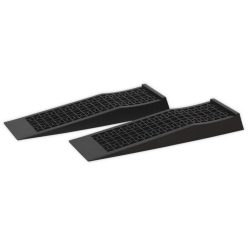
Jacks & axle stands for workshop lifting and safe support
This category covers the tools used to lift and securely support a vehicle for servicing—practical lifting & support gear built around controlled access rather than quick height alone. The right combination can protect jacking points and keep your work area predictable.
For race-garage style maintenance, good support makes tasks like brakes, suspension and exhaust work easier to plan, helping maintain a consistent working position as parts come off and loads shift.
Technical background: contact, stability and access
A jack provides movement, a stand provides holding—together they define how the saddle interfaces with the car. Saddle shape, rubber pads and the vehicle’s jacking point compatibility drive contact stability more than “lifting power” alone.
Low cars often need a low minimum saddle height (mm), while taller vehicles may benefit from reach and usable lift travel. With ramps, approach angle and tyre placement largely determine access and convenience.
- Saddle/pad: grooves, cups or rubber blocks can help locate the jacking point and reduce slip tendency.
- Base footprint: wider feet and solid floor contact can improve steadiness on typical garage surfaces.
- Locking: on stands, the mechanical lock and safety features support repeatable positioning.
How to choose: fitment, range, and compatibility
Quick selection guide: start with your vehicle’s jacking points, then use the product card to confirm height range, saddle type and pad options (inch-friendly specs often include mm too). This keeps your choice scalable as the range expands.
- Trolley jack: check minimum saddle height and whether it clears splitters/low front ends.
- Axle stands: compare min-max range, saddle profile and base size as one system.
- Ramps: confirm width and tyre position so the wheel tracks safely to centre.
- Adapters: pinch weld pads, rubber blocks and lift pucks can reduce point loading at sensitive seams.
If you work on multiple cars, options with interchangeable pads and adaptable saddle profiles can make day-to-day use easier.
Use, setup, and failure prevention
Begin on a flat, clean surface, secure the vehicle (parking brake, gear/park), and prevent rolling with wheel chocks. Lift in a controlled manner and position stands according to the manufacturer’s guidance so the load path stays centred within the stand base.
Lower onto the stands gently, then check stability before you work (light rock test, visual confirmation). If you use rubber pads, ensure they don’t creep and that saddle engagement remains consistent at the jacking point.
A common problem is placing the saddle on an unsuitable jacking point or supporting on uneven/soft ground, which can allow the vehicle to shift as loads change. Prevention is straightforward: align with the correct jacking points, confirm locks are engaged, and only proceed once the supports sit solidly and the surface is stable.
PRO TIP: If you frequently service low cars, choose a jack and pad setup that speeds positioning while being gentle on pinch welds and seam areas.
FAQ
Ramps vs jack + stands: which should I use?
Ramps can be convenient for quick underbody access, while a jack + stands setup is usually more flexible for wheel-off work like brakes and suspension. Your access needs and vehicle design will decide.
What should I verify on the product card?
Lift/stand height range, saddle type, base footprint, and whether compatible rubber pads or adapters are available for your jacking points.
Why does the car feel unstable on stands, and what should I check?
Checklist: confirm the floor is flat, the saddle is centred on the jacking point, the stand lock is fully engaged, both sides are set to matching heights, and wheel chocks are in place to prevent rolling.
Can I use any rubber puck or adapter on any jacking point?
Not always—shape and material matter. Pick an adapter designed for your jacking point style and follow the product’s stated usage.
How high should I lift the car?
High enough to access the fasteners and components comfortably while keeping the stands within their normal adjustment range. Avoid “edge of range” setups when it’s not necessary for the job.
