
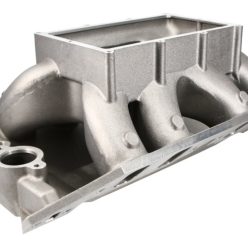
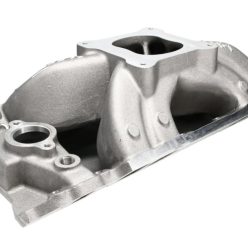
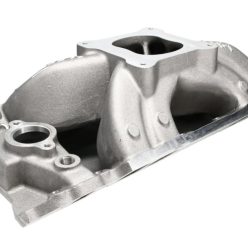
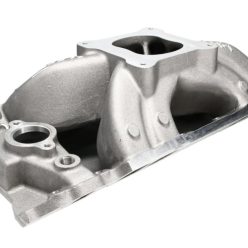
Intake manifolds (inlet manifolds) connect the cylinder heads to the carburettor or throttle body, influencing plenum behaviour, distribution and overall fitment. This category focuses on performance manifold layouts and related parts where geometry and mounting details matter.
Choose by engine family, carb flange, port layout and deck height rather than appearance alone. Verify exact dimensions and specifications on the product card; in-stock items dispatch fast within the EU.
Many fitment issues can be avoided with a dry test: check gasket alignment, bolt access and installed height before final assembly, then confirm the exact application details on the product page.

Net price: 810 €

Net price: 1 355 €

Net price: 1 355 €

Net price: 1 355 €
Net price: 1 355 €
Net price: 610 €

Net price: 610 €
Net price: 610 €
Net price: 942 €
Net price: 610 €
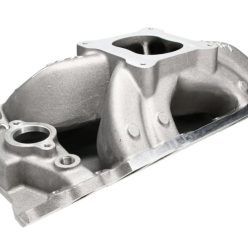
Net price: 610 €
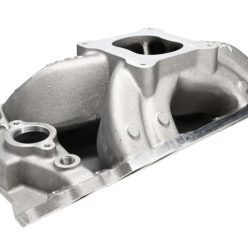
Net price: 942 €
Intake Manifolds and Accessories: Fitment, Airflow and Installation Logic
The intake manifold, also referred to as an inlet manifold, links the cylinder heads to the carburettor or throttle body, so fitment logic should be judged together with airflow behaviour. In this category you will find intake manifolds and, depending on version, related parts where flange pattern, port window, plenum layout and installed height all influence whether a given setup is a sensible match.
Technical background and system integration
Airflow character is shaped by more than runner shape alone: plenum volume, entry geometry, top flange format and the intended engine family all play a role. A manifold that suits a tighter street setup may not be the most natural choice for a higher-rpm or drag-oriented combination, even when the external dimensions look close.
Flange pattern and port alignment matter because an apparently compatible manifold can still create an awkward installation if the openings, bolt positions or gasket land do not match the same geometry. Depending on version, you may also need to account for carburetted or injected layouts, vacuum take-offs and different deck-height related packaging.
- Engine family: confirm the block and cylinder-head range before looking at any other filter.
- Top flange: 4150, 4500 or another mounting format can change the upper hardware you need.
- Height: installed height affects bonnet clearance and air-cleaner packaging.
- Port shape: the gasket outline helps show whether the manifold is realistically aligned to the head.
How to choose the right one
After confirming the engine family, narrow the choice by cylinder-head version, upper mounting format and intended use. A combination built around sharper response and tighter packaging may call for a different manifold style than one aimed at larger plenum volume or sustained higher-rpm use.
Deck height and total installed height are key because manifolds for the same engine family can still sit differently in the car. Many listings show height in inch, while some overall dimensions may also be useful in mm, so compare the manifold, spacer, carburettor or throttle body and air-cleaner stack as one package.
Use the filters in a practical order: engine family first, then flange pattern, then height and the fitment notes on the product card; markings such as BBC, 4150 or 4500 can remove the wrong options very quickly.
Installation and failure-prevention tips
A dry test-fit before final assembly can save a full strip-down later: check port position with and without the gasket, confirm bolt access, fuel rail or ancillary clearance where relevant and make sure no bracket is forcing the assembly sideways. Use clean threads, flat sealing faces and the tightening sequence specified by the manufacturer.
Typical issue: if the gasket line shifts between the manifold and the head, or the end sealing area does not sit evenly, idle quality can become less settled, mixture distribution may drift and the contact pattern after removal can look uneven. The usual prevention route is careful trial fitting, surface inspection and a follow-up check after the first heat cycle.
Work through the bolt sequence gradually and evenly, then confirm that the carburettor or throttle-body base, vacuum ports and related brackets are not pulling the manifold off-centre. If the setup uses a spacer or dedicated mounting hardware, read their height and flatness together with the rest of the package rather than as isolated parts.
PRO TIP: Trial-fit the air cleaner and close the bonnet before final assembly, because a combination that looks acceptable on paper can lose clearance very quickly once every upper component is stacked together.
Frequently asked questions
What is the difference between a 4150 and a 4500 flange?
The difference is not only the bolt pattern but also the upper hardware the manifold is designed to accept. Always compare the manifold flange, the carburettor or spacer you plan to use and the space available above the engine as one system.
What is the most common failure or installation mistake?
Check the gasket witness marks, the evenness of the bolt seating, the end sealing area and any signs that the assembly was pulled sideways during tightening. After the first start and first heat cycle, inspect the fasteners again and review the contact pattern around the carburettor or throttle-body base and the vacuum take-offs.
How do I know whether it will fit under the bonnet?
Do not look at manifold height in isolation, because the spacer, carburettor or throttle body and air cleaner create the real installed stack. Compare the listed dimensions with the actual space in your vehicle, especially if engine mounts, firewall proximity or air-cleaner style have changed.
Can the same manifold be used for carburetted and injected setups?
Not always, because the upper interface, vacuum layout, rail provision and related accessories may differ by version. Read the product card carefully to see whether the design matches your induction layout or whether extra adapters and hardware are required.
Should I re-check anything after first start-up?
Yes, it is usually sensible to inspect the fixing points, vacuum connections and sealing contact after the first heat exposure. This is particularly useful when you are working with new gaskets, a different cylinder-head version or a combination with changed installed height.
