
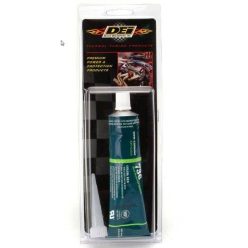
An intake manifold thermal gasket is the heat-isolating sealing layer fitted between the intake manifold and cylinder head, where it may help reduce heat transfer into the intake side. This category is built mainly around TurboWorks intake manifold gaskets, with a small number of throttle-body versions and one DEI heat-resistant sealant also present.
Choose the correct part by exact engine family, year range and mating pattern, because port layout, bolt spacing and the sealing face can change between closely related engines. Before final assembly, check flatness, hole alignment and make sure the gasket does not overhang into the airflow path.
Verify exact dimensions and specifications on the product card; in-stock items dispatch fast within the EU.

Net price: 20 €

Net price: 19 €

Net price: 19 €

Net price: 19 €
Net price: 20 €

Net price: 20 €

Net price: 25 €
Net price: 25 €

Net price: 25 €

Net price: 19 €

Net price: 20 €
Intake Manifold Thermal Gaskets for Intake-Side Heat Isolation and Precise Sealing
This heat-isolating intake manifold gasket (thermal intake gasket) sits between the head and manifold mating faces to provide sealing while helping reduce direct heat transfer into the intake side. The current assortment is built mostly around TurboWorks intake manifold thermal gaskets, with separate throttle-body items and one DEI heat-resistant sealant also included.
Practical role goes beyond simple sealing: when the correct gasket is used, it can support cleaner intake-side assembly and may help limit how much heat is passed into the manifold. That can be relevant on tuned road cars, repeated heat-cycle use or harder driving, but only when the port shape, hole pattern and overall fitment are right for the engine.
Technical background and system integration
Actual range on this page is centred on intake manifold thermal gaskets for Audi, Seat, Skoda, VW and Ford 1.9 TDI and 1.8T applications, Honda B16/B18, D-series, K20 and S2000, Toyota 1JZ/2JZ, Nissan 200SX, SR20DET and RB25, Mitsubishi Evo, Subaru, Renault Clio II Sport, Hyundai Coupe, Fiat, Citroën and Mazda MX-5 setups. This makes it a true product-list category where exact engine family matters more than a broad brand label.
System position is between the cylinder head and the intake manifold, or on some items between the throttle body and the intake side. The throttle thermal gasket products already show that not every part on the page fits the same connection point, so always confirm whether the item is made for the manifold flange or the throttle-body flange. The DEI sealant should also be treated as a separate support product rather than an automatic substitute for a model-specific gasket.
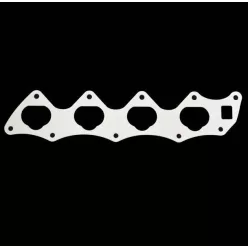
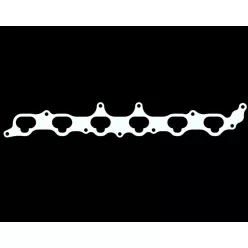
- Port layout: the openings should match the head, manifold or throttle-body passages cleanly.
- Bolt pattern: the fixing holes and locating points need to align fully, not just approximately.
- Application: always confirm whether the part is for an intake manifold or a throttle-body connection.
How to choose the right one
Quick selection guide: first decide whether you need a heat-isolating gasket for the intake manifold or for the throttle body, then narrow it down by exact engine family. On this page, similarly named Honda, Nissan, Toyota or VAG products should be filtered by engine code, year range and mating face rather than engine capacity alone.
Product card check should focus on the application list, part number and exact naming. This matters especially across Honda B16/B18, D-series, K20 and S2000, Toyota 1JZ/2JZ, Nissan SR20DET/RB25 and Mitsubishi Evo applications, because the flange shape and fixing pattern can vary even within related platforms. When two products look close in name, use the engine code in the title as the main filter.
- For tuned road use: choose by exact fitment first, then by the intake-side layout you are actually assembling.
- For rebuild work: make sure the new gasket matches the existing manifold, throttle body and hardware geometry together.
Installation and failure-prevention tips
Preparation should include checking both mating faces for flatness, removing old gasket residue and confirming that the holes and ports do not overlap incorrectly. Degrease using a manufacturer-recommended cleaner, then allow to dry completely before applying load/boost. Tighten the hardware in stages so the gasket does not shift, twist or squeeze out of position.
Common issue appears when the gasket is installed slightly rotated, used with a partial bolt-pattern mismatch or trapped against old residue on the sealing face. That can show up as false air, unstable idle, unusual correction behaviour or uneven seating, so the best prevention is a dry test-fit and a full check of port shape, bolt alignment and clean mating faces before final tightening.
Post-install checks after the first heat cycle should cover the joint area, hardware seating, vacuum hose condition and any witness marks around the flange. On boosted or harder-used engines, it is worth repeating the inspection sooner and confirming that the gasket remains correctly seated.
PRO TIP: If the build also includes an intake spacer, larger throttle body or other intake-side hardware changes, choose the thermal gasket around the final hole pattern and sealing face of the complete assembly.
FAQ
What is the difference between an intake manifold thermal gasket and a throttle thermal gasket?
An intake manifold thermal gasket fits between the head and the manifold, while a throttle thermal gasket is made for the throttle-body connection point. Their shapes, hole patterns and system roles are different, so they are not interchangeable.
How is an intake manifold thermal gasket different from a conventional gasket?
An intake manifold thermal gasket can add a heat-isolation role alongside sealing on the intake side. Even so, it still depends on precise model-specific fitment and correct alignment during assembly.
What is the most common failure or installation mistake?
Check that every hole lines up exactly, the ports do not overhang, the fasteners start by hand and the gasket sits flat during a dry trial fit. Also confirm that vacuum fittings, the intake manifold flange and the throttle-body side are not pulling the joint out of alignment before final tightening.
Can a thermal gasket be reused?
That depends on the exact design and its condition after removal. If the sealing edge is damaged, compressed unevenly, distorted or worn around the holes, replacing it is the safer route.
What should I inspect if idle changes after installation or I suspect false air?
Inspect the full intake-side joint, vacuum hoses, hardware seating and any visible marks around the gasket perimeter. It is also worth checking whether the manifold or throttle-body flange is being pulled sideways by pipework or other attached parts.
