
The Intake category covers key air-supply parts: high-flow airboxes, intercooler brackets, and sensor/connectivity adapters for Nissan Patrol Y60/Y61 and BMW M57 swap builds. Precise fitment, optimised airflow and reliable sealing help control temperatures and support consistent performance both off-road and on-road.
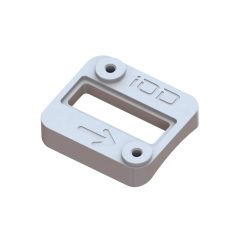
Net price: 107 €
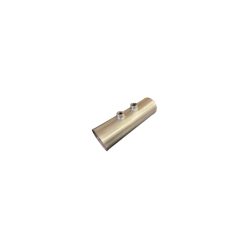
Net price: 107 €
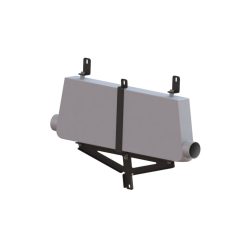
Net price: 107 €
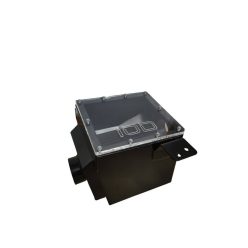
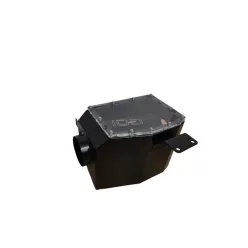
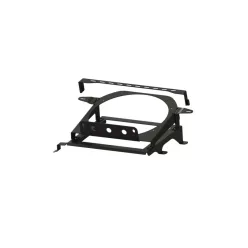
Net price: 149 €
Brief summary and key benefits
The Intake system must deliver a steady supply of cool, low-restriction air across the whole operating range. Our parts—high-flow airboxes, rigid intercooler brackets and sensor/connection adapters—enable reliable packaging and consistent performance. They are frequently used on Nissan Patrol Y60/Y61 builds, especially BMW M57 swaps where OE routing or mounts are not ideal. Clean ducting reduces charge temperatures, improves response and lowers turbo stress.
Technical Basics
Core elements include the airbox, intake piping, intercooler and sensors. The mass air flow (MAF) measures incoming air, the manifold absolute pressure (MAP) captures boost, and the intake air temperature (IAT) tracks thermal load. Swaps often require adapters to relocate these sensors while preserving the correct bore size and orientation. Common materials are aluminium tube/sheet, heat-resistant plastics and silicone elbows; sealing relies on quality clamps and O-rings. A robust intercooler mount prevents vibration-induced cracks and keeps couplers stress-free.
Typical pitfalls: undersized pipework causing restriction; filter positioned in hot air; leaks that corrupt MAF/MAP readings; and solid mounting with no isolation, leading to fatigue. Each sharp 90-degree turn adds loss—prefer smooth radii and consistent cross-sections.
Selection Criteria
Airflow & diameter: match pipe IDs and filter area to power goals. On boosted engines, a small pre-filter raises compressor work; oversized hardware wastes space. Avoid arbitrary changes to MAF housing diameter unless you can recalibrate.
Cold-air sourcing: place the airbox in a cool, high-pressure region (core support/wing), shielded from engine-bay heat with drainage against water ingress.
Interfaces & sensors: on swaps, standardise MAP/IAT threads with adapters. Choose silicone rated for temperature, and wide clamps to avoid cutting hoses.
Intercooler mounting: multi-point intercooler brackets reduce vibration and keep joints sealed. Verify clearance to the cooling pack, fan and shrouds, and ensure a clean airflow path.
Installation & Maintenance
Start with a dry mock-up; mark lengths and mounts. Install the MAF in the specified orientation and follow bends with straight sections to reduce turbulence. Tighten clamps evenly to appropriate torque and pressure-test the system. Service the filter regularly—shorter intervals after dust/mud. Periodically check intercooler bracket fasteners, chafe points on hoses and sensor connectors.
Warning: any unmetered air (post-MAF leak) upsets fuelling; keep the system airtight. Before deep water crossings, verify airbox drains and the height of connections.
FAQ
Do I need to recalibrate if I change MAF housing size?
Usually yes—the MAF signal depends on bore diameter, so ECU mapping may need adjustment.
Where should the airbox draw air from?
From a cool, positive-pressure area (front/wing). Avoid hot under-bonnet air and splash zones.
What’s the benefit of rigid intercooler mounts?
They stabilise the core, reduce vibration and maintain joint sealing under load.
Why is boost oscillating?
Often due to a leak at couplers/clamps or an erroneous MAP signal—perform a pressure test.
What routine service is recommended?
Filter cleaning/replacement, clamp re-torque, and periodic inspection of sensors, hoses and brackets.
