
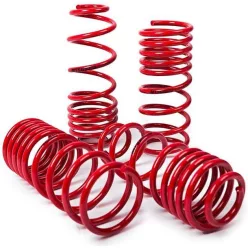
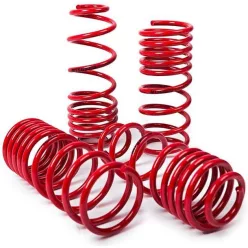
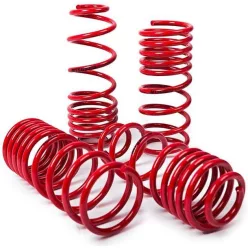
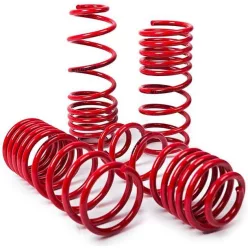
The Honda – MTS Technik lowering springs category includes chassis-specific kits for Accord II–VIII, Civic, Integra and other Honda models. Typical drop values between about 30 and 60 mm suit the brand’s naturally sporty suspension geometry. MTS Technik springs improve cornering stability, reduce body roll and sharpen steering feel while keeping the cars usable for everyday road driving.
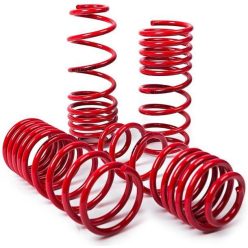
Net price: 214 €
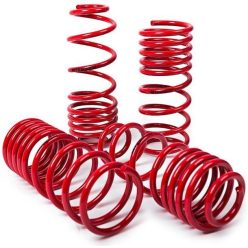
Net price: 190 €
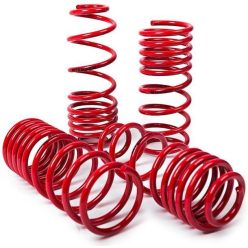
Net price: 153 €
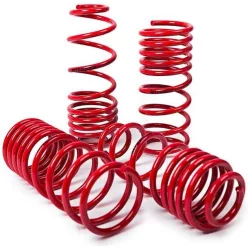
Net price: 153 €
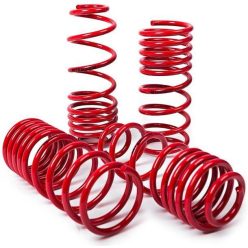
Net price: 243 €
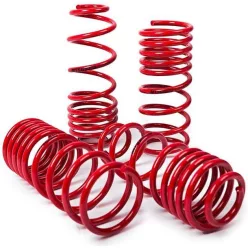
Net price: 245 €
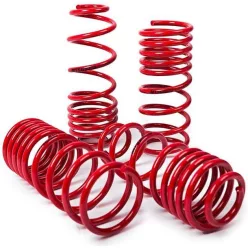
Net price: 235 €
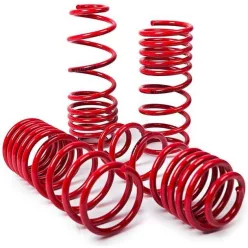
Net price: 228 €
Net price: 227 €
Net price: 236 €
Net price: 214 €
Net price: 230 €
Benefits and use cases of Honda lowering springs
The Honda – MTS Technik lowering springs are a natural match for the light, responsive chassis found on Accord, Civic and Integra models. Factory suspension is often tuned for comfort and clearance, which can allow noticeable body movement when driven hard. A carefully selected lowering spring kit drops the centre of gravity, increases precision and lets the chassis make better use of the engine’s performance. Most kits are tuned for fast-road use, so the car becomes sharper and more engaging without turning into an uncompromising track-only machine.
Technical Basics
MTS Technik lowering springs are built from high-strength spring steel with durable corrosion protection to survive daily use and winter conditions. The range covers Accord generations II, III, IV, VI, VII and VIII in various hatchback, saloon, estate and coupé versions, as well as Civic V, CRX III and Integra applications. Drop figures such as 30/30 mm, 35/35 mm, 40/35 mm or 60/55 mm indicate changes in ride height at the front and rear compared with stock. A key warning is that more extreme 50–60 mm drops substantially reduce ground clearance, so extra care is needed over speed bumps, potholes and steep ramps.
Selection Criteria
Choosing the correct Honda lowering spring kit starts with confirming the exact model, chassis code, engine and body type (for example Accord VI Hatchback, Accord VII Estate, Civic V Hatchback, Integra). The manufacturer’s drop values help you decide how aggressive the stance should be: 30–35 mm suits daily-driven cars, while larger drops deliver a more track-inspired look and feel. For most road users, a 30–35 mm drop offers the best combination of improved handling and usable clearance. Cars used frequently on mountain roads or track days may benefit from a larger drop when paired with appropriate wheel size and tyre profile.
Installation & Maintenance
Installing lowering springs on Honda models should be done by workshops familiar with MacPherson front struts and multi-link or torsion-beam rear axles. During installation, shocks, top mounts, bushes and bump stops should be inspected, because firmer springs subject them to greater loads. A precise post-installation wheel alignment is essential to keep the car stable and predictable, especially on sporty Civic and Integra applications. Over time, check spring coating, hardware and any unusual noises; a key warning is that if the car feels unstable or makes clunks after lowering, it should not be driven hard until inspected.
FAQ
How much should I lower a daily-driven Honda Accord?
For most Accord models, a 30–35 mm drop strikes a good balance between comfort and sharper handling. It noticeably improves stance and stability without making the car too low for everyday driving. Larger drops are better suited to enthusiasts who understand the trade-offs in ground clearance and ride quality.
Can I keep OEM shock absorbers with MTS Technik springs on a Honda?
With a modest 30–35 mm drop and low to moderate mileage, OE dampers can often be retained. For drops above 40 mm or high-mileage vehicles, matching the springs with sport dampers is strongly recommended to maintain control and avoid bottoming out. Using tired shocks with stiffer springs will quickly reveal weaknesses in damping.
How does comfort change on a Civic or Integra after lowering?
Lowering springs make the ride firmer and road imperfections more noticeable, especially with low-profile tyres. In return, body roll is reduced, turn-in is sharper and overall stability improves, which many drivers find more confidence-inspiring. If comfort is a priority, choose a moderate drop and avoid extreme wheel-and-tyre combinations.
Will lowering my Honda increase tyre wear?
Lowering can increase tyre wear if the alignment is not correctly set afterwards, leading to excessive negative camber or incorrect toe. With accurate alignment and regular checks, tyre life can stay close to stock. Any sign of rapid inner-edge wear is a clear signal to recheck geometry.
Is approval needed to lower a Honda for road use?
Legal requirements depend on your country’s local regulations and inspection standards. Using TÜV or ECE-approved springs simplifies inspections in many regions, and keeping the documents in the car is advisable. When in doubt, consult an inspection station or tuning specialist experienced with Honda models.
