
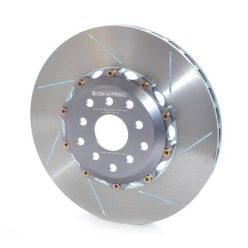
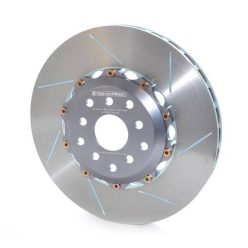
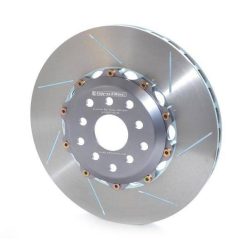
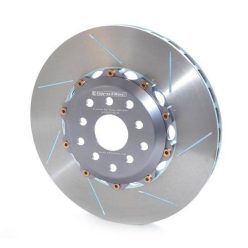
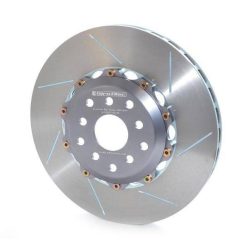
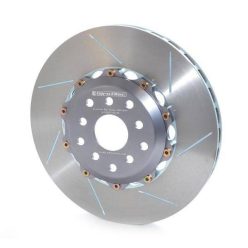
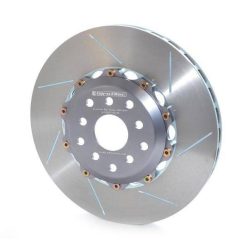
Our GiroDisc brake discs are two-piece, floating, slotted rotors engineered for high-performance road cars and track-focused builds. The hats are CNC-machined from 6061-T6 aluminium, while the friction rings use a proprietary high-strength cast iron alloy with curved internal vanes for efficient cooling. The floating design reduces thermal distortion and vibration, delivering a consistent, confidence-inspiring pedal feel even under repeated hard braking.

Net price: 830 €

Net price: 830 €
Net price: 830 €

Net price: 830 €

Net price: 830 €

Net price: 830 €
Net price: 1 224 €
Net price: 1 224 €
Net price: 1 048 €
Net price: 1 048 €
Net price: 1 224 €
Net price: 1 224 €
GiroDisc brake discs for road and track performance
GiroDisc brake discs are designed for drivers who need more than OEM-level braking, but still want reliable, bolt-on components. The two-piece floating construction, slotted friction surface and carefully matched materials provide stable braking performance at elevated temperatures. Each part number is tailored to a specific vehicle and brake system, so the upgrade integrates cleanly with OEM calipers or compatible big brake kits while improving consistency and durability.
Technical Basics
A typical GiroDisc assembly consists of a 6061-T6 aluminium hat (bell) bolted to a high-carbon, proprietary cast iron rotor ring. Curved internal cooling vanes draw air through the disc, helping to evacuate hot air from the centre and reducing the risk of fade during repeated heavy stops. The slotted surface of the rotor helps to sweep away pad gases and debris, maintaining a fresh, high-friction interface between pad and disc.
The use of lightweight aluminium hats reduces unsprung and rotational mass compared to a one-piece cast iron disc, which benefits steering response and suspension control. Rotor diameters typically range from around 300 mm up to 380 mm or more, depending on the vehicle application, and thickness matches the original or big brake kit specification. Many applications are available for both front and rear axles, allowing you to maintain a well-balanced brake bias across the car.
The two-piece, floating (floating) mounting allows the iron rotor ring to expand and contract under heat without transferring excessive stress into the aluminium hat. This significantly reduces the tendency for the disc to warp or crack from thermal shock, especially on heavy cars or those used on fast road and circuit. The carefully selected pad contact area and vane geometry are optimised to provide repeatable performance over long stints.
Selection Criteria
Choosing the right GiroDisc brake disc always starts with accurate vehicle data: make, model, engine and model year, plus the exact brake system configuration. Each part number is matched to a specific OEM disc diameter, thickness, bolt pattern and offset, so it is important to cross-check these parameters before ordering. For best results, front and rear discs should be selected as a set, so that the overall brake balance and ABS/ESC calibration behave predictably.
Your intended use is equally important. For fast road and occasional track days, a slotted two-piece rotor used with a suitably sporty pad compound will typically be sufficient, offering a clear improvement in bite and fade resistance over stock. For intensive circuit work, endurance racing or very powerful, heavy cars, you may prefer larger diameter discs, more thermally robust pad compounds and high-temperature brake fluid, all working together as a system.
Pad choice has a major impact on feel and disc life. GiroDisc rotors are compatible with a wide range of performance pad compounds, from fast road to full race. A very aggressive race pad can deliver exceptional bite and high-temperature stability, but may increase dust, noise and disc wear in everyday driving. By contrast, a milder road-sport pad offers better comfort but will reach its limits sooner on track, so you should align the pad choice with your real-world usage.
Installation & Maintenance
Correct installation of GiroDisc brake discs is critical to achieving vibration-free, consistent performance. Before fitting, the hub faces must be thoroughly cleaned of rust and debris so that the disc seats perfectly flat. Mounting bolts should always be torqued to the manufacturer’s specified torque values, using appropriate thread treatment where recommended, and rotor run-out should be checked with a dial gauge.
Whenever new discs and pads are installed, a proper bed-in (bedding) procedure is essential. This involves a series of controlled, progressively harder stops that gradually build temperature in the system and lay down an even transfer layer of pad material on the disc. Skipping this step, or jumping straight into full-power braking from cold, can cause hotspots, uneven deposits and premature cracking or judder.
Ongoing maintenance includes periodic measurement of disc thickness to ensure it remains above the specified minimum, as well as inspection for heat checking, grooves or abnormal discolouration after heavy use. After track days or mountain driving, it is wise to inspect the discs and pads for signs of overheating or uneven wear. If you experience vibration, pulsing or noise, check hub cleanliness, run-out and mounting hardware first, as continuous operation with such symptoms can damage both discs and other brake components.
FAQ
How are GiroDisc brake discs different from OEM discs?
GiroDisc rotors use a two-piece floating design with a lightweight aluminium hat and a high-strength cast iron friction ring, instead of a one-piece cast disc. This improves cooling, reduces warping and cuts unsprung mass, which all contribute to more consistent braking under hard use. The slotted surface also manages pad gases and debris better than a plain OEM disc.
Are GiroDisc brake discs suitable for daily driving?
Yes, most applications are perfectly usable on the road when paired with an appropriate fast-road brake pad. You may notice slightly more noise or feel through the pedal compared to a plain OEM disc, but the trade-off is improved bite and fade resistance. For primarily street-driven cars, it is sensible to choose a pad compound that balances comfort and performance.
What brake pads should I use with GiroDisc rotors?
For mixed road and occasional track use, a mid-aggressive, temperature-resistant sport pad is usually ideal. Dedicated track cars benefit from full race pads, which offer superior performance at very high temperatures but can be noisy and harsh when cold. Always follow the recommendations of both the disc and pad manufacturer when pairing components.
How long do two-piece GiroDisc brake discs typically last?
Service life depends heavily on vehicle weight, power, driving style and pad choice, but the robust cast iron rotor and efficient cooling generally offer very good durability. Under hard circuit use, wear will naturally be faster than on the road. One advantage of the two-piece design is that the iron ring can usually be replaced separately, so you do not need to buy a complete new assembly every time.
Do I need to bed in new GiroDisc brake discs?
Yes, every new disc and pad combination requires a proper bedding procedure to achieve optimal performance and longevity. A structured sequence of moderate-to-hard stops builds heat gradually and lays down an even transfer layer on the disc surface. This reduces the risk of judder, hotspots and premature cracking, and helps you get the most from your braking upgrade.
