
In GFB Fuel Pressure Regulators you’ll mainly find FX-S, FX-R and FX-D options in Race Series and StreetSeries versions, where titles commonly show AN6/AN8 connections and a stated flow figure (e.g. 750–1800 lph).
Use Filter and sorting to narrow the list, then open each product card and confirm the mounting style (for example Bosch rail mount) and any 1/8 NPT provision you may need for monitoring. Pick the right unit for your setup and place your order.
![FX-D Fuel Pressure Regulator Race Series AN8 1800lph [GFB]](https://www.llracing.eu/img/30353/8070x/248x248,r/8070x.webp?time=1754400621 "FX-D Fuel Pressure Regulator Race Series AN8 1800lph [GFB]")
Net price: 241 €
![FX-D Fuel Pressure Regulator Race Series AN8 1800lph [GFB]](https://www.llracing.eu/img/30353/8070/248x248,r/8070.webp?time=1754400623 "FX-D Fuel Pressure Regulator Race Series AN8 1800lph [GFB]")
Net price: 241 €
![FX-R Fuel Pressure Regulator Race Series AN6 1300lph [GFB]](https://www.llracing.eu/img/30353/8060x/248x248,r/8060x.webp?time=1754400618 "FX-R Fuel Pressure Regulator Race Series AN6 1300lph [GFB]")
Net price: 232 €
![FX-R Fuel Pressure Regulator Race Series AN6 1300lph [GFB]](https://www.llracing.eu/img/30353/8060/248x248,r/8060.webp?time=1754400622 "FX-R Fuel Pressure Regulator Race Series AN6 1300lph [GFB]")
Net price: 232 €
![FX-S Fuel Pressure Regulator 750lph (Bosch Rail Mount) [GFB]](https://www.llracing.eu/img/30353/8051x/248x248,r/8051x.webp?time=1754400621 "FX-S Fuel Pressure Regulator 750lph (Bosch Rail Mount) [GFB]")
Net price: 192 €
![FX-S Fuel Pressure Regulator 750lph (Bosch Rail Mount) [GFB]](https://www.llracing.eu/img/30353/8051/248x248,r/8051.webp?time=1754400623 "FX-S Fuel Pressure Regulator 750lph (Bosch Rail Mount) [GFB]")
Net price: 192 €
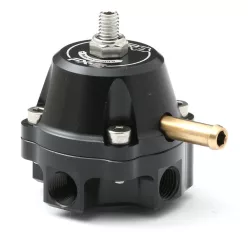
Net price: 192 €
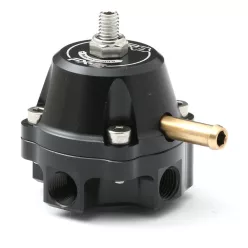
Net price: 192 €
GFB Fuel Pressure Regulators – consistent pressure control, flow-matched connections and practical mounting options
A fuel pressure regulator (FPR) is used to maintain a repeatable pressure at the fuel rail, while managing excess flow via the return line in return-style systems.
This category includes several GFB options such as FX-S, FX-R and FX-D, where the product titles highlight AN6/AN8 plumbing and stated lph flow figures to help you match the regulator to your build.
Before buying, it’s worth checking your fitting standard, available space and whether you want a dedicated point for a pressure gauge or pressure sensor.
Technical Basics
In a return-style layout, the regulator maintains the set pressure and bleeds excess fuel through the return line, which helps keep pressure steady at the rail. If the return path is restricted, pressure can creep and become less stable under load.
Connection standards matter: AN sizes such as AN6 and AN8 are not the same as NPT tapered threads. If a title references 1/8 NPT, treat it as a separate standard and use correct tapered-thread sealing practice.
Flow markings like 750 lph, 1300 lph and 1800 lph provide a quick comparison, but the whole system (pump capacity, filters and line routing) determines real-world behaviour. The target is avoiding unnecessary pressure drop or oscillation at load.
You’ll see both Race Series and StreetSeries naming; these can indicate different layouts or porting approaches. Where “Bosch rail mount” is referenced, physical fitment at the rail becomes the key check.
Selection Criteria
Start with your plumbing: if your build is based on AN6, the FX-R options are a natural starting point, while higher-flow setups may lean toward AN8 connections such as FX-D. Matching port size upfront reduces the need for adapters and extra leak points.
Next, decide on mounting: for a straightforward fit at the rail, look for Bosch rail-mount options and confirm clearance around hoses and fittings. If you prefer a universal location, port layout and hose routing become the deciding factors.
Then consider monitoring: if you want a direct take-off for measurement, an item referencing 1/8 NPT may suit gauge or sensor planning. Set pressure based on measured values, not estimates.
Finally, match the use case: track use often increases heat and vibration demands, while street use prioritises long-term leak-free operation. In both cases, a properly sized return path and tidy routing support stable pressure control.
Installation & Maintenance
Only work on the fuel system after depressurising it, and perform a strict leak check after the first start. This is a safety step, not an optional extra.
With AN fittings, focus on clean sealing faces and correct tightening; with NPT, use appropriate thread sealing and insertion depth. If you use a 1/8 NPT point, avoid excess sealant that could contaminate the system.
When setting pressure, verify readings at idle and under load; load behaviour is what reveals pressure drop, creep or instability. If issues appear, check the return line for restrictions and re-check all connections.
For ongoing reliability, periodically inspect fittings, hose ends and mounts; heat cycles can loosen joints over time. Warning signs include fuel smell, damp connections and unstable fuel pressure under load.
FAQ
How do I choose between GFB FX-S, FX-R and FX-D?
Use the title cues: confirm AN6/AN8 to match your hoses, then compare the stated lph figure (e.g. 750–1800) against your system’s demand. After that, decide whether you need rail-mount fitment (such as Bosch rail mount) or a universal layout. Always finalise the choice based on your actual plumbing plan.
What do AN6 and AN8 mean in these listings?
AN6 and AN8 indicate the fitting size used for the fuel line connections. If your system uses a different standard, you may need adapters, which increases complexity and potential leak points. Keeping a consistent standard across the system is usually the most reliable approach.
What should I know about 1/8 NPT?
1/8 NPT is a tapered thread standard, different from AN, and is commonly used for adding a gauge or sensor take-off. Use proper tapered-thread sealing practice and ensure there is enough clearance for the gauge or sensor body. Do not mix AN and NPT assumptions during assembly.
Why can fuel pressure be unstable under load?
A restricted return line, a partially blocked filter or an undersized fitting can cause pressure creep or fluctuation. Loose fittings and incorrect sealing can also introduce instability. Confirm behaviour with load testing, not idle-only readings.
What should I check before ordering a Bosch rail-mount regulator?
Confirm your rail is genuinely Bosch mount compatible and check physical clearance for fittings and hose routing. Also verify you can route lines without tight bends or chafing points. A quick fitment check prevents wasted time during installation.
Once you’ve confirmed port size, mounting style and monitoring needs, choose the right GFB regulator and check out.
