
The Gauges & Displays range delivers precise, real-time feedback on engine, driveline and cooling health. You’ll find wideband AFR kits, oil pressure and temperature gauges, tachometers and other essential readouts. The aim is to boost reliability, catch issues early and fine-tune setups for both road and track use.

Net price: 288 €
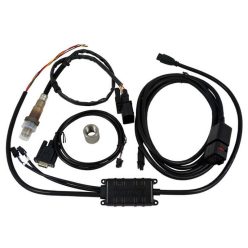
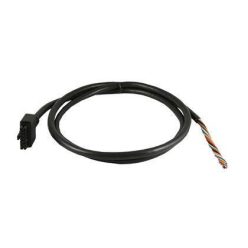
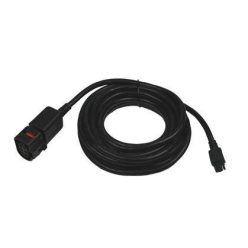
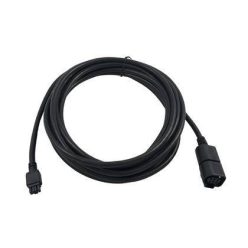
Innovate Motorsports (3877) LC-2 Digital Wideband Lambda Controller Kit with Bosch LSU 4.9 O2 Sensor
Net price: 237 €
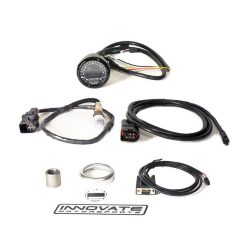
Net price: 256 €
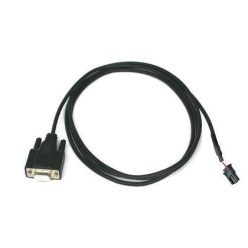
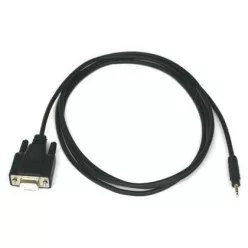


Brief summary + key benefits
Gauges & Displays provide accurate data on engine and peripheral systems so drivers and technicians can react to trends before failures occur. Wideband AFR helps optimise fuelling, oil pressure and temperature monitoring protect the lubrication system and thermal balance, while boost/vacuum and EGT gauges aid forced-induction and durability tuning. The goal is prevention: detect anomalies early, fine-tune consistently and raise overall reliability.
Technical Basics
Modern instruments rely on electronic senders outputting analogue voltage, frequency or digital (e.g., CAN) signals. Wideband systems use UEGO sensors to cover the full mixture range. Common threads include 1/8-27 NPT, M10x1 and 1/8 BSPT, with adapters for clean integration. Displays can be analogue pointer or digital (LED/LCD), often with programmable alarms and dimming.
Wiring best practice: shielded signal lines, solid grounds and stable supply. Wideband controllers heat the probe; observe warm-up, correct exhaust placement and splash protection. Compatibility depends on vehicle, ECU and protocol—OE and aftermarket ECUs may use different levels. Typical channels: AFR, oil pressure/temp, coolant temp, boost/vacuum, EGT. Alarm limits should reflect engine build and use case (road, track, drift, rally). Pitfalls include poor grounding, noisy supply, incorrect sensor depth and probes installed too close to the turbine (overheat risk).
Selection Criteria
Define your aim: diagnostics, calibration or live race monitoring. For AFR choose a stable, fast-heating wideband; for turbo engines, robust boost monitoring and alarms are essential. For daily use prioritise legibility, high-contrast faces and anti-glare lenses; at night, adjustable brightness/colour helps. If you need data logging, select PC/SD capture or ECU integration.
Match senders and fittings: use proper sealant on tapered NPT threads, crush washers on parallel threads; protect coolant and exhaust runs with corrosion and heat shielding. Accuracy depends on sensor class and correct calibration; periodic free-air calibration keeps wideband readings truthful. Choose mounting points close to the source while retaining service access.
Budget for accessories: T-pieces, adapters, pods/brackets, harness protection and fuses. If you need several channels in one spot, a compact multi-gauge or display module declutters the cabin and adds alarms and logging; for a classic look, analogue pointers suit better.
Installation & Maintenance
Work on a stable surface with the vehicle safely supported. Use a relayed supply, solid grounds and route signal looms away from ignition and high-current paths. Torque senders to the maker’s spec; use sealant on tapered threads and crush washers on parallel ones. AFR probe: ~10–12° tilt, after the turbo, roughly 50 cm downstream (general guideline), oriented to avoid condensation.
In service, watch for noisy traces (flickering pointers, unstable digits)—usually grounding or supply issues. Periodically check loom retention, connector condition and heat protection near the exhaust. Perform regular wideband calibration; incorrect lambda causes poor fuelling and potential engine damage. After any intervention, run a short test drive and verify readings.
FAQ
Q: Which is more critical on the road: oil pressure or temperature?
A: Both—oil pressure shows immediate lubrication health, temperature reflects sustained load; fitting both is recommended.
Q: Do wideband systems require periodic calibration?
A: Yes—regular calibration (per the maker’s procedure) preserves accuracy.
Q: Can ignition noise affect readings?
A: Yes. Use shielded cable, star-grounding and a separately fused supply.
Q: Where should the AFR probe sit?
A: Post-turbine with proper heat protection, avoiding condensation; on NA engines, in a well-scavenged header runner.
Q: What to check for bouncing oil-pressure signals?
A: Verify ground, supply and consider a damper/orifice; also rule out mechanical causes.
