
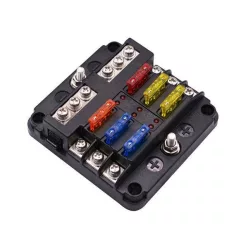
Our Fuse Boxes & Fuses selection covers automotive blade (mini/standard), high-current MIDI/MEGA/ANL fuses, sealed holders and compact distribution panels. Correct sizing protects looms, speeds fault finding and keeps wiring tidy. Choose by load current, wire mm² (AWG) and environment (IP rating) for reliable motorsport and road use.

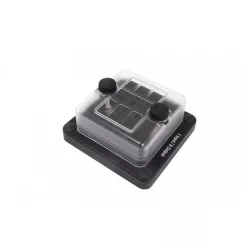
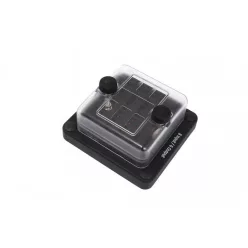

Brief summary & key benefits
Fuse Boxes & Fuses make electrical systems safer and easier to service. Blade (mini/standard/maxi) fuses suit small/medium loads, while MIDI/MEGA/ANL styles cover high-current feeds and distribution. Sealed panels protect contacts in harsh environments and tidy up branching with common busbars. Size fuses to protect the wire based on continuous current, wire mm² (AWG) and run length.
Technical Basics
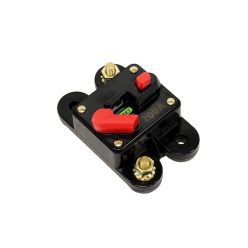
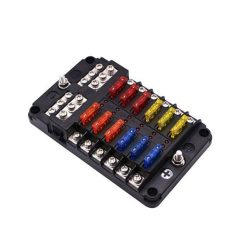
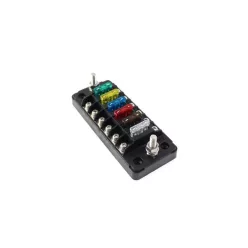
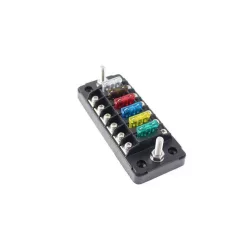
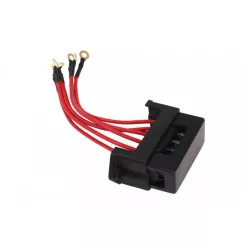
Types: blade (ATC/ATO), easy to swap; MIDI/MEGA, bolted, low resistance; ANL, popular for audio/high-current; resettable breakers for convenient troubleshooting. Panels may share a common feed or use individual feeds, sometimes with negative bars and relay slots.
Sizing: pick roughly 125–150% of the continuous load and ensure the fuse rating never exceeds the wire’s safe ampacity. Consider inrush on fans/pumps and avoid nuisance blows by using relays or slower characteristics where appropriate. Place main fuses close to the source (battery/master) so the entire run is protected.
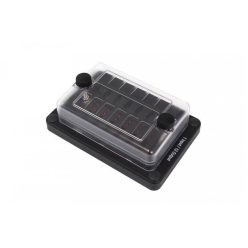
Placement & protection: choose sealed housings (IP-rated) for engine bay/off-road; label circuits clearly and carry spare fuses. Keep bolted joints clean and tightened to spec; periodic warmth indicates rising contact resistance.
Selection Criteria
Environment: cabin → open panel; bay/exterior → sealed unit. Current & wire size: match the fuse to both the expected load and the cable mm². Features: common feed bars, integrated ground bars, relay slots, LED blown indicators for quick diagnostics.
System design: place big consumers (fans, fuel pumps, heaters) behind relays; give ECUs/dashes a clean switched supply on separate fuses; isolate noisy accessories (cams, loggers, chargers) on their own small circuits.
Installation & Maintenance
Crimp quality terminals with the correct tool; seal and strain-relieve looms; route away from heat and abrasion. Fit the main MIDI/MEGA/ANL fuse within 10–20 cm of the source. Before first start, verify voltage drop and check for warm joints under load. Re-torque bolted connections periodically, especially after heat cycles and off-road use.
FAQ
How many ways should my panel have?
Count present loads and add 20–30% headroom for future circuits.
When to use ANL/MIDI instead of blade?
For high-current feeds and long main runs where low resistance and bolted joints are required.
Why do fuses blow on startup?
Inrush current. Use relays/soft-start or select a rating that accounts for inrush without exceeding wire capacity.
Can multiple devices share one fuse?
Possible, but troubleshooting is harder; separate individual fuses are better.
Where should the main fuse sit?
Near the source (battery/master) so the entire cable is protected.
