
The Fuel Rails category covers injector fuel distribution solutions (injector rails) for common performance platforms and upgraded fuel system layouts.
You’ll typically see Aeromotive, DeatschWerks, Radium and TurboWorks options, where choosing the right port standard (e.g. ORB, AN, NPT) is key for clean plumbing and serviceability.
Use filters for brand/price/stock and sorting, then open the product card to confirm engine fitment, injector style (top feed/side feed) and port size. Pick the fuel rail that matches your build and place your order.
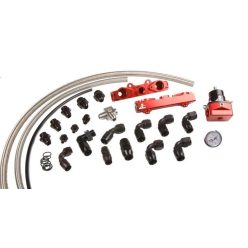
Net price: 1 569 €

Net price: 341 €
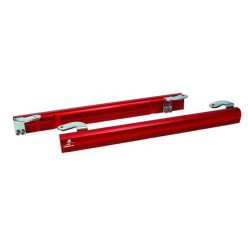
Net price: 410 €
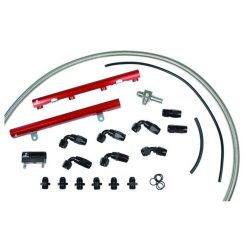
Net price: 1 081 €
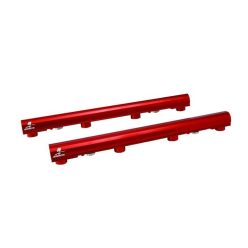
Net price: 440 €
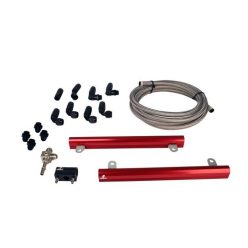
Net price: 1 176 €


Net price: 894 €

Net price: 933 €

Net price: 1 835 €

Net price: 427 €
Fuel Rails – consistent injector feed, sensible port layouts and reliable fitment for tuned builds
A fuel rail (injector rail, fuel distribution rail) delivers fuel evenly to the injectors and keeps the plumbing serviceable when you move beyond stock power levels.
Upgrading a rail becomes relevant when you fit larger injectors, change the rail layout, or want a cleaner solution for adding a fuel pressure regulator connection and additional feed/return routing.
Because the category covers multiple manufacturers, correct selection always starts with engine fitment, injector style (top feed/side feed) and the connection standard you plan to run (ORB/AN/NPT).
Technical Basics
Material and internal design influence stability: several listings reference billet aluminium constructions, including 6061T6 specifications on some applications.
Do not mix port concepts: ORB-08 style ports seal on an O-ring, while 1/8 NPT uses a tapered thread, so assembly methods and typical leak points differ.
On higher-demand setups, internal bore can matter; some product descriptions mention a 5/8" through-bore (ID), aimed at supporting higher flow and reducing hydraulic fluctuation.
Also note compliance statements where shown: some motorsport-focused rails are described as not legal for use on emissions-controlled vehicles unless they match OEM replacement specifications.
Selection Criteria
Start with platform fitment and engine code logic (the assortment includes applications referenced for Subaru STI, VW 1.8T 20V, Toyota/Lexus 2JZ-GTE and Mitsubishi Lancer EVO-type engines, among others).
Next, confirm injector style: side feed and top feed rails differ in mounting and sealing, so the injector seat and O-ring arrangement must match your injectors.
Then match plumbing: if your system is built around AN hose ends and adapters, select a rail and port layout that minimises extra fittings and keeps inlet/outlet routing simple and accessible.
Finally, plan for add-ons: multiple product descriptions explicitly reference easier integration of a fuel pressure regulator and N2O feed points, which can be beneficial when you design the rail as part of the full fuel system.
Installation & Maintenance
Always depressurise the fuel system before work and perform a full leak check after first start, as any fuel leak is an immediate fire risk.
With ORB ports, focus on the O-ring condition and clean sealing faces; with NPT, use correct thread sealing and insertion depth. Treat ORB/AN/NPT as distinct standards rather than “close enough”.
Mount the rail so hoses are not under strain and injectors are not side-loaded; rigid billet rails and brackets can amplify alignment issues if the fitment is forced.
For long-term reliability, periodically inspect injector O-rings, fasteners and fittings after heat cycles. Fuel smell or damp joints should trigger an immediate inspection.
FAQ
When should I upgrade my fuel rail?
Typically when you install larger injectors, rework the fuel line layout, or want a more serviceable port configuration for your build. It can also help when you redesign feed/return routing around an aftermarket regulator. Always confirm engine fitment on the product card.
What is the difference between top feed and side feed?
Top feed and side feed describe how the injector is supplied and mounted, which changes the rail’s sealing and geometry. Using the wrong style can prevent the injector O-ring from sealing correctly. Verify injector type before ordering a rail kit.
Why do ORB/AN/NPT ports matter?
ORB seals with an O-ring, while NPT seals on a tapered thread, so they require different assembly practices. Matching your rail ports to your AN-based plumbing reduces adapters and potential leak points. Fewer interfaces usually means fewer problems.
Is a fuel rail suitable for E85?
Rail material alone is not the full answer; you must confirm the entire system’s material compatibility (hoses, seals, filters, injector O-rings). E85 is especially sensitive to seal and hose selection. If unsure, follow manufacturer specifications for every component in the fuel path.
What should I check after installation?
Do a thorough leak check at injectors and all fittings, then re-check under load conditions where issues may appear. If you detect fuel smell or dampness, stop and depressurise immediately. Most faults trace back to sealing surfaces, O-rings or mismatched port standards.
Filter by your engine and port standard, then choose the right fuel rail and check out.
