
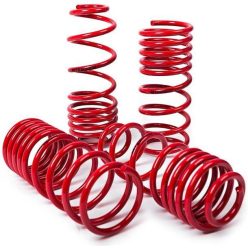
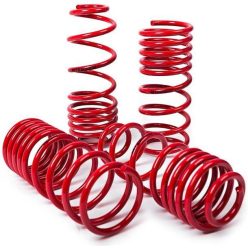
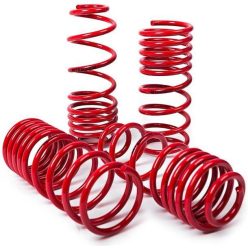
The Ford – MTS Technik lowering springs category spans classic Capri and Escort generations through to modern C-Max and Focus models with dedicated lowering spring kits. Drop options between roughly 25 and 60 mm reduce body roll, improve turn-in and give a more planted stance. Each MTS Technik kit is matched to specific axle loads and body styles, complementing the inherently sporty Ford chassis characteristics.
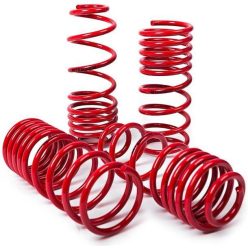
Net price: 166 €
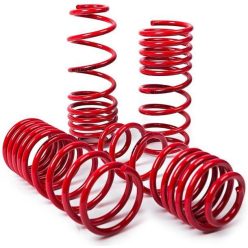
Net price: 193 €
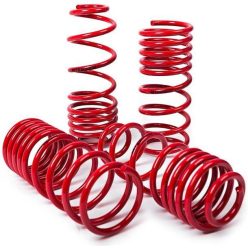
Net price: 74 €
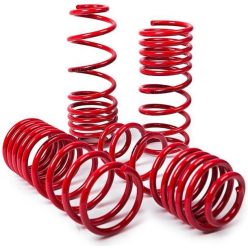
Net price: 214 €
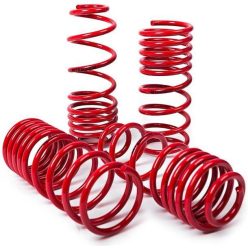
Net price: 187 €
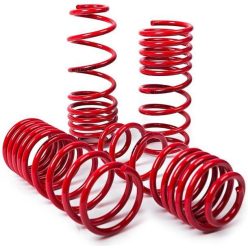
Net price: 145 €

Net price: 145 €
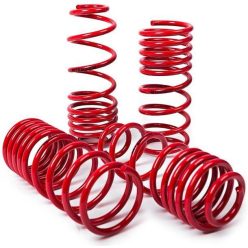
Net price: 145 €
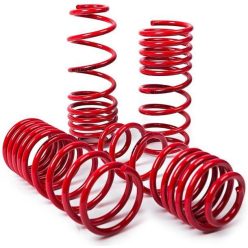
Net price: 140 €
Net price: 136 €
Net price: 135 €
Net price: 166 €
Advantages and applications of Ford lowering springs
The Ford – MTS Technik lowering springs are a popular upgrade for both classic and modern Ford models where fine-tuning the factory suspension is desired. Cars such as Capri, Escort, Cougar, C-Max and Focus often leave the factory with a compromise between comfort and handling. A well-chosen lowering spring kit lowers the centre of gravity, cuts down on body roll and sharpens steering feedback. As a result, quick direction changes, twisty roads and motorway speeds feel more controlled and confidence-inspiring.
Technical Basics
MTS Technik lowering springs are made from high-strength spring steel with long-lasting corrosion-resistant coatings to withstand weather and road salt. Dedicated kits exist for Ford C-Max, Focus C-Max, Capri II/III, several Escort generations and the Cougar, each tuned to the relevant axle-load range. Drop figures such as 25/25 mm, 30/30 mm, 35/35 mm, 40/40 mm, 60/40 mm or 60/60 mm indicate front and rear ride-height changes relative to stock. A key warning is that more extreme drops reduce ground clearance and available suspension travel, which can affect comfort and component longevity if taken too far.
Selection Criteria
To select the correct Ford lowering spring kit, identify the chassis code, engine and body style (for example Escort 3/4, Escort Cabriolet, Orion, C-Max I, Cougar). Decide how aggressive you want the drop to be: 25–35 mm kits suit daily-driven street cars, while 40–60 mm options give a clearly more track-inspired stance. For mixed road use, a 30–35 mm drop usually offers the best compromise between stability, comfort and ground clearance. When running larger wheels and wider tyres, you must pay close attention to wheel offset and tyre sidewall height to ensure that tyres do not contact the arches under load.
Installation & Maintenance
Installing lowering springs on Ford models, particularly those with complex rear suspension layouts, demands careful work from an experienced technician. During installation, shock absorbers, bushes, top mounts and bump stops should be inspected and replaced if worn, as firmer springs subject them to higher loads. After the job a thorough wheel alignment is mandatory, including toe and, where possible, camber adjustments, to maintain straight-line stability and even tyre wear. Regular inspections of the springs and suspension hardware are advisable; if you notice unusual noises, bounciness or nervous steering, a key warning is to have the system checked before driving at high speeds.
FAQ
How much lowering is suitable for a daily-driven Ford Escort?
For most road-going Escorts, a 30–40 mm drop gives a clearly sportier appearance and more controlled handling without compromising ground clearance too much. More extreme 60 mm setups place greater demands on the suspension and require extra care on poor roads. Always consider wheel size and typical road conditions when choosing.
Can I use MTS Technik springs with factory Ford dampers?
With moderate 30–35 mm lowering and good-condition OE dampers, factory shocks can often remain in place. For higher mileage cars or setups in the 40–60 mm range, upgrading to sport dampers is recommended to maintain damping performance and protect components. Matching springs and dampers generally delivers the most durable and predictable result.
How does comfort change on a Ford C-Max or Focus after lowering?
Lowering springs make the ride firmer, so small bumps are felt more strongly, but they also reduce body movement and improve stability. Many drivers find the car feels more secure at speed and more responsive in everyday driving. If comfort is important, a modest drop and sensible wheel-and-tyre setup will keep the ride acceptable.
Will lowering increase tyre wear on my Ford?
Lowering may increase tyre wear if alignment is not corrected, leading to excess negative camber or unsuitable toe settings. With a proper alignment and periodic checks, tyre life can remain close to standard. Uneven wear, especially on inner edges, is a sign that an alignment check is overdue.
Is lowering my Ford legal on public roads?
Legality depends on your country’s local regulations and inspection standards. Using lowering springs with TÜV or ECE approval often simplifies inspections and documentation. If you are unsure, consult an inspection station or suspension specialist familiar with modified Fords in your region.
