
Ferrari – D2 Racing Street suspension kits are road-focused, height-adjustable spring–damper systems that sharpen steering feel and cornering while preserving everyday comfort. Threaded bodies provide precise ride-height control. Always match the kit to your exact axle loads, body and brake/wheel package, and stay within the manufacturer’s approved adjustment range.
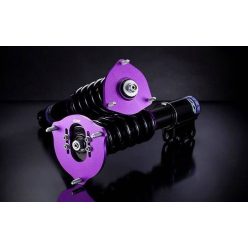
Net price: 3 543 €
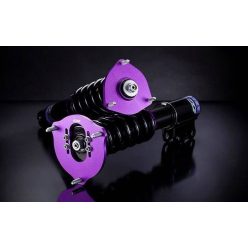
Street Suspension D2 Racing FERRARI 458 / 458 Spider (with hydraulic lift?excl.control system) 10-15
Net price: 3 148 €
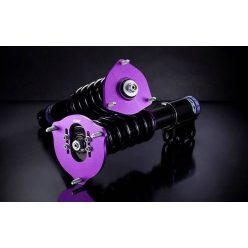
Net price: 3 148 €
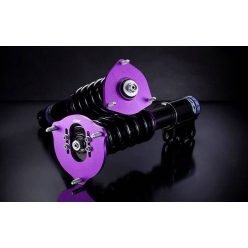
Net price: 2 753 €

Net price: 3 543 €

Net price: 3 148 €

Net price: 2 753 €

Net price: 4 332 €

Net price: 3 937 €

Net price: 3 937 €

Net price: 3 543 €

Net price: 3 148 €
Brief summary & key benefits
Ferrari – D2 Racing Street kits enhance agility with calmer body control, precise ride-height tuning and consistent damping while keeping everyday comfort intact. A moderate drop lowers the centre of gravity, trims pitch/roll and clarifies steering feedback. Application-specific valving, robust bushings and anti-corrosion finishes support long-term durability on mixed roads.
Technical Basics
Each kit pairs gas-charged dampers with vehicle-specific steel springs. A threaded body with locking collars allows per-axle height adjustment within the approved range. Depending on application, springs may be linear for direct feedback or dual-rate/progressive to improve small-bump compliance while maintaining support under load. Heat-stable oil keeps damping consistent during spirited driving; dust boots and quality seals protect sliding parts, and exterior components receive anti-corrosion coatings.
Ferrari specifics: mid-engined V8 models and front-engined V12 GTs differ markedly in weight distribution and unsprung mass. Larger brake/ wheel packages and carbon-ceramic systems shift axle loads and the useful damping window. Excessive lowering reduces usable bump travel, narrows camber/toe adjustment latitude and can deteriorate steering-link angles; approach changes in small, documented steps.
Because of stiff aluminium subframes and precise mounting points, small setup changes are clearly felt. Inspect top mounts and bushings during installation; worn parts compromise damper control and may introduce noise. Keep front-rear ride-height balance conservative for road use to maintain stable aero and predictable entry behaviour.
Selection Criteria
Use case — For daily and fast-road use, start near a mid-range height. This preserves travel and alignment freedom while offering firm control. For occasional track days, lower slightly if clearance remains safe and tyre temperatures are managed.
Body & balance — Mid-engined cars have lighter front axles and can become nervous with excessive front camber or very low heights. Front-engined GTs benefit from careful rear ride-height tuning to balance entry bite with traction on exit.
Tyres & wheels — Big wheels and short sidewalls look sharp but reduce compliance and raise bottom-out risk. On street tyres, moderate camber and a touch more rebound usually deliver clean feedback without harshness; semi-slicks can justify firmer damping if road quality allows.
Brakes & unsprung mass — Carbon-ceramic brakes and wide wheels increase unsprung mass and thermal load. Match spring rates accordingly and monitor rebound settings to prevent float over long undulations. Keep a written baseline (height/damping/camber) to revert quickly between road and event setups.
Comfort — Ultra-low ride heights add NVH and reduce travel. For mixed roads, a middle stance with balanced toe and modest camber protects tyre life and keeps the car settled over crests and compressions.
Installation & Maintenance
Have a qualified shop fit the kit. Clean threads and apply light anti-seize; torque all fasteners to factory specs and preload rubber bushes at ride height. After a shakedown drive, re-torque and perform a four-wheel alignment (camber/toe/caster). Check wheel-arch clearances on full lock and with compression to avoid contact at speed.
For longevity, periodically wash threads, refresh anti-corrosion spray and confirm that lock collars have not moved. Inspect top mounts and damper shafts for any play or oil mist. Maintain a detailed baseline log so you can revert easily after experimentation or tyre changes.
FAQ
Q: How low can I go for street use?
A: Stay within the manufacturer’s approved range and begin near mid-height to preserve travel and alignment latitude.
Q: Is alignment mandatory after installation?
A: Yes — lowering alters geometry; set camber/toe/caster correctly after fitting and after any height change.
Q: Do carbon-ceramic brakes affect setup?
A: They can — changed unsprung mass and heat loads may justify tweaks to spring rate and rebound control.
Q: What baseline settings should I start with?
A: Mid-height, moderate front camber and the recommended damping baseline; fine-tune in small steps based on tyres and roads.
Q: Will very low ride heights hurt comfort?
A: Yes — they cut bump travel and raise NVH; for road use a conservative stance works best.
