
Our Electronic Modules add smart functions to your build: CAN switch panels, wideband lambda controllers, thermocouple amplifiers (TCA), DBW and gearbox control units, battery isolators/current monitors, USB–CAN interfaces and more. They extend your ECU, reduce wiring complexity and increase reliability for both track and street applications.
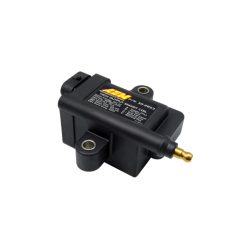

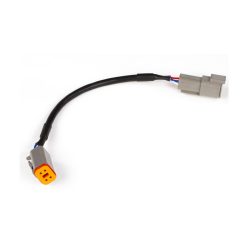
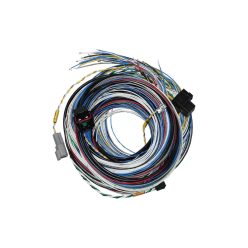
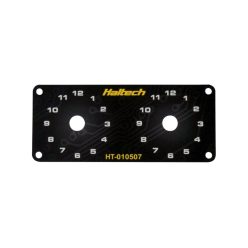
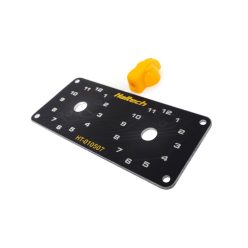

Net price: 567 €

Net price: 503 €

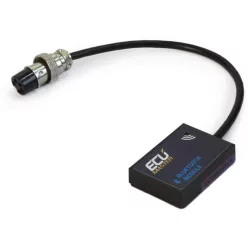

Brief summary & key benefits
Electronic Modules extend your ECU with dedicated hardware: CAN switch panels, wideband controllers, thermocouple amplifiers, DBW/gear modules, battery isolators/monitors and USB–CAN bridges. They reduce loom complexity, add channels for logging and improve reliability.
Technical Basics
CAN switch panels replace dozens of wires with a single twisted pair. Configurable latching/momentary behaviour and LED feedback make cockpit control clean and robust.
Wideband lambda controllers provide fast, linear readings via CAN and/or 0–5 V. Stable heater control and correct calibration are crucial for accurate closed-loop fuelling.
TCA modules (thermocouple) handle high-temperature K/J probes with cold-junction compensation and high sample rate, ideal for EGT and turbine monitoring.
DBW & gearbox modules offload time-critical PWM drive and safety from the ECU, providing deterministic control of throttle bodies and transmissions.
Battery isolator/monitor units handle high currents, support crash shutdown and log voltage/current over CAN. Verify continuous and peak ratings plus remote control options.
USB–CAN / bridge interfaces are essential for configuration and logging; check supported bitrates and software compatibility.
Selection Criteria
ECU compatibility: confirm message IDs/byte order, analogue scaling and available drivers or templates in your tuning suite.
Channel count & expansion: leave 20–30% headroom for future sensors; prefer modules with daisy-chain or multiple CAN ports.
Throughput & latency: high-dynamics signals (wheel speed, TCA) require adequate sampling and low latency to keep control loops stable.
Environment: choose sealed, vibration-resistant enclosures, proper temperature ratings and solid grounding/isolation for engine-bay use.
Software & diagnostics: real-time telemetry, self-test, DTCs and easy firmware updates save hours at the track.
Installation & Maintenance
Design a proper CAN topology (linear bus), keep stubs short and ensure 120 Ω termination. Use correct gauge for high-current paths and heatshrink plus strain relief at every joint. After first start, sanity-check channels and logs; back up configurations before firmware updates.
Inspect connectors, mounts and module temperatures periodically; warmth indicates rising contact resistance. Apply updates in a controlled session with a validation run.
FAQ
Analogue vs CAN output?
Analogue is quick to integrate; CAN offers better noise immunity, more channels and simpler wiring.
How to load wideband calibration?
Use the vendor’s calibration table, set units to lambda and apply scaling in the ECU.
Module not detected?
Check ID, bitrate, termination and CAN polarity—mis-wired CAN_H/CAN_L is a classic fault.
Where to mount a battery isolator?
Close to the battery with short heavy-gauge cables and rigid mounting; protect and label the control wiring.
