
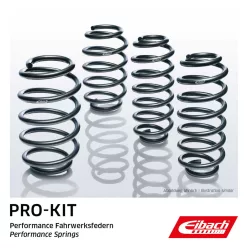
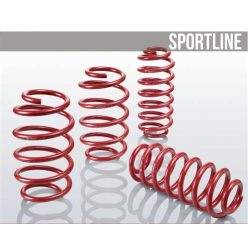
Eibach lowering spring kits are designed for drivers who want sharper handling and a more aggressive stance without turning their car into a track-only build. The vehicle-specific Pro-Kit and Sportline springs lower the centre of gravity, reduce body roll and nose dive, while the progressive spring rate keeps ride comfort close to OE levels. These lowering spring kits are ideal for fast road use, occasional track days and visually cleaner wheel gaps on modern BMW, Audi, Lexus and other performance-oriented models.
Net price: 279 €
Net price: 280 €
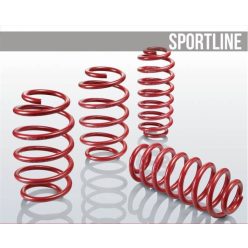
Net price: 201 €
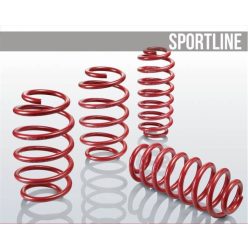
Net price: 201 €
Eibach lowering spring kits for sharper, more stable handling
Eibach lowering spring kits aim to improve a car’s dynamics by lowering the centre of gravity and controlling body movement, while still keeping the car usable every day. Pro-Kit and Sportline lowering springs typically offer around 20–40 mm of drop depending on the application, which is enough to reduce fender gap and tighten body control without making speed bumps and ramps unmanageable. Thanks to Eibach’s high-strength spring steel and durable coating, the ride height remains consistent over time, helping the suspension geometry stay within its intended range even after years of use.
The Pro-Kit springs focus on a moderate drop with a balanced comfort–sport compromise, whereas Sportline springs are tuned for a more aggressive stance and firmer behaviour. Most kits are engineered to work with good-condition OE dampers, making them an ideal first step into suspension tuning. For harsher use, frequent spirited driving or more extreme drops, pairing the springs with shortened sport dampers or a complete sport suspension kit further enhances control and consistency, especially on heavier or more powerful cars.
Technical Basics
Eibach lowering springs are manufactured from high-strength chrome–silicon spring steel, cold-formed, heat-treated and shot-peened to resist fatigue and high cyclic loads. A key feature is the progressive spring rate, which allows the spring to remain relatively compliant over small bumps but firm up significantly as it compresses further under hard braking, cornering or acceleration. This dual behaviour reduces body roll, nose dive and squat, translating into improved grip, more direct steering feedback and greater driver confidence at speed.
Most Eibach lowering spring kits are supplied with TÜV or similar approvals that specify the permitted drop and maximum axle loads for each application. This not only simplifies legal road use in many European countries but also shows that the system has been validated to work safely within the specified weight range. The surface is protected by a multi-stage phosphating and powder-coated finish, which helps the springs withstand road dirt, water and winter salt. When combined with healthy dampers and mounts, this construction delivers long-term stability with minimal height loss over the life of the kit.
From a technical point of view, lowering the spring length inevitably reduces the available damper stroke. With moderate drops of roughly 20–30 mm, good-quality OE dampers usually cope well, as long as they are not already worn. For larger drops, repeated heavy use or track work, it is advisable to combine the springs with matched sport dampers designed for reduced ride height. This reduces the risk of the damper repeatedly hitting the bump stops and maintains more consistent damping control throughout the suspension travel.
Selection Criteria
Choosing the right Eibach lowering spring kit starts with accurate vehicle data: exact model, body style (saloon, estate, coupe), model year, engine and drivetrain. For each part number, Eibach specifies the maximum front and rear axle loads and the nominal lowering. It is crucial to stay within these limits, especially on cars with heavier engines, factory sport packs, panoramic roofs or other weight-adding options. Running springs outside their specified axle load range can lead to excessive drop, reduced bump travel and shortened component life.
In practical terms, the first decision is how much drop you really need. A moderate 20–30 mm Pro-Kit is often the best compromise for daily-driven cars, offering a visibly lower, cleaner stance and sharper responses while preserving most of the original comfort. A 30–40 mm or stronger drop – where Sportline springs usually sit – gives a more dramatic visual effect and firmer feel, but also increases the risk of scraping on ramps and speed bumps and pushes geometry closer to its limits. For cars that see frequent track days or aggressive back-road driving, pairing such springs with matched dampers and upgraded anti-roll bars can unlock their full potential.
Intended usage should always guide your choice. For mainly urban and motorway use, a mild Eibach Pro-Kit drop is ideal to sharpen handling without making the car tiring on long journeys. For fast-road builds, occasional track days or heavily tuned engines, a slightly lower and stiffer setup may be justified, provided you accept the trade-offs in comfort and ground clearance. It is also worth considering future upgrades at the selection stage: if you plan to add sport dampers or a complete coilover system later, choosing a spring kit that matches those components will make the long-term setup more coherent.
Installation & Maintenance
Installing Eibach lowering springs should be treated as a full suspension job rather than a simple cosmetic tweak, and is best handled by an experienced workshop. The process involves removing the complete strut assemblies, safely compressing the old springs with appropriate spring compressors and inspecting top mounts, bearings and rubber isolators. Springs must always be replaced in axle pairs, and in practice a full-car set is strongly recommended to maintain balance and predictable behaviour under braking and cornering.
Once the kit is fitted, a full wheel alignment is essential, as the reduced ride height changes camber and toe compared with stock. Skipping this step can result in vague steering, tramlining and rapid, uneven tyre wear. During the first few hundred kilometres, the springs will usually settle slightly, so it can be worthwhile to re-check alignment afterwards, especially on cars driven hard. A properly aligned suspension allows the Eibach springs to deliver their intended improvements in stability, turn-in and high-speed confidence.
From a maintenance perspective, periodically inspect the springs and dampers for chipped coating, early rust, oil leaks or unusual knocking noises. The powder-coated finish is designed for long life, but mixed weather, salt and gravel can still take a toll if left unchecked. If the car develops excessive bouncing, instability over bumps or uneven tyre wear, it may indicate worn dampers or other suspension components that need attention. With correct installation, suitable shocks and regular checks, an Eibach lowering spring kit will maintain a stable ride height and predictable handling for many years of spirited road use.
FAQ
How much will Eibach lowering springs drop my car?
Depending on the application, Eibach kits typically lower the car by roughly 20–40 mm, with Pro-Kit focusing on milder drops and Sportline on more aggressive ones. Exact figures are listed for each part number, so it is important to check the data for your specific model, especially if the car has extra equipment that increases weight.
Can I use Eibach lowering springs with stock dampers?
For moderate drops of up to around 30–40 mm, Eibach springs are generally designed to work with healthy OE dampers, making them an easy first suspension upgrade. For larger drops, high mileage dampers or cars that see frequent spirited driving, combining the springs with shortened sport dampers or a matched suspension kit is recommended for durability and control.
Are Eibach lowering spring kits comfortable enough for daily driving?
Eibach Pro-Kit and other progressive spring designs aim to deliver noticeably sharper handling while keeping ride comfort close to OE levels. Small bumps and joints will be more pronounced than with factory springs, but a well-chosen drop remains perfectly usable for commuting, motorway driving and longer trips, especially when matched with good dampers and tyres.
Do I need a wheel alignment after fitting lowering springs?
Yes, a full alignment is strongly recommended after any ride-height change, as lowering alters camber and toe settings. Without alignment, the car may feel nervous at speed and tyres can wear quickly and unevenly. A correct alignment not only protects your tyres but also lets the Eibach springs deliver their full benefits in stability and steering precision.
Are Eibach lowering springs road legal in the EU?
Most Eibach lowering spring kits come with TÜV or equivalent approvals that specify the permitted drop and axle loads for each application. When you choose a part number approved for your exact vehicle and have it installed correctly, the setup is generally suitable for legal road use and periodic technical inspections, subject to local regulations in your country.
Do Eibach lowering springs require any special maintenance?
The springs themselves do not require special servicing, but it is wise to inspect the coating and suspension components periodically. Looking for chipped paint, corrosion, leaking dampers or unusual noises will help you catch issues early. With sensible checks and properly matched dampers, an Eibach lowering spring kit will offer stable ride height and predictable handling over a long service life.
