
Downpipe flanges are flat exhaust mating plates used between the turbo outlet and the first pipe section, helping align bolt pattern, port shape and routing in a fabricated or replacement system. In this category you can compare builder-oriented options across several bolt patterns.
Start by checking the flange pattern, opening shape and whether you need a T3/T4, GT, K03/K04 or twin-scroll style part for your build. Verify exact dimensions and specifications on the product card; in-stock items dispatch fast within the EU. The safest match comes from the port shape and the job of the mating side together.
For a cleaner installation, focus on flat faces, even tightening order and proper support points in the nearby pipework so heat cycling does not pull the flange out of line. Use the product card to confirm the exact pattern before final assembly.


Net price: 20 €


Net price: 17 €
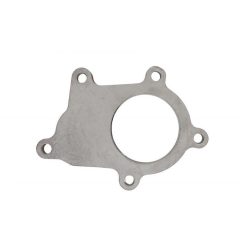


Net price: 16 €


Downpipe flanges: accurate mating between turbo and exhaust
Flanges used at the turbo outlet or at the downpipe entry help create a stable joint between the hot side of the turbo system and the first exhaust section. The right flange choice can make fabrication easier, support better sealing line control and reduce the chance that thermal movement in the pipework loads the joint in an awkward direction.
Technical background and system integration
Fitment logic in this category goes beyond a simple label such as T3 or K03. Bolt count, bolt position, port geometry, divided or undivided layout and the direction of the outgoing pipe all influence whether the part will actually work in your build.
Pattern range on this page covers several builder-familiar layouts, including T3/T4, GT25/GT28/GT30/GT35, K03/K04 and selected Subaru, Mitsubishi and Toyota related flange patterns. Because of that mix, the product card should be your final check for application, flange image and mating-side details rather than the product name alone.
- Bolt layout: confirm the number of fasteners, their position and the clearance needed for bolts or studs around the surrounding pipe and hardware.
- Port shape: check whether the opening is round, oval or divided, because this directly affects sealing line contact and pipe entry geometry.
- Pipe direction: make sure the flange allows the next section to leave the turbo in a direction that still clears the bulkhead, subframe, steering and shielding.
- Application: vehicle or turbo codes can help narrow the search, but the actual flange pattern on the product card should decide the final selection.
How to choose the right one
Bolt pattern should be your first checkpoint: count the fastener positions, compare the spacing and confirm that the layout matches the existing turbo outlet, manifold side or downpipe entry. Two flanges can look similar at a glance yet still cause a build problem if the holes sit slightly differently.
Port geometry should be checked together with the routing of the first pipe section. On twin-scroll systems especially, the internal split and the way the pipe continues from the flange need to stay consistent through the early part of the exhaust path.
Product card review is the safest way to confirm the exact turbo or engine-related application before you commit to fabrication or ordering. On this category page, filters and product cards work best together because several different T, GT and OE-style patterns are grouped in one listing.
Installation and failure-prevention tips
Face preparation matters because the two mating surfaces should be clean, burr-free and checked in a dry trial fit before the joint is finalised. If the attached downpipe section is already pushing or twisting the flange, later heat cycling can load the sealing line in a less favourable way.
Tightening order is easier to control when fasteners are brought down gradually in a cross pattern while the next pipe section is already close to its final direction. In a fabricated system, it is often smarter to tack or mock the section first and only then finish the permanent joint.
Common Failure happens when the flange seals well on its own but the attached pipe introduces side-load into the joint, so after several heat cycles you start to see soot marks, leakage or hardware loosening. This is usually prevented by a dry mock-up, accurate pipe alignment and making sure the nearby section is properly supported rather than hanging from the flange.
Post-check after the first full heat cycles should include the fastener position, the sealing edge and any sign of discolouration or fine soot around the flange perimeter. These clues often reveal alignment trouble before the change in sound becomes obvious.
PRO TIP: When building a new downpipe, treat the flange as the spatial reference for the whole first section rather than as a separate hardware item, because that makes it easier to coordinate flex section placement, heat shielding and future service access.
FAQ
How do I know which downpipe flange I need?
Start with the existing mating face: bolt count, spacing, port shape and the related turbo code are the most useful checks. Labels such as T3, GT or K04 are a good starting point, but the actual pattern should always be verified before final assembly.
What is the most common failure or installation mistake?
Check the joint step by step for flat face contact, natural pipe position, cross-pattern tightening and whether the downpipe weight is hanging on the flange. Then inspect the sealing edge and repeat the check after the first full heat cycle.
What is the difference between T3/T4 flanges and GT or K-series flanges?
The main difference is in bolt pattern, opening geometry and the turbo family they are designed to match. Even where outside dimensions seem close, the way the pipe leaves the flange and the sealing line can be very different.
Does every downpipe flange need a separate gasket?
That depends on the mating design and the hardware used on the opposite side of the joint. Some builds rely on a dedicated gasket, while others depend on the flange faces and matching hardware, so this should be checked against the actual assembly.
What should I inspect after the first road test?
Look for soot around the flange edge, any change in exhaust sound and any movement in the fasteners. Also check whether the nearby pipe section starts to pull the flange sideways once the system reaches working temperature.
