
A differential adapter is the mounting piece that lets the diff housing and subframe work together correctly, or adds support where a BMW rear diff mount needs a different layout. In this category you will mainly find BMW-focused solutions, from E30 Type 188 conversion parts to F8x rear diff bracket options.
Choose by chassis code, differential type, number of mounting points and whether you need a conversion part or a support bracket. Before final assembly, always do a dry test-fit and make sure the bushes, bolt holes and seating faces line up without preload.
Verify exact dimensions and specifications on the product card; in-stock items dispatch fast within the EU.
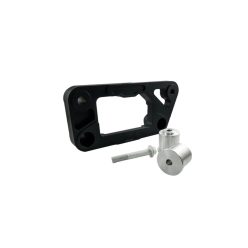
Net price: 452 €

Net price: 114 €

Net price: 420 €
Differential Adapters for BMW Swaps and More Stable Rear Diff Mounting
These parts work as a mounting interface between the differential and the subframe, or as a rear differential bracket where the goal is to add support to the factory rear mount. In this category you will mainly find BMW-focused solutions for E30 Type 188 conversions and F8x M2/M3/M4 rear differential support.
Main job is to match the mounting geometry to the project rather than forcing the driveline into place. When the fitment is correct, the assembly is less likely to preload bushes, and driveline reactions during load changes can remain more predictable.
Technical background and system integration
System role matters because these parts sit at a loaded point of the driveline. Some versions adapt a large-case Type 188 differential to an E30 chassis, while others use the second rear mounting position to reduce diff twist under harder launches and rapid throttle transitions.
Construction can vary by part: aluminium or dural bodies, pressed steel sleeves, polyurethane bushes or complete bracket-style assemblies may all appear in this category. That is why the exact BMW platform, mounting layout and product-card description matter more than the generic category name.
- Chassis: confirm the shell code such as E30, F80, F82 or F87 before comparing products.
- Diff type: check whether the part is meant for a Type 188 large-case unit, a stock F8x differential or a different rear mount layout.
- Mounting style: compare bolt locations, bush position and whether you need an adapter piece or a complete rear bracket.
How to choose the right one
Quick selection guide: first decide whether your project needs a conversion adapter to physically mount a different differential housing, or a rear bracket that changes how the existing diff is supported. Then verify chassis code, differential style and number of mounting points on the product card.
Product card check should include model code, fitment wording, any OE reference where available, and whether the part is a bushed component or a full bracket assembly. For BMW E30 builds using a large-case Type 188 diff, compare both the shell and the housing design; for F8x M2/M3/M4 builds, confirm whether you need a dual-support bracket or only a replacement mounting piece.
- For swaps: choose this route when the goal is to fit a different diff casing into the car correctly.
- For support: choose this route when you want a rear mount solution that helps control movement at the existing differential location.
Installation and failure-prevention tips
Preparation starts with clean threads, clean seating faces and a dry test-fit before final tightening. Follow the manufacturer’s sequence, tighten in stages, and only lock the assembly down once the bushes and bracket sit in a natural, unloaded position.
Common issue appears when the adapter or bracket is installed with the bush already twisted at rest, or when the mounting face does not seat fully. In that condition the driveline may feel harsher during load changes and the differential can sit off-position, so check flat seating, centring and freely aligning bolt holes during assembly.
Post-install checks after the first drive should cover bolt seating, bush position and clearance around the rear subframe, shafts and exhaust. On track or drift builds, it is sensible to repeat the inspection at shorter intervals after the first heat cycles.
PRO TIP: If several driveline parts are changing in the same project, choose the diff adapter around the final subframe and shaft geometry, not around the chassis code alone.
FAQ
What is the difference between a differential adapter and a rear differential bracket?
An adapter usually solves the interface between two different component layouts, such as fitting a different diff housing into the car. A rear differential bracket more often changes or supplements the support strategy for the existing differential.
How do I know whether I need an E30 Type 188 adapter or an F8x bracket?
Start with the chassis code and the exact differential you plan to run. An E30 project with an E34 large-case Type 188 conversion points towards an adapter, while F80/F82/F87 applications are usually decided by the rear mounting arrangement.
What is the most common failure or installation mistake?
Check that every fastener starts by hand, the bushes are not held at an odd angle, and the washer and bolt head sit fully on their seats. Before final tightening, verify the product-card orientation, left/right position and the placement of any spacers included with the kit.
Is this category suitable for road cars or mainly for motorsport builds?
That depends on the exact design, because a bushed adapter and a more rigid dual-support bracket can change refinement in different ways. For road and track use alike, compatibility, noise-vibration balance and the condition of the full driveline should be considered together.
What should I inspect after the first test drive?
Recheck bolt position, bush centring, gaps between the diff housing and the subframe, and nearby clearance to shafts and exhaust parts. If the car will see repeated hard use, inspect the assembly again after several heat cycles.
