
The Crimp-On AN Connectors for PTFE (Teflon) Hose category covers solutions where the connector is permanently crimped onto PTFE hose using a hydraulic crimper.
The current range focuses on AN-6, AN-8 and AN-10 sizes, typically in a 90° elbow format for fuel, oil and water-type plumbing where neat routing matters.
Filter by price and status, sort as needed, then open the product card to confirm part code and compatibility before ordering your quantity.
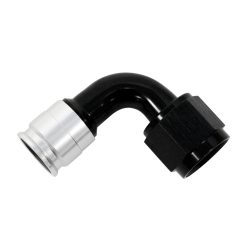


Crimp-On AN Connectors for PTFE (Teflon) Hose – crimped retention for PTFE lines, stable joints and tidy routing
A crimp-on joint means the connector is crimped onto a PTFE (Teflon) hose, creating a non-reusable, mechanically retained assembly rather than a hand-assembled screw-together style. Choose this approach when you want repeatable, workshop-grade retention and you can assemble it with a hydraulic crimper and the correct tooling.
This category currently concentrates on 90° elbow connectors in AN-6, AN-8 and AN-10, which is useful when you must turn the line immediately without forcing a tight bend in the hose. Always verify the exact designation on the product card (for example “Crimp On” and the size), because hose construction and crimp diameter requirements are critical to reliability.
Technical Basics
AN connections typically seal on a 37° flare (cone) surface, not on the threads, so mating faces must be clean and undamaged. That’s why thread tape is generally not the answer for flare sealing; correct flare-to-flare contact is what prevents leaks. If you are using adapters, confirm the sealing method at every interface (AN/JIC, ORB, metric), because mismatches are a common root cause of weeping joints.
PTFE hose (often with a braided reinforcement) behaves differently from rubber/CPE hose, and crimp-on connectors are designed around that specific construction. The crimp sleeve/collar and any internal support features must match the hose type, and the crimp must be set to the manufacturer’s specified diameter using the correct die set. Different hose constructions can require different tooling and settings, even at the same AN size.
Warning: do not try to “make do” with improvised crimping methods, because an incorrect crimp can damage the hose and lead to leaks or pull-off. If you do not have the right equipment and experience, have the assembly crimped by a hose or motorsport workshop and validate it with a pressure/leak test.
Selection Criteria
Start with the system size: this category currently offers AN-6, AN-8 and AN-10. Select based on your component ports (pump, filter, regulator, oil cooler), expected flow, and available space, because oversizing can make routing harder and may require more adapters. The most reliable approach is to match the fitting size to the system design rather than choosing “bigger” by default.
The 90° body format is ideal when you need an immediate direction change and want to avoid forcing the hose into a tight radius. Aim for a routing path where the hose is not twisted, not under constant tension, and not vibrating against the connector. Good routing is often the difference between a dry, reliable system and one that slowly seeps over time.
Compatibility checks matter: confirm that the connector is intended for your PTFE hose type and that the mating side truly uses 37° flare sealing. When adapters are involved, verify thread pitch and sealing method at each step before ordering, because one incorrect interface can compromise the whole build.
Installation & Maintenance
Preparation drives success: cut the PTFE hose cleanly, control the braid, and keep the bore free of debris. Assemble the parts in the specified order, then crimp using a hydraulic crimper with the correct die to the specified crimp diameter. After crimping, inspect seating and alignment before you commit to final routing.
Always leak/pressure test before finalising the line path. Protect the hose from abrasion and heat with sleeves where needed, and secure the line so vibration does not load the connector. If you later change the system, plan disassembly on the AN interfaces, because the crimped end itself is not designed to be “undone” without destroying the assembly.
FAQ
What tools do I need for crimp-on AN PTFE connectors?
You need a hydraulic crimper and the correct dies for the specific hose and connector type. The crimp diameter must follow the manufacturer’s specification, because this determines retention and sealing performance. If you cannot verify the correct settings, use a workshop and validate with a pressure test.
Are these connectors only for PTFE (Teflon) hose?
Yes, crimp-on connectors are designed around a specific hose construction, and PTFE versions are not interchangeable with rubber/CPE hose assemblies. Always check the product designation and match it to your hose specification. Mixing hose types is a frequent cause of leaks or weak retention.
AN-6 vs AN-8 vs AN-10: how do I choose?
Choose based on your system ports and flow needs; this category covers AN-6, AN-8 and AN-10. Bigger can reduce restriction but may be harder to route and may require adapters that add leak points. Check the ports on your pump/regulator/filter and match the hose and fittings as a complete system.
Why does the AN side leak even if the crimp looks good?
Most leaks come from a damaged/dirty 37° sealing surface or a standards mismatch (AN/JIC vs ORB vs metric). Inspect the cone faces for scratches and confirm the mating part seals on a flare, not on threads. Fix the interface, not the torque.
When is a 90° crimp-on connector the best option?
A 90° elbow is best when you must turn immediately at the port and want to avoid a tight hose bend. It can improve routing, reduce strain, and make the layout more serviceable in tight bays. Ensure the hose is not twisted and has adequate support against vibration.
Once you’ve confirmed sizing, routing and proper crimping capability, select your connectors and build a safe PTFE line assembly.
