
The Control Arms range targets Nissan Patrol Y60/Y61 geometry correction and fine-tuning after a lift. You’ll find rear lower/upper arms, PRO adjustable versions and radius arms to restore proper caster and axle position. Featured brands include IOD PERFORMANCE and RS ULTIMATE. The result: straighter tracking, improved self-centring and durable joints for mixed on-road and off-road use.
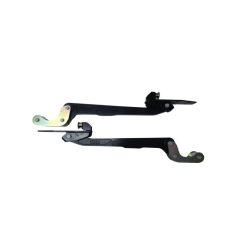
Net price: 1 469 €
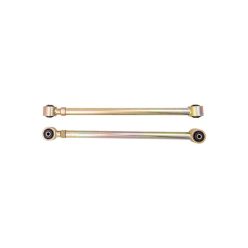
Net price: 214 €
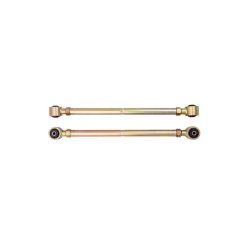
Net price: 267 €
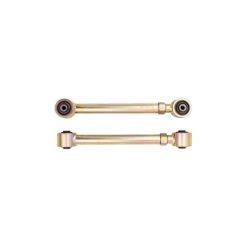
Net price: 214 €
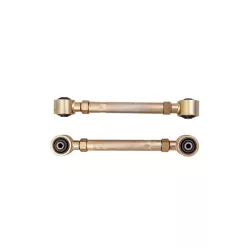
Net price: 267 €
Brief summary & key benefits
The Control Arms category focuses on the Nissan Patrol Y60/Y61. By upgrading or adjusting rear lower/upper arms and radius arms, you can recover factory-like geometry after a lift, larger tyres or additional payload. PRO adjustable variants offer a wide range of correction for caster, camber and toe, reducing tyre wear and improving stability and steering centring. Most solutions are suitable for lifts up to 0–6”, and can work with OEM metal-rubber or polyurethane bushings.
Technical Basics
A lift alters axle–chassis relationships and the angles at the mounting points. Radius arms are pivotal for restoring caster (self-centring and straight-line stability). Rear lower/upper control arms position the rear axle and influence torque reaction during acceleration and braking; adjustable units can also correct camber and toe on modified vehicles. Leading manufacturers (e.g., IOD PERFORMANCE) use thick-wall hardened steel construction with zinc coating for corrosion resistance; CNC-machined aluminium may be used where weight matters. Use quality fasteners of 10.9/12.9 grade and follow specified torque values.
Compatibility: this range targets Nissan Patrol Y60/Y61. Engine/trim differences and lift height can affect fitment—always verify against your VIN/chassis code and the product sheet. Common pitfalls include tightening bushes at full droop, under-torquing hardware and skipping the post-install alignment; all of these can cause an off-centre steering wheel, pull and abnormal tyre wear.
Selection Criteria
Lift height: with ~0–2” lifts an adjustable rear control arm often suffices; beyond 2–3” you may need radius arms and/or long-arm solutions to bring key angles back in range. For larger lifts, check propshaft angles and panhard/track bar lengths too.
Bushings: metal-rubber offers comfort and isolation; polyurethane provides crisper response and durability at the expense of NVH. Mixed use builds often pair OE front bushes with PU at the rear for better control.
Materials & coatings: frequent mud/water/salt exposure demands robust zinc or powder-coat finishes and impact-resistant designs. Tube diameter and wall thickness largely determine bending stiffness—do not compromise here when running large tyres.
Use case: touring/overlanding prioritises centred steering and predictable behaviour; trial work needs unhindered articulation and impact resistance; high-speed rally-raid benefits from rigid mounts and precise steering feedback, with tight inspection intervals.
Installation & Maintenance
Fitment tips: final-torque bushes only with the vehicle on its weight to avoid pre-load. Adjust PRO arms incrementally and symmetrically, noting baseline lengths. Use thread locker where specified and always re-measure after adjustments.
Prevent loosening: re-torque after the first 100–200 km and after heavy off-road sessions. Inspect bushes for cracks, check fastener stretch and look for coating damage that could initiate corrosion.
Checks: book an alignment after any geometry-changing work. Watch for warning signs such as an off-centre wheel, pull under power or braking, clunks during load changes and irregular tyre wear—these indicate the need for re-inspection.
FAQ
Q: Steering feels nervous after a lift—what should I change first?
A: Start with radius arms or adjustable arms to recover caster, then perform a full alignment.
Q: What’s the benefit of PRO adjustable arms?
A: Wide, tool-friendly adjustment without disassembly; suitable for lifts up to roughly 0–6”.
Q: Metal-rubber vs polyurethane bushes?
A: Rubber = comfort/less NVH; PU = sharper response and durability with more NVH.
Q: Do I need to re-torque?
A: Yes—after the first 100–200 km and following demanding off-road use.
Q: Are parts shared between Y60 and Y61?
A: Many are, but verify per product and lift height; always check the fitment notes.
