
In the Carburettors category you’ll find complete carburettor units for classic and tuned petrol engines, where accurate air–fuel mixing and stable throttle response matter. The range typically includes Weber, FAJS and Dellorto in several bore sizes.
Filter by brand and size, sort by price or availability, then open the product page to verify the mounting pattern and recommended use. Pick the carburettor that matches your build and place your order.
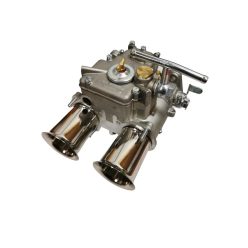
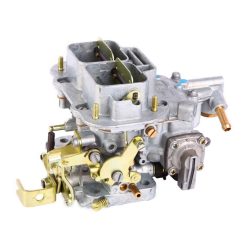
Net price: 317 €

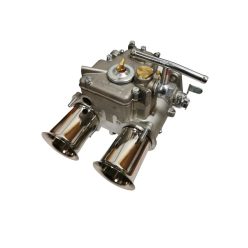

Net price: 184 €

Net price: 303 €
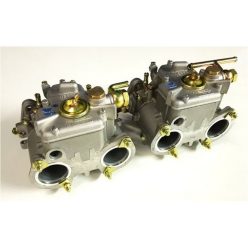
Net price: 1 112 €
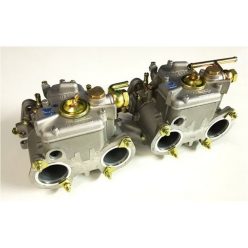
Net price: 1 112 €
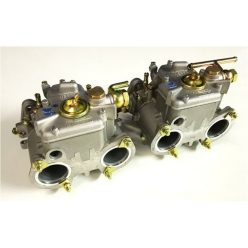
Net price: 1 112 €
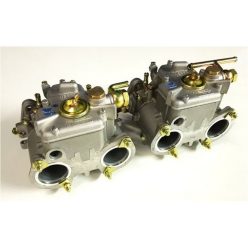
Net price: 1 112 €
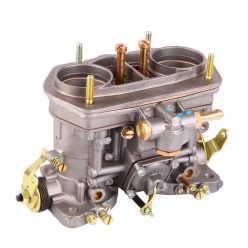
Net price: 409 €
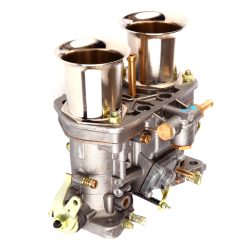
Net price: 433 €
Carburettors – complete units for classic and tuned petrol builds, with tunable mixture control
Carburettors meter fuel into the incoming airflow using pressure differences created in the intake stream, so correct sizing and setup directly influence throttle response, idle stability and overall drivability under load. This category focuses on complete carburettor units, meaning you’re selecting a ready-to-fit assembly where mounting geometry and adjustability are built into the package.
The selection typically includes Weber, FAJS and Dellorto carburettors. To avoid surprises, always confirm fitment details on the product page, because the intake manifold, linkage solution and fuel delivery stability can be just as decisive as the carburettor itself.
Technical Basics
A carburettor relies on the venturi effect: air speed increases through a restriction, pressure drops, and fuel is drawn into the stream. That’s why bore size and internal geometry affect not only peak power but also low- and mid-range behaviour. Many performance units use multiple circuits (idle/progression/main), so the engine can react differently at part throttle versus wide open throttle depending on the design and calibration.
Fitment starts with the mounting pattern and the carb type: common performance references include DCOE and IDF, while Dellorto families are often seen as DHLA/DRLA. You should also check linkage direction, throttle lever compatibility and air filter/trumpet clearance, as packaging in the engine bay can become the limiting factor. If anything is unclear, compare bolt spacing and key dimensions against the manufacturer’s data rather than guessing.
A frequent pitfall is incorrect fuel pressure or inconsistent fuel delivery, which may cause rich running, flooding or unstable mixture. Heat exposure and poor filtration can also lead to issues over time, so the supporting hardware matters even when the carburettor unit itself is correct.
Selection Criteria
Choosing the right carb is not just about a number in millimetres: engine displacement, target rpm range, cam profile and intake layout all play a role. If the carb is too large, air speed can drop at low rpm and drivability may suffer; if it’s too small, it can become restrictive at higher rpm. For road use, balanced part-throttle behaviour is often more valuable than chasing a headline top-end figure.
Consider the configuration too: some units incorporate a cold-start mechanism while others do not, which can change day-to-day usability and tuning approach. If you’re running dual carburettors, synchronisation capability and linkage quality are critical, because uneven opening can create hesitation and make consistent tuning difficult.
Brand and “style” guidance can help: Weber DCOE/IDF formats are widely used in classic and motorsport applications, FAJS often follows Weber-compatible architecture, and Dellorto DHLA/DRLA families are also common in period-correct and tuning builds. When replacing an existing unit, matching type and mounting geometry usually reduces complexity compared to switching the whole intake concept.
Installation & Maintenance
Most installation problems come from air leaks: ensure the gasket surfaces are flat, fasteners are tightened evenly, and any unused vacuum ports are correctly sealed. Make sure the throttle cable/linkage moves freely, returns cleanly to idle and reaches full opening at wide open throttle. A quick visual check here prevents many “mystery” tuning symptoms.
On dual-carb setups, synchronisation is a must; if both sides do not open equally, the engine may surge, hesitate or idle poorly. Tune only after the engine is mechanically healthy (ignition timing, valve clearances, no intake leaks), because carb symptoms can mask underlying issues. Once the base condition is correct, fine adjustments become predictable.
For upkeep, clean fuel is the cheapest insurance: run a proper fuel filter, periodically check for seepage at connections and be aware that long storage can require refilling/bleeding before stable running returns. If the engine spec changes (exhaust, cam, compression), carb settings may need to be revisited to keep the mixture stable.
FAQ
Which carburettor size do I need?
The best bore size depends on displacement, rpm goals and intake design. Start with the manufacturer’s recommendations and confirm the mounting geometry against your manifold. For road cars, prioritise stable part-throttle and idle over maximum peak output.
What is the main difference between Weber DCOE and IDF?
DCOE is commonly used in side-draft layouts, while IDF is often seen in down-draft style installations. The decision is usually driven by packaging, manifold choice and the intended intake routing. Both can be tuned well, but they impose different installation constraints.
Can I replace a Weber with a Dellorto unit?
Not automatically: the mounting pattern and key dimensions can differ (e.g., DHLA/DRLA versus DCOE/IDF). It works reliably only if the manifold/adapter and linkage match the chosen type. Use product-page dimensions to verify compatibility before purchasing.
Why does my engine hesitate when I open the throttle?
Common causes include intake leaks, poor synchronisation on dual setups, or unstable fuel delivery. Ignition and valve issues can also present as carb problems, so confirm the engine’s base condition first. Then address mixture and linkage adjustments.
Do I need a fuel pressure regulator for a carburettor?
Some setups are sensitive to excessive fuel pressure, which can lead to flooding or rich running. Whether you need a regulator depends on your pump and the carb’s specification, so the manufacturer data is the best reference. If you see overflow or inconsistent mixture, fuel pressure is one of the first checks.
When selecting a unit, terms like “carb”, “dual carbs”, “twin setup”, “intake manifold”, “trumpets”, “throttle linkage”, “sync”, “butterfly”, “venturi” and “fuel pressure” naturally come up, so reviewing the product details is always worthwhile.
Once you’ve confirmed type and size, choose the right complete carburettor and place your order.
