
The Brake proportioning valves category contains adjustable proportioning valves, residual pressure valves and brake force devices for fine-tuning front–rear brake bias. Products from Wilwood, Tilton, Epman and TURBOWORKS include knob-type and lever-type adjusters that let you reduce rear line pressure and balance the car for track days, drifting or fast-road driving. With the right proportioning valve you can prevent premature rear lock-up, improve stability under hard braking and achieve a more consistent, confidence-inspiring pedal feel.

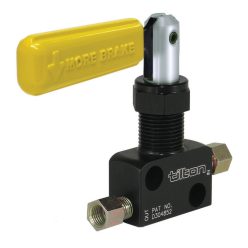
Net price: 133 €
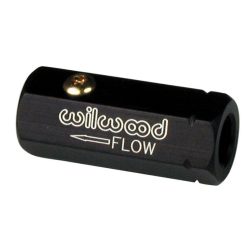

Net price: 58 €
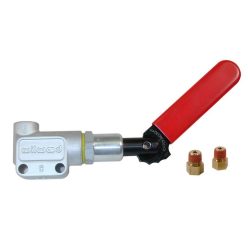
Net price: 97 €
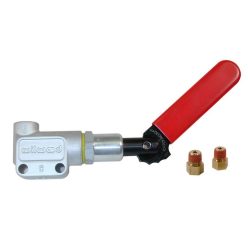
Net price: 97 €



Net price: 89 €
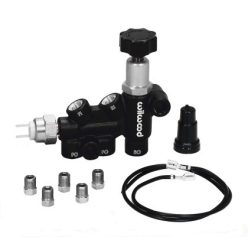
Net price: 145 €
Role and Key Benefits of Brake Proportioning Valves
Brake proportioning valves are hydraulic control devices installed in the rear brake line to manage front-to-rear brake force distribution. Their purpose is to adapt braking to weight transfer and grip: during heavy deceleration, load shifts onto the front axle and the rear tyres can accept less braking force before locking. By limiting rear pressure above a certain threshold, a proportioning valve helps maintain stability, avoiding sudden rear lock-up and oversteer under hard braking.
Adjustable proportioning valves reduce rear line pressure in a controlled way once the system pressure reaches a defined “knee” point. Knob-type units – such as Wilwood’s 260-12627 – use a fine-thread adjuster to vary the reduction, while lever-type solutions like Tilton 90-1003 or Wilwood 260-8420 offer discrete, click-stop positions that can be changed quickly from the cockpit. This allows drivers to tune brake bias for tyre changes, fuel load, surface grip or driving style, and in many cases pressure reduction of up to around 50–60% is available over a 100–1000+ psi adjustment range.
Alongside classic proportioning valves, the range also includes residual pressure valves that maintain a small base pressure in the system, particularly useful with drum brakes or long lines where piston retraction could otherwise cause excess pedal travel. These valves help keep pistons closer to their working position, improving initial pedal response. Some TURBOWORKS “brake force amplifier” solutions influence pedal leverage or perceived effort, complementing the role of the proportioning valve in motorsport and high-performance street applications.
Technical Basics
A typical brake proportioning valve acts as a pressure regulator in the rear brake line. At low pedal pressures it allows full line pressure to pass unchanged, so front and rear wheels see similar pressures. Once the “knee point” is reached, an internal piston or spool shifts and the relationship between inlet and outlet pressure changes: above this point the rear pressure increases more slowly than the master-cylinder pressure. The result is a curved pressure graph that limits rear braking force just when weight transfer is most severe.
Knob-adjustable valves use a fine-thread screw to shift the internal spring preload or piston position, changing the knee point and/or the slope of the reduction curve. Wilwood’s 260-12627, for example, uses a compact forged body with an adjuster that lets you tune rear pressure reduction across a usable range, often quoted as up to 57% maximum reduction depending on model. Lever-type designs like Tilton’s 90-1003 or Wilwood’s 260-8420 provide a series of clearly defined positions; the lever “clicks” between detents, and the handle position offers an immediate visual reference for how much rear pressure reduction is selected.
Residual valves operate differently: instead of varying rear pressure with input, they maintain a small static pressure in the line when the brakes are released. This keeps wheel cylinder or caliper pistons slightly extended, preventing the seals from pulling them back too far. They are often used in drum-brake systems or where the master cylinder is mounted lower than the calipers. Proportioning and residual valves are usually made from aluminium or steel, with metric (M10x1) or NPT threads and seats for bubble or inverted flares, so correct matching to your existing pipework is essential.
Selection Criteria
Choosing the right brake proportioning valve starts with understanding the vehicle and brake system. On modern road cars with ABS and electronic brake-force distribution, additional mechanical valves are generally not recommended, as the OEM system already manages rear pressure dynamically. On non-ABS track cars or pedal-box setups with dual master cylinders, however, an adjustable valve is a key tool for optimising brake bias. Knob-type valves are usually ideal when adjustments are made in the pits; lever-type valves are better suited when you need quick, repeatable changes while driving.
Next, consider thread types, flare styles and pressure range. The port threads must match your lines or chosen fittings – many motorsport valves use M10x1 bubble flare seats, while others use 1/8"-27 NPT requiring separate adapters. Tilton’s 90-1003, for example, has 10x1 mm metric ports; Wilwood offers models with metric or NPT ports. The quoted adjustment window (often around 100–1000 psi or higher) should cover the typical operating pressures of your system so that the valve actually has room to work in your use case.
For residual valves, you must choose a pressure rating appropriate to your setup—disc systems typically use lower residual pressures than drum systems. Using the wrong value can leave brakes dragging and overheating. In all cases, think of the braking system as an integrated package: calipers, discs, pads, master cylinder, lines and proportioning devices must work together. If you are unsure how a valve will affect bias or pedal feel, consulting a brake specialist before purchasing is wise.
Installation & Maintenance
Fitting a brake proportioning valve is a safety-critical job and should ideally be handled by an experienced technician. The valve is typically installed in the rear brake line between the master cylinder and the rear T-piece, mounted in a protected but accessible location. All threaded joints must be tightened to the correct torque, using suitable sealing methods where appropriate (for example, compatible sealant on NPT threads). After installation the system must be fully bled and checked carefully for leaks before any road or track use.
The initial test drive should build brake load gradually while you evaluate stability and pedal behaviour. A common setup procedure is to start with the valve effectively “wide open” (minimal rear reduction) and then progressively increase rear pressure reduction until, under very hard braking, the fronts begin to approach lock slightly before the rears. For track use, this process may be repeated as tyres, pads and conditions change. Skipping proper testing and simply “guessing” a setting is risky and can result in longer stopping distances or instability.
From a maintenance perspective, proportioning valves are durable but not immune to wear or contamination. Periodically inspect the unit for corrosion, fluid weeping around fittings and smooth operation of the knob or lever. Any stiffness, sticking or unexplained change in brake bias should be investigated at once. Residual valves and fittings should likewise be checked for leaks or overheating. A clear warning: a partially blocked or misadjusted proportioning valve can seriously degrade braking performance, so treat it with the same respect as calipers or master cylinders.
FAQ
What does a brake proportioning valve do?
A proportioning valve reduces rear brake line pressure relative to the front above a certain threshold, helping prevent premature rear lock-up. By managing front–rear brake bias it keeps the car more stable under hard braking, especially when weight transfers forward and rear grip is reduced.
What is the difference between knob-type and lever-type valves?
Knob-type valves offer fine, continuous adjustment ideal for tuning in the pits, while lever-type valves provide several fixed, click-stop positions. Lever valves are popular in racing because the driver can change brake bias quickly and feel or see the setting without taking eyes off the track.
Can I add an adjustable valve to an ABS-equipped road car?
It is generally not recommended. Modern ABS and electronic brake-force distribution systems already control rear pressure; adding a mechanical valve can interfere with their operation and reduce safety. Adjustable valves are best suited to non-ABS race and track cars with conventional hydraulic layouts.
Where should I install a brake proportioning valve?
Most setups place the valve in the rear brake line between the master cylinder and the rear line junction, in a location that is protected from debris yet accessible for adjustment. The exact position depends on your plumbing and, for lever-type units, on how you want to reach the control in the cabin.
How do I adjust a proportioning valve for track use?
Start with minimal rear pressure reduction and perform progressively harder stops, then gradually increase rear reduction until the fronts approach lock slightly before the rears during maximum braking. The correct bias setting will vary with tyres, pads, aero and conditions, so be prepared to re-check settings as your setup evolves.
