
Banjo Fittings and Banjo Bolts is where you’ll find banjo fittings (banjo eyes) and hollow banjo bolts for compact connections when space and hose routing are tight. The range includes AN3–AN8 banjo hose ends plus multiple threaded banjo bolt options (e.g. M10x1, M14x1.5) for fuel, oil or hydraulic use.
For other connector types, return to Fittings and Threaded Adapters. Filter by size and brand, sort the list, then open a product page to confirm thread pitch and banjo eye bore for the sealing washers. Choose the compatible part and add it to your basket.
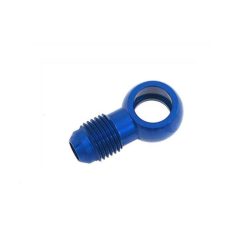
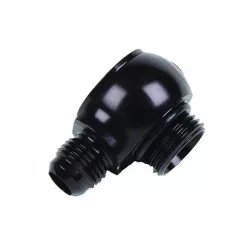
Net price: 100 €
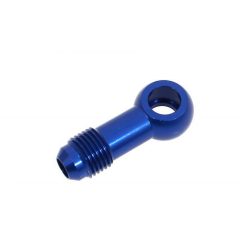

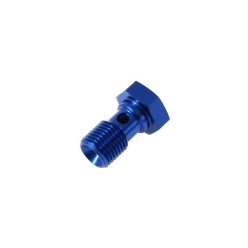
Net price: 4 €
Net price: 5 €
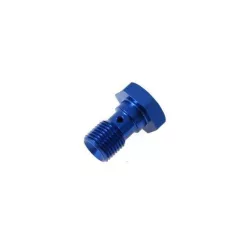
Net price: 4 €
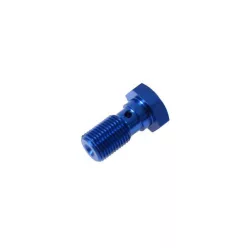
Net price: 4 €
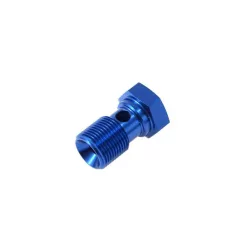
Net price: 5 €
Banjo Fittings and Banjo Bolts – compact banjo-eye connections for clean routing, easy positioning and service access
A banjo connection lets the banjo eye rotate around a hollow banjo bolt, so you can set the hose angle neatly even where clearance is limited. That adjustability is why banjo parts are common in oil and fuel plumbing, as well as hydraulic applications where access and line routing matter.
This category lists 30 products, mainly TurboWorks items with one Aeromotive option. You can filter by sizes such as AN3, AN4, AN6, AN8 and by metric threads including M8x1, M10x1.25 and M16x1.5, depending on the component you are mounting to.
Technical Basics
Sealing is typically achieved with two sealing washers (often copper washers) placed on both sides of the banjo eye, while the hollow bolt carries the flow through its internal drilling. Because the seal is made by surface contact, flatness and cleanliness of the mating faces are critical, especially in brake or clutch hydraulics.
Where the banjo fitting connects to an AN line, sealing on that side is usually via a 37° flare seat, so the AN6 or AN4 size must match the mating AN fitting. Do not assume the thread alone guarantees fitment: the banjo eye bore and the bolt shank size must also match.
For metric banjo bolts such as M10x1 and M14x1.5, always verify pitch and bolt length, because a wrong pitch will damage threads and a wrong length can prevent proper washer crush. Aluminium components also demand careful tightening to avoid thread pull-out or distortion.
Selection Criteria
Start by deciding whether you need a banjo fitting (for example AN3–AN8 banjo hose ends) or you are primarily sourcing the correct banjo bolt for a specific port (for example M12x1.5). If your priority is hose angle control, the banjo fitting provides the positioning flexibility and the bolt provides the clamping and flow path.
Confirm compatibility at three checkpoints: thread (e.g. M10x1.25), banjo eye bore (to suit the bolt), and the line-side connection type (e.g. AN6). For fuel and oil systems, also consider routing space and flow requirement so the line does not side-load the joint.
If you want consistent geometry across a build, sticking with a single brand family can help, which is why many users choose TurboWorks throughout. Where a specific regulator or component calls for it, the Aeromotive banjo option may be relevant, but the final decision should be driven by exact interface specs.
Installation & Maintenance
Use new or flawless sealing washers, and place one washer on each side of the banjo eye before tightening the banjo bolt. Tighten gradually while holding the fitting in the desired orientation so the hose or hard line is not twisted.
After installation, check for leaks under real operating conditions: bleed and pressure-check hydraulic systems, and inspect fuel/oil systems after start-up and warm-up. If you see weeping, avoid simply over-tightening; re-check washer condition and the flatness/cleanliness of the sealing faces.
For maintenance, inspect the banjo eye faces for nicks, check the bolt drilling for debris, and look for thread damage on aluminium ports. If the joint is serviced frequently, replace copper washers as they deform during tightening and may not reseal reliably once reused.
FAQ
What is a banjo fitting and banjo bolt used for?
A banjo fitting is a ring-shaped connector that clamps under a hollow banjo bolt to create a compact, rotatable connection. It is useful where hose angle needs to be set precisely in tight spaces. Fitment depends on thread, bolt size and the banjo eye bore together.
Which banjo bolt thread do I need (M10x1 vs M10x1.25)?
The receiving component dictates the thread, so you must match the specified pitch exactly. M10x1 and M10x1.25 are not interchangeable even though the diameter is the same. Also confirm bolt length so the washers can seal correctly without bottoming out.
Can banjo connections be used on brake or clutch lines?
Yes, banjo parts are common in hydraulic systems because they package neatly and allow controlled hose orientation. Use correct sealing washers and ensure clean, flat mating faces to prevent leaks. Always test under pressure after bleeding.
Why does a banjo joint leak even when tightened?
Common causes include reused or damaged copper washers, scratched sealing faces, or a mismatch between the banjo bolt and the banjo eye bore. Bolt length can also be wrong, preventing proper washer crush. The fix is usually washer replacement and surface inspection, not excessive torque.
What does an AN6 banjo hose end mean?
AN6 describes the AN line-side size that mates to the corresponding AN fitting and 37° flare seat. The banjo side still has its own dimensional requirements, including the eye bore and matching bolt. Check both interfaces on the product page before ordering.
Filter to your exact sizes, verify compatibility, and order the banjo fittings or bolts that match your setup.
