
Audi RS3 8Y Performance Tuning Kits cover selected Forge Motorsport and Milltek hardware for RS3 8Y (2021+) models. The range focuses on charge-air cooling, boost plumbing and 80 mm exhaust flow with options like an intercooler, boost hose kit, replacement air filter and performance exhaust variants.
Use the filters (brand, price, status, colour) and sorting, then open each product card to confirm the exact part number and fitment. Choose the right option and add it to your basket.

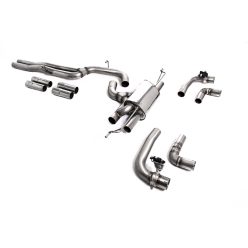
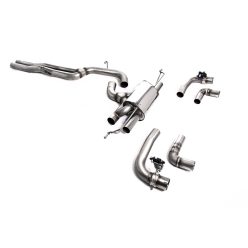


Net price: 124 €
Audi RS3 8Y Performance Tuning Kits – focused upgrades for stable temps and improved flow
This category groups RS3 8Y (2021+) hardware aimed at consistent performance under load, where heat soak and airflow limits can show up during repeated acceleration or track day use.
You’ll find a mix of intercooler, boost hose options, a replacement air filter for an induction kit, plus OPF/GPF-back exhaust variants, so it’s worth selecting by body style, engine code and your intended use.
These are practical, measurable upgrades: better charge-air temperatures, more robust boost plumbing, and a freer-flowing exhaust path, while keeping fitment checks front and centre.
Technical Basics
An upgraded intercooler supports lower intake temperatures and repeatable pulls; for FMINT33 the listed core size is 640×250×130 mm with a bar-and-plate construction, which typically prioritises heat capacity and durability.
A boost hose kit can reduce the chance of boost leaks and soft hoses under higher load; FMKT033 is described as a four-hose set (pre/post intercooler, turbo outlet, throttle body elbow) for DNWA engine codes.
The hoses are noted as fluorosilicone lined to help resist oil vapour penetration and to suit modern O.A.T. (Organic Acid Technology) coolants, which is useful when the car sees higher under-bonnet temperatures.
If you already run the Forge induction setup, the FMINDK47 replacement filter is specified as a high-flow nanofibre (synthetic, pleated) element, positioned as an upgrade versus common cotton filters.
On the exhaust side, OPF/GPF-back systems replace the section after the particulate filter; the Milltek options reference an 80 mm bore and T304L stainless steel. Always verify road legality and local regulations if any configuration is listed for motorsport-only use.
Selection Criteria
Start with your priority: for consistent power, choose cooling and boost integrity first (intercooler + hoses), and treat the exhaust as the sound/character and flow step.
For Milltek, confirm body style and the exact item: the product list includes FMSSXAU974 and FMSSXAU975 variants, so match the description (e.g., Sportback) to your car before ordering.
Boost hoses may offer colour choices (Red/Black): pick black for an OEM-style bay, or red for visibility during inspections, but treat DNWA fitment as the deciding factor.
The replacement filter is best seen as a service part for FMINDK47: if you drive in dusty conditions or do frequent high-load runs, keeping a spare can reduce downtime.
Use sorting by price and check availability (“In stock” vs “Available to order”), then open the product page to confirm included fittings, instructions and any notes that affect installation time.
Installation & Maintenance
Intercooler fitting often involves bumper-area removal and careful alignment; prioritise seal integrity and correct routing so you don’t introduce boost leaks or rubbing points after reassembly.
With boost hoses, correct clamp placement and tightening matters: under-tightening can cause boost leaks, while over-tightening may damage hoses or outlets. Re-check after a heat cycle and consider a pressure test if symptoms appear.
Exhaust installation benefits from checking clearances and hangers to prevent knocks and unwanted resonance; if you hear a rattle, it’s usually a positioning issue rather than a part defect.
For the air filter, maintain stable airflow and protect sensors: replace or clean according to the manufacturer’s schedule, and don’t run an over-oiled element if your setup is sensitive to contamination.
FAQ
Which RS3 8Y engines does the boost hose kit fit? DNWA
The boost hose kit is described for DNWA engine codes, so confirm your engine code in the vehicle documentation before ordering. If your code differs, rely on the product fitment notes rather than assumptions. Correct coupler sizes and connections are essential on tuned cars.
What does OPF/GPF-back mean, and is it road legal? OPF/GPF-back
OPF/GPF-back refers to the exhaust section after the particulate filter. Road legality depends on the exact configuration and local rules, so check the product documentation and your region’s requirements. Any bypass or de-cat style items are commonly restricted to motorsport use.
What is the intercooler core size and why does it matter? 640×250×130 mm
The listed core size is 640×250×130 mm, which supports more heat exchange capacity under repeated load. Lower charge-air temperatures can help keep performance consistent during back-to-back runs. Always verify space/fitment behind the bumper and the supplied hardware.
When should I replace the FMINDK47 air filter? FMINDK47
Replace it when it’s visibly loaded with dirt, airflow feels restricted, or the service interval is reached. Dusty roads and frequent high-load driving can shorten the interval. Use the specified FMINDK47 element to ensure correct sealing and sizing.
Do I need extra clamps or gaskets for installation? fittings
Some kits include essential fittings, but contents vary by product, so check the “what’s included” section on the product page. It’s sensible to replace tired OEM clamps/gaskets during installation. After fitting, inspect for leaks and re-check fasteners after a heat cycle.
Narrow down by fitment and goals, then add the right RS3 8Y option to your basket.
