
The AN-8 Hoses, Fittings & Hose Ends category focuses on AN-8 (Dash 8) size components commonly used in fuel and oil plumbing where stable sealing and flow matter. If you want to compare sizes or browse related AN solutions, open AN Hoses, Fittings & Adapters. Use filters (stock/price) and sorting, then open each product card to confirm thread details and compatibility. Choose the right AN-8 items and place your order.

AN-8 Hoses, Fittings & Hose Ends – Dash 8 parts for tidy routing, reliable sealing and service-friendly plumbing
AN-8 (Dash 8) is typically chosen when you need a solid balance of flow and packaging for a fuel line or oil line. The aim is a route that stays dry, remains easy to inspect, and can be disconnected without fighting seized or awkward joints. This is especially relevant for oil cooler runs and custom fuel feed/return layouts where routing quality directly affects reliability.
Dash size alone is not enough for fitment, because thread and sealing method define whether a joint will actually seal. AN plumbing commonly relies on AN/JIC 37° flare sealing, while transitions may involve other standards such as NPT or metric ports. Quick warning: if you cannot clearly identify where a joint seals, do not force it—verify the specification first.
Technical Basics
AN/JIC 37° connections seal on the cone, not on the thread, so clean and undamaged flare seats are essential on AN-8 joints. 37° flare components are not interchangeable with 45° flare systems, and mixing them is a common cause of weeping. Quick warning: do not apply sealant to flare sealing faces.
On AN-8 parts you will often see 3/4"-16 thread markings (UNF logic), but transitions and special pieces can differ, so always confirm the exact call-out on the product page. If your system includes NPT tapered threads, the sealing concept may change compared to flare joints, and the correct sealing approach must follow the manufacturer’s instructions. Quick warning: a thread that screws in is not automatically a joint that seals correctly.
Material and hose construction affect durability: fittings are commonly aluminium with anodised finishes, while the hose construction can vary depending on your build. Working pressure and temperature limits depend on the exact hose/fitting series, so treat the manufacturer’s ratings as decisive. Quick warning: if the line runs close to exhaust heat, plan dedicated heat shielding.
Selection Criteria
Start by defining what the AN-8 run is for: an oil cooler circuit, fuel feed/return, or another fluid route where restriction should be controlled. Then choose the right interface and geometry so the hose is not forced into tight bends right behind the fitting. Quick warning: do not “pull the hose into place”—solve routing with geometry and mounting instead.
Where standards meet, select a proper adaptor rather than improvising. Confirm the receiving port standard (flare seat vs tapered thread vs washer/O-ring) and ensure you have tool access for assembly and inspection. Quick warning: if threads do not start smoothly by hand, stop and re-check to avoid cross-threading.
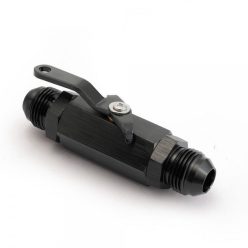
Depending on the build, you may also use a lock nut style mounting aid or a fuel shut-off (flow control) valve for service or safety. For valves, consider flow direction, accessibility and supporting the valve body so vibration does not load the joint. Quick warning: in fuel systems, treat any smell or dampness as an immediate inspection item.
Installation & Maintenance
Good assembly starts with cleanliness: keep debris out of the line and protect AN/JIC 37° sealing faces from scratches. Start threads by hand, then tighten evenly so the cone seats correctly without distortion. Quick warning: overtightening can deform sealing faces and create persistent seepage.
Before regular use, perform a staged pressure test and inspect every AN-8 joint, then re-check after the first heat cycle. Route away from sharp edges, clamp the line so vibration does not load the fitting, and add abrasion/heat protection where needed. Quick warning: fuel smell, visible dampness or oil misting should be treated as urgent.
For ongoing checks, look for residue at joints, loosening and rubbing marks on the hose outer. If a flare cone/seat is scratched or threads are damaged, replacing the affected fitting is usually safer than trying to “torque past” the issue. Quick warning: preventative inspection is far cheaper than repairing the consequences of a failed oil or fuel line.
FAQ
What is AN-8 (Dash 8) typically used for?
AN-8 is commonly used for fuel and oil plumbing where you want a serviceable joint and controlled restriction. Suitability depends on pressure, temperature and the port standards you need to mate to. Always confirm thread and sealing type on the product page.
How does AN/JIC 37° sealing work?
37° flare joints seal on the cone/seat interface, not on the thread. That means clean, undamaged sealing faces are critical for a dry joint. If the seat is scratched, the connection can weep even when tightened correctly.
Is 3/4"-16 common on AN-8 parts?
You will often see 3/4"-16 markings on AN-8 style components, but transitions and special parts can differ. Always verify the exact thread call-out and sealing method in the product specification. Do not force mismatched standards together.
Do AN fittings need thread sealant?
Usually not on AN/JIC 37° flare joints, because the cone is the sealing surface. Sealant may be appropriate on NPT tapered threads if the product specifies it, but it should not be applied to flare faces. Sealant on the cone can prevent proper seating and cause leaks.
How can I avoid leaks on an AN-8 build?
Keep the system clean, protect the 37° sealing faces, and start threads by hand to avoid cross-threading. Pressure-test and re-check after a heat cycle, because joints can “settle” slightly. If sealing faces or threads are damaged, replacement is often the most reliable fix.
Use filters to narrow by spec, verify compatibility on the product page, and order the AN-8 parts you need for your route.
