
The AN-3 Brake & Clutch Hoses, Fittings & Hose Ends category covers AN-3 (Dash 3) parts for brake and clutch hydraulics where correct fit and consistent sealing matter. You will typically find banjo solutions, adaptors to common metric threads such as M10x1.0, plus PTFE hose and matching hose ends. For the full AN range across sizes and adaptor types, browse AN Hoses, Fittings & Adapters. Use filters by thread and design, sort by price or popularity, and open each product page to confirm compatibility. Choose the right AN-3 parts and place your order.

Net price: 13 €
Net price: 9 €
Net price: 6 €
Net price: 2 €
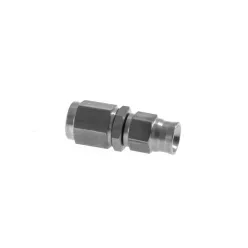
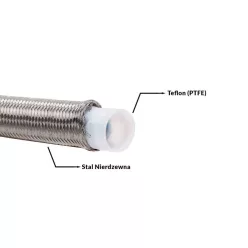
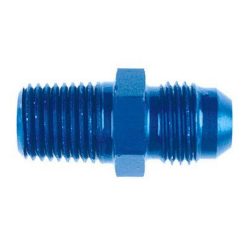
Net price: 3 €
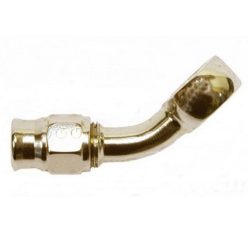
Net price: 9 €
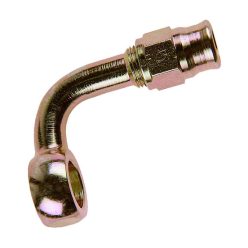
Net price: 14 €

Net price: 7 €

Net price: 6 €
AN-3 Brake & Clutch Hoses, Fittings & Hose Ends – Dash 3 hydraulic lines with service-friendly joints and predictable fitment
AN-3 (Dash 3) is widely used for brake and clutch plumbing where compact size and dependable joints are required. This category brings together the key building blocks: hose, hose ends, adaptors and routing hardware so you can assemble a complete hydraulic run. For safety-critical systems, always rely on the manufacturer’s ratings for the exact item you choose.
In many builds, AN-3 lines connect to OE-style ports via a metric adaptor, while other setups use a banjo design to save space at calipers or master cylinders. The goal is a joint that stays stable through heat cycles and vibration while remaining easy to service. Quick warning: any sign of fluid seepage in a brake/clutch circuit must be investigated immediately.
Technical Basics
AN/JIC 37° connections seal on the cone, so clean, undamaged seats are essential on AN-3 joints. The AN-3 side is often associated with 3/8-24 UNF, but the other side may be different (for example M10x1.0 or 7/16-24), so check the product’s stated thread and sealing method. Quick warning: 37° flare parts are not interchangeable with 45° flare systems.
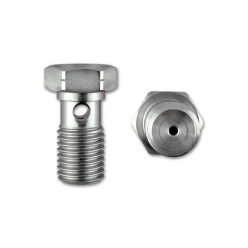
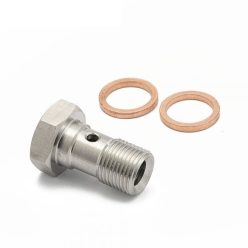
For hydraulic lines, PTFE hose is a common choice, typically paired with a braided reinforcement to reduce expansion under pressure. Within this category you may see banjo bolt options (for example M12x1.5) and banjo fittings with different hole sizes (for example 10mm), plus AN-to-metric adaptors for factory-style ports. Quick warning: banjo sealing arrangements can vary by design, so follow the specific product instructions.
You may also use a bulkhead pass-through fitting for a stable fixed point, or a T-piece if you are building a split circuit or adding an instrumented branch. With these parts, mechanical support and correct mounting clearances are just as important as thread selection. Quick warning: poor support can lead to chafing and fatigue even if the flare joint is correct.
Selection Criteria
Start by identifying the port thread you need to mate to (for example M10x1.0 or M10x1.25), then select the correct AN-3 adaptor and hose end. If packaging is tight, a banjo or an angled hose end can reduce stress and improve access. Quick warning: do not force alignment by twisting or bending the hose at the fitting.
Match the hose end to the hose construction: PTFE assemblies require hose ends designed for that inner tube and assembly method, which can differ from rubber-based hoses. If your build includes ports such as 1/8 NPT or 1/8 BSP, choose adaptors where the sealing concept is clearly stated (flare seat vs tapered thread). Quick warning: a thread that “fits” is not the same as a joint that seals correctly.
Where you need clean routing through panels or the chassis, a bulkhead fitting helps create a serviceable fixed point, and a T-piece can simplify organised branching. Consider mounting, accessibility for spanners, and clearance to moving parts as part of the selection. Quick warning: only use components that are explicitly suitable for brake/clutch hydraulic use.
Installation & Maintenance
Keep the system clean during assembly: when cutting PTFE hose, prevent debris from entering the bore, and protect the 37° sealing faces from scratches. Tighten joints smoothly and ensure threads start by hand to avoid cross-threading. Quick warning: overtightening can deform sealing faces and create persistent weeping.
After installation, perform a staged pressure check and re-inspect each AN-3 connection after the first heat cycle. Brake/clutch work also includes proper bleeding, and a change in pedal feel can indicate trapped air or an underlying leak. Quick warning: if you see dampness at a joint, do not drive until the root cause is fixed.
For maintenance, look for rubbing marks, loose supports and residue at fittings, as these often appear before a failure. If the issue is near a banjo bolt or adaptor, re-check that the correct parts and sealing method were used rather than simply tightening further. Quick warning: preventative checks are essential on safety-critical hydraulics.
FAQ
What is AN-3 (Dash 3) used for in brake and clutch systems?
AN-3 is commonly used for brake and clutch hydraulic lines where compact routing and stable joints are needed. Compatibility depends on the mating thread (for example M10x1.0) and the sealing method used by the port. If the product listing does not clearly state suitability, follow the manufacturer’s specification.
Does AN-3 always mean 3/8-24 UNF?
The AN-3 side is often associated with 3/8-24 UNF, but the opposite end can be metric or another standard. Always verify the thread call-out and sealing method on the specific adaptor or fitting. This is especially important when mixing OE ports with aftermarket lines.
When should I choose an AN-3 banjo fitting?
A banjo setup is useful when space is limited or you need the line to exit sideways from the port. It is common around calipers and master cylinders where clearance is tight. Confirm hole size (for example 10mm) and bolt thread before ordering.
Is PTFE hose suitable for brake fluid?
PTFE hose is often used in hydraulic applications, but final suitability must be confirmed by the manufacturer’s fluid compatibility and pressure/temperature ratings for the exact hose and fitting set. Correct assembly and the proper hose ends are equally important. If in doubt, choose products explicitly specified for brake systems.
Why can a 37° flare joint leak after assembly?
Common causes include contamination, a scratched 37° cone/seat, mixed standards, or incorrect tightening. Clean and inspect the sealing faces and confirm you are using the correct sealing concept for that port. If the seat is damaged, replacing the fitting is often the most reliable fix.
Filter by thread and design, verify compatibility on the product page, and order the AN-3 parts you need to complete the line.
