
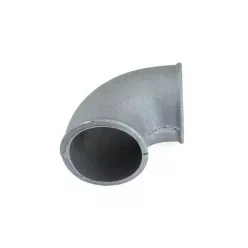
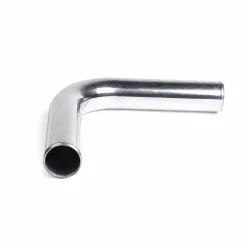
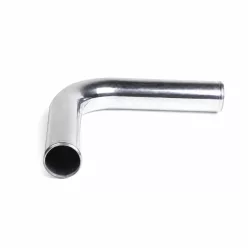
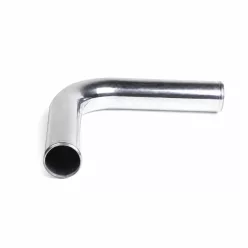
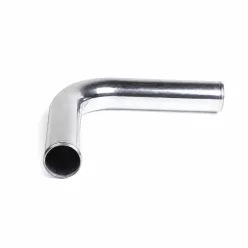
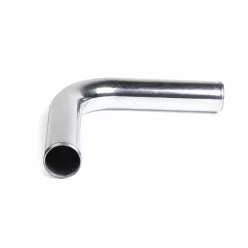
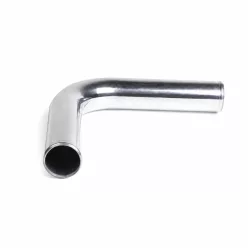
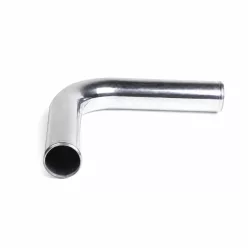
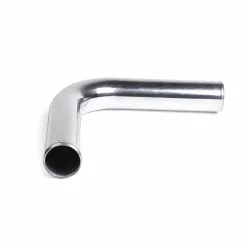
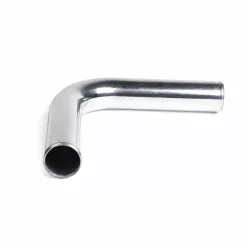
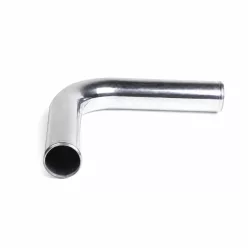
Our Aluminium 90° Elbow Pipes are lightweight, weldable or clamp-on bends for intake and intercooler plumbing. They cover popular diameters (around 30–70 mm) with a typical 300 mm leg length, giving generous trimming allowance. A 90° bend offers a compact route in tight bays, while aluminium reduces weight and resists corrosion on the cold side.

Net price: 7 €
Brief summary & key benefits
Aluminium 90° Elbow Pipes provide a compact direction change for cold-side plumbing. They’re ideal where space is tight around the turbo, intercooler or throttle body. With multiple diameters (roughly 30–70 mm) and a typical 300 mm leg length, these elbows offer generous trimming allowance. Lightweight aluminium cuts mass and maintains a clean, corrosion-resistant appearance.
Technical Basics
These elbows are intended for intake/intercooler service—not for exhaust heat. A single 90° bend simplifies packaging and reduces joint count compared with stacking smaller angles. Smooth internal surfaces and well-aligned joints help preserve air velocity. Typical options use nominal ODs in the 30–70 mm range with legs around 300 mm, leaving room for couplers, sensors or joiners. Because aluminium has high thermal conductivity and lower stiffness than steel, avoid excessive clamp force that might ovalise the tube.
Selection Criteria
Diameter: size to the turbo, intercooler and throttle-body stubs. Undersizing restricts flow; oversizing can reduce air velocity. Bend strategy: pick a 90° elbow for the most compact corner; where space allows, two 45° pieces with a short straight can give a slightly smoother transition. Leg length: around 300 mm provides trimming freedom; leave straight sections behind each clamp. Wall gauge: light gauges suit most cold-side runs; choose heavier walls for long unsupported spans or harsh use. Material pairing: keep aluminium within a section, or isolate dissimilar metals with silicone/EPDM to minimise galvanic effects and thermal mismatch.
Installation & Maintenance
Plan the route, mark cut lines, then deburr and degrease thoroughly. A light edge chamfer protects silicone couplers. Align the elbow so clamps have adequate straight length; tighten evenly and stop before deformation. If welding aluminium, account for higher thermal expansion and conductivity—use solid fixturing and controlled heat input. After assembly, pressure- or smoke-test for leaks and re-torque clamps after initial heat cycles. Periodically inspect mounts, shielding and potential chafe points near panels and looms.
FAQ
Can I use a 90° aluminium elbow on the exhaust?
No—use stainless steel for hot sections; aluminium is for the cold side.
Which sizes are typical?
Commonly around 30–70 mm OD with legs near 300 mm.
Clamp or weld?
Cold-side systems typically use silicone couplers and stainless clamps; weld only when fixed geometry is required.
Why is my joint leaking?
Often burrs, angled cuts or undersized/low-quality clamps; re-cut square, deburr and tighten evenly.
Are two 45° bends better than one 90°?
They can be slightly smoother for flow if space allows, but a single 90° is more compact and reduces joint count.
