
The Airride Electrical Lines category covers the wiring and accessories needed to power and control your airride suspension reliably. These automotive-grade cables supply current to compressors, valve blocks and height sensors, while keeping voltage drop and heat under control. Proper wire gauge, solid grounding and clean routing help your air suspension respond quickly, reduce troubleshooting time and extend component life.
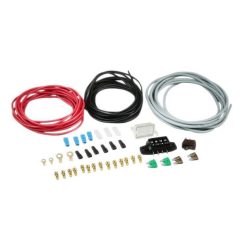
Airride electrical lines – reliable power and clean control
Airride Electrical Lines are the hidden backbone of any airride suspension, feeding compressors, valves and controllers with stable power and clean signals. In this category you will find automotive-grade wiring and accessories designed to cope with vibration, temperature changes and moisture inside a vehicle. Correctly sized power and ground cables keep voltage drop low, protecting the compressor from overheating and slow fill times. A well-planned wiring layout is not glamorous, but it has a huge impact on how fast, quiet and reliable your air suspension feels on the road.
Technical Basics
Airride compressors draw significant current, so they must be supplied via flexible, fine-stranded copper automotive wire. Quality PVC or cross-linked XLPE insulation resists oils, road salt and heat around the chassis, ensuring long-term stability. Power and ground conductors must be sized according to compressor current draw and cable length, because undersized wire will cause voltage drop and local overheating. Low-current control wires for valve blocks, level sensors and pressure switches should be routed away from high-current runs to avoid interference and erratic behaviour.
When wiring the airride controller and relays, always follow the manufacturer’s pinout and fuse recommendations. Main power feeds must be fused as close to the battery as possible, so a short circuit cannot turn the loom into a heating element. Crimp terminals should be made with a proper ratcheting crimp tool and sealed with heat-shrink tubing to keep out moisture and corrosion. Warning: using household solid-core or aluminium cable in a vehicle is unsafe and can quickly lead to broken conductors or even fire.
Selection Criteria
The key factors when choosing electrical lines are expected current, cable length and installation environment. High-output airride compressors require thicker power and ground wires, multiple ground points and relay-based switching, while valves and sensors can run on smaller gauge wires. It is worth planning the entire layout early – battery location, fuse box, tank and compressor position – so you can cut cables to accurate lengths and minimise unnecessary runs. Oversized wiring is usually safer than undersized, but excessively long cables still increase resistance and reduce performance.
Think about where your looms will run: inside the cabin, in the boot, along the sills or under the chassis. Sections exposed to stone impact or abrasion benefit from extra protection such as split conduit, braided sleeves or heat shields. If you plan to upgrade later – additional pressure sensors, standalone manometers or a second compressor – it is smart to pull multi-core cables and leave a few spare wires in place. Warning: saving a few euros on cable quality or gauge can turn into hours of diagnostics and repeated component failures.
Installation & Maintenance
When installing airride wiring, mechanical reliability is just as important as electrical performance. Always route cables along existing harness paths where possible, securing them with quality tie wraps and grommets through bulkheads. Avoid sharp edges, moving suspension parts and direct proximity to exhaust components that can overheat insulation. Splices should be crimped and sealed rather than twisted together, and ground points must be on clean, bare metal to ensure a low-resistance connection.
During operation it is good practice to inspect the loom from time to time, especially in high-stress areas such as grommets, hinges and underbody sections. Look for cracked insulation, discolouration or melted plastic – all signs that a wire is running too hot or has been damaged. Connectors can be refreshed periodically with suitable contact cleaner to keep transition resistance low, especially around the compressor relays and main fuse box. Warning: never “solve” a recurring fuse blow by fitting a larger fuse; always find and fix the root cause first.
FAQ
What wire gauge do I need for an airride compressor?
Required wire gauge depends on the compressor’s current draw and the total cable length from the battery. Larger, high-duty compressors need thicker cables and short ground runs to keep voltage drop low and cranking strong. When in doubt, follow the manufacturer’s table and step up one size if your wiring run is unusually long.
Do I need a relay to switch my airride compressor?
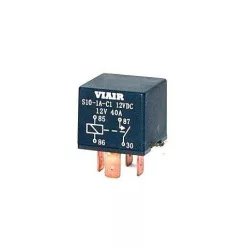
Yes, an automotive relay is strongly recommended for switching the compressor. It keeps heavy current away from switches and controllers, which only have to carry the small relay coil current. This improves safety and significantly extends the life of switches and control units.
Can I use household wiring for my air suspension?
No, household cables with solid conductors or aluminium cores are not designed for vibration and temperature cycles in vehicles. They are stiff, prone to fatigue and not oil or fuel resistant, which makes them unsuitable and unsafe. Always use flexible, automotive-grade copper wire certified for in-vehicle use.
Where should I connect the ground cables in an airride system?
High-current ground cables for compressors should be kept as short as possible and bolted to solid chassis or frame points on bare, cleaned metal. Smaller grounds for sensors and controllers can share common grounding points, but they should still be clean and corrosion-free. Poor grounding often shows up as slow compressor start, flickering lights or random controller resets.
How often should I check my airride wiring?
A quick visual inspection of the wiring once or twice a year is usually enough for street cars, while track or show vehicles may benefit from more frequent checks. Focus on sections exposed to movement, heat or moisture, and verify that all main power and ground fasteners are still tight. Regular checks help catch minor issues before they turn into breakdowns.
