
In AEM Fuel Pressure Regulators, you’ll find adjustable regulators where product details commonly list AN-6 ports and a dedicated 1/8 NPT gauge port for quick pressure checks.
The selection includes “1000HP” labelled options with different return-port sizing (for example AN-6 or AN-8), so always confirm the stated base pressure range and part number on the product page. Use filters and sorting, open the product card to verify the exact porting, then place your order.
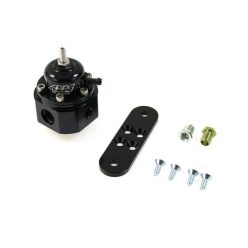
Net price: 208 €
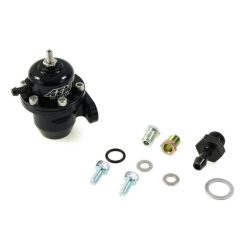
Net price: 212 €
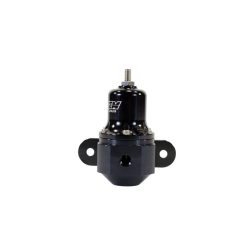
Net price: 219 €
AEM Fuel Pressure Regulators – stable fuel pressure, straightforward monitoring and AN/NPT-friendly porting
A fuel pressure regulator (FPR) is used to maintain a set base pressure at the fuel rail, while routing excess flow back via the return line to keep delivery consistent.
Within this AEM range, product data frequently references AN-6 plumbing and a 1/8 NPT gauge port, which is useful for fitting a mechanical gauge or pressure sensor close to the regulator.
Note that a product title and its “Details” field can occasionally show a different pressure range; for a safe decision, prioritise the part number (for example AM-25-300BK) and the manufacturer’s specification.
Technical Basics
Two standards matter most here: AN/JIC 37° flare fittings (e.g. AN-6) and NPT tapered threads (e.g. 1/8 NPT gauge ports). AN seals on the flare, NPT seals on the taper, so they are not interchangeable.
For the high-capacity universal unit, the listing details 2× -6 (9/16-18) inlets, a -6 (9/16-18) outlet, plus a 1/8 NPT gauge port—handy if you want multiple feeds or higher-flow routing.
The “1000HP” labelled AEM regulators list AN-style inlet/outlet ports and a dedicated return port; return sizing can differ by model (e.g. AN-6 vs AN-8), which can impact pressure stability with high-flow pumps.
Vacuum/boost reference matters when a regulator uses a reference signal: the high-capacity model description includes a 5 mm (3/16") vacuum hose connection, so hose integrity and clamping directly affect stable regulation.
Selection Criteria
Start with the required base pressure and the stated adjustment range: one “1000HP” page lists 1.5–4 bar in the details, while another lists 1.5–10 bar, so always verify the range against the part number you intend to buy.
Match your plumbing to the regulator: if your system is AN-6 throughout, fitment is simpler, but if the regulator specifies an AN-8 return, restricting the return line is a common cause of pressure creep and unstable readings.
If you want closer-to-OE mounting, check kit contents: one AEM listing notes an included adapter for certain Honda/Acura applications, which can be convenient for street and track builds. Confirm your exact model and rail style on the product page before committing.
For higher-demand setups, prioritise pressure stability under load and a free-flowing return line; the goal is consistent pressure control, not simply the highest possible setting.
Installation & Maintenance
Work on the fuel system only after depressurising it, and run a leak check at every fitting after the first start.
The high-capacity AEM listing includes a universal mounting bracket and 10-32 screws, which helps secure the unit and reduces vibration-related loosening over time.
Threading rule: do not seal AN flare threads (the flare seals), and only seal 1/8 NPT ports using the recommended method—wrong sealing can cause leaks or thread damage.
When setting pressure, verify a gauge or pressure sensor reading at idle and under load; if a vacuum reference hose is used, inspect routing, clamps and hose condition to avoid unstable behaviour.
For ongoing checks, inspect hose ends, mounts and sealing points regularly; warning signs include fuel smell, damp fittings, and logged pressure drop or oscillation.
FAQ
Which AEM regulator should I choose: AM-25-300BK, AM-25-302BK or AM-25-305BK?
Choose based on port layout (AN-6/AN-8, inlet/outlet/return), the listed base pressure range and how you plan to mount it. The AM-25-305BK listing specifies multiple inlets and a gauge port, while the “1000HP” versions differ in return sizing. Always cross-check the part number and your line/fitting standards.
What is the 1/8 NPT gauge port used for?
The 1/8 NPT port is typically used for a fuel pressure gauge or pressure sensor pickup close to the regulator. Because NPT is a tapered thread, correct sealing practice is essential to avoid leaks. Confirm clearance and heat exposure if you run an electronic sensor.
Why does return size (AN-6 vs AN-8) matter?
The return line must flow freely to bleed excess fuel back; if it’s undersized or restricted, you can see pressure creep or unstable control. If the regulator calls for AN-8 return and the system is reduced to AN-6, issues are more likely with high-flow pumps. Aim for stable, repeatable pressure under load.
Why do I sometimes see a different pressure range in the title vs the details?
Occasionally, the product title and the “Details” field don’t match. In that case, use the part number and manufacturer specification as the deciding reference. If you’re unsure, plan around your pump/injector needs and confirm the intended target pressure.
Do I need a vacuum/boost reference hose?
If the regulator uses a vacuum reference, the hose helps the regulator respond to load changes (especially on boosted engines). The high-capacity AEM description includes a 5 mm (3/16") vacuum hose connection, so hose integrity matters. Follow the product-page guidance for your specific setup.
Once porting and pressure range match your build, pick the right AEM regulator and place your order.
