
Our Adapters & Converters category covers wiring adapters, signal conditioners and interface modules for ECUs, dashes and sensors. From PnP patch looms to CAN/OBD-II bridges and wideband lambda accessories, these parts speed up installation, keep wiring tidy and reduce errors—ideal for workshop builds and track use.
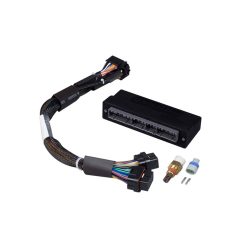
Net price: 568 €
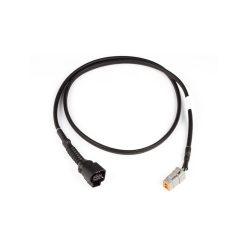
Net price: 33 €
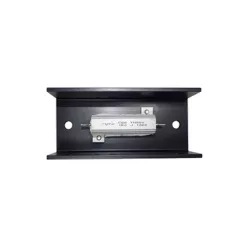
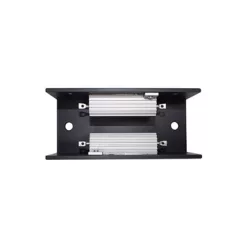
Net price: 11 €
Net price: 202 €
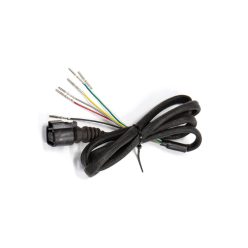
Net price: 49 €
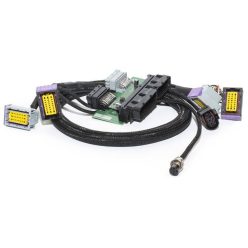
Net price: 284 €
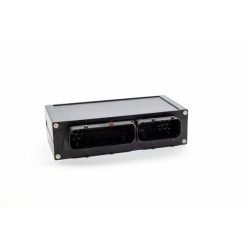
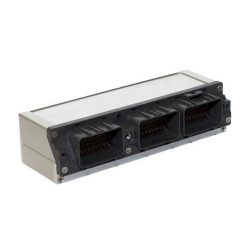
Brief summary & key benefits
Adapters & Converters speed up motorsport electronics by matching connectors, pinouts and signal levels between OE looms and aftermarket ECUs/dashes/sensors. PnP patch looms avoid cutting the factory harness, communication bridges integrate CAN and OBD-II devices, while wideband and sensor add-ons deliver clean, conditioned data for calibration.
Technical Basics
Patch looms (PnP): OE plug on one side and ECU/dash plug on the other. Quality looms use correct wire gauge on power feeds, shielded pairs on sensitive signals and follow documented pinouts.
Signal conditioning: translates sensor outputs to the ECU’s expected domain—e.g., VR-to-Hall conversion, frequency-to-voltage, thermistor curve mapping or scalable MAP ranges.
Comms interfaces: CAN–OBD-II bridges, CAN splitters/terminators and USB–serial links. Maintain proper 120 Ω termination and a short T-branch topology for reliable traffic.
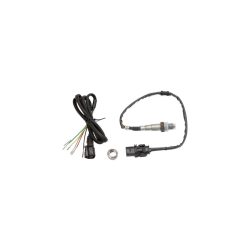
Wideband accessories: controller modules and O2 sensor looms; stable supply and grounding dramatically affect accuracy and sensor life.
Selection Criteria
Compatibility: confirm OE connector keying, exact pinout and the target ECU/dash model. Turbo engines with DBW often require extra feeds and shielded lines.
Electrical budget: account for current on actuators and sensors; undersized wiring causes drop and noise. Keep sensor ground separate from high-current returns where possible.
Shielding & routing: use shielded cable for crank/cam, lambda and high-speed lines; avoid parallel runs with injector/coil drivers; secure looms mechanically with heat-resistant sleeving.
Software support: prefer adapters with published pinouts, ready ECU projects and CAN templates—this shortens commissioning time.
Installation & Maintenance
Create a wiring diagram, de-energise the system, then install. Strain-relieve connectors and protect looms with braided sleeve and quality heatshrink. Verify termination and node IDs on CAN. After first start, log voltage and comms health; perform a smoke/pressure test where relevant and check for ground offsets. Periodically inspect contacts, seals and pass-throughs; in harsh environments use rated enclosures and connectors.
FAQ
What does PnP mean?
A pre-made patch loom between OE harness and ECU—no splicing or soldering required.
Do I need a CAN–OBD-II bridge?
Yes, when your logger/dash expects OBD-II but the ECU broadcasts custom CAN, or vice versa.
When is a conditioner required?
Whenever sensor type/range doesn’t match the ECU input (e.g., VR to Hall, different thermistor curves).
Why do comms drop out?
Often poor grounding, lack of shielding, wrong termination or damaged wiring.
Why is my wideband reading unstable?
Check power supply, grounds and exhaust leaks; stabilise the heater control and wiring.
